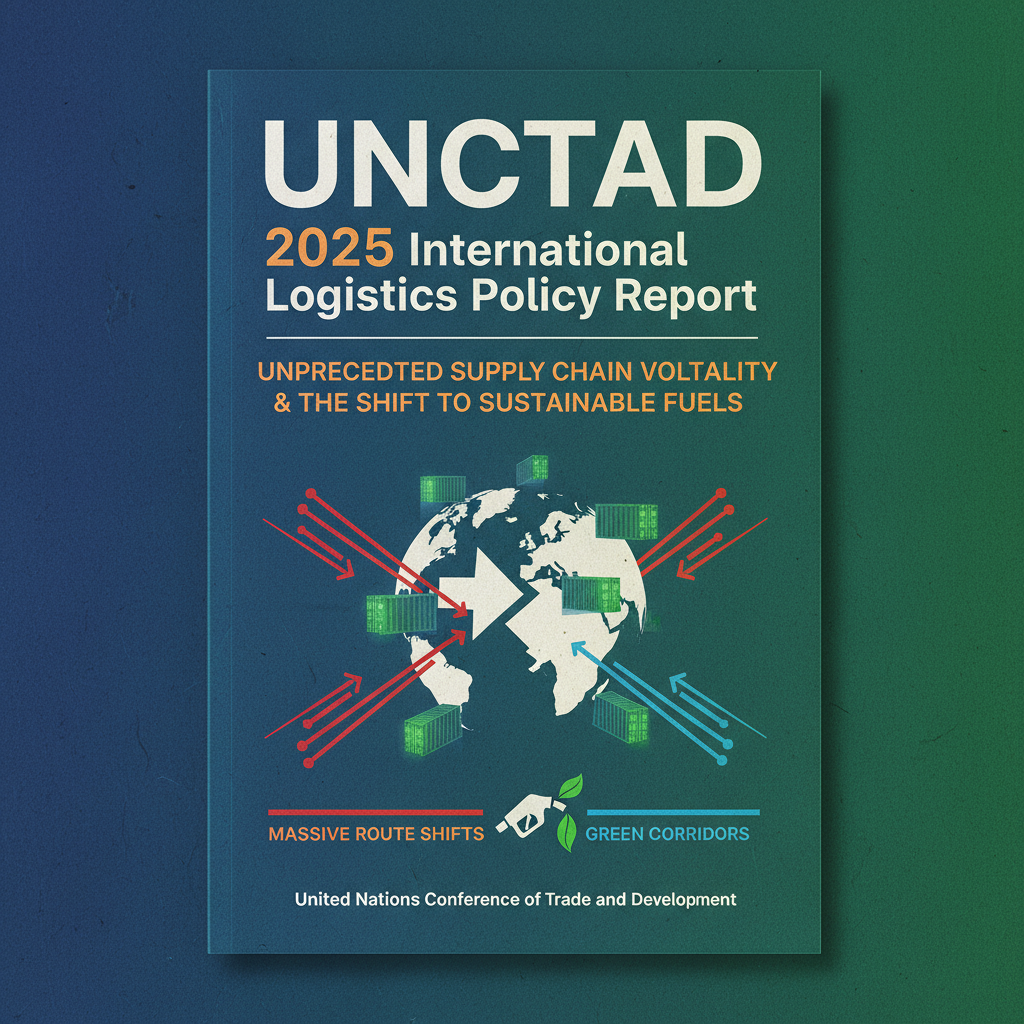
Global supply chains are facing an era of unprecedented volatility. The recently published UNCTAD international logistics policy report, officially titled the Review of Maritime Transport 2025, reveals a landscape defined by geopolitical tensions and massive trade route shifts. According to the report, maritime trade volumes reached 12.72 billion tons in 2024, representing a 2.2% growth, but seaborne trade is projected to stall at a mere 0.5% growth in 2025.
The logistics sector is undergoing a structural transformation. A significant trend highlighted in the UNCTAD international logistics policy report is the persistent rerouting of vessels away from traditional chokepoints like the Suez Canal. This has caused severe operational bottlenecks:
- Transit levels through the Suez Canal dropped approximately 70% below 2023 averages.
- Longer shipping routes led to a record 6% increase in global ton-miles.
- Alternative fuel vessels now account for over 50% of new shipbuilding orders by tonnage.
This reality has substantially elevated freight rates, greenhouse gas emissions, and transport delays worldwide.
Beyond geographical disruptions, the UNCTAD international logistics policy report underscores a critical environmental pivot. A stark gap remains in the industry, as over 90% of the active global fleet still operates on conventional fossil fuels. UNCTAD Secretary-General Rebeca Grynspan warned that the industry is experiencing the most sustained disruption to global commerce arteries since 1967. As port disruptions become chronic, logistics experts must urgently prioritize supply chain resilience and digital modernization.
References
- mcstrmi.org: UNCTAD Review of maritime transport 2025
- iims.org.uk: UNCTAD Review of Maritime Transport 2025 report
- unognewsroom.org: UNCTAD Press conference
- assafinaonline.com: UNCTAD: Review of Maritime Transport 2025