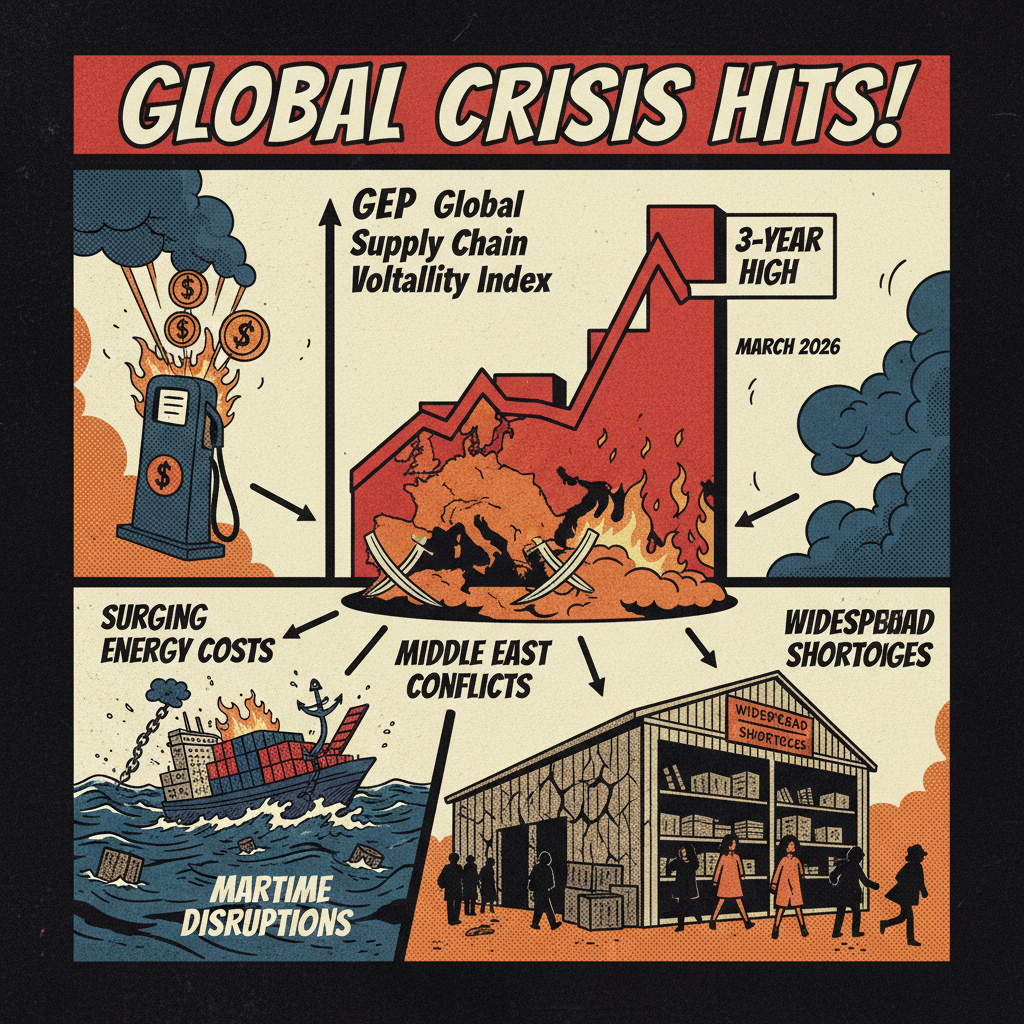
The global logistics landscape is experiencing renewed turbulence as the GEP Global Supply Chain Volatility Index soared from 0.09 in February to 0.57 in March 2026. This marks the highest level of volatility recorded since January 2023. The sharp escalation reflects the immediate economic fallout from maritime disruptions and energy price shocks linked to the ongoing conflict in the Middle East. Consequently, global manufacturers are aggressively increasing safety stockpiling in response to soaring supplier prices and heightened uncertainty.
Procurement leaders and supply chain experts are closely monitoring several critical factors that have pushed the index to a three-year peak. Surging oil prices have driven global transportation costs to a four-year high, particularly impacting Asian markets that heavily rely on Middle East energy imports. Despite an overall softening of global input demand, item shortages have hit a three-year high, signaling severe bottlenecks in the availability of polymers and energy-intensive metals like aluminum and copper.
- Asia: The regional index surged to 1.16, indicating the most significant supply chain pressures since August 2022.
- Europe: The index rose sharply to 0.64 as manufacturers aggressively built up safety stocks ahead of anticipated price hikes.
- North America: Pressures reached a 39-month high of 0.42, reversing previous trends of spare capacity.
Industry experts emphasize that while geopolitical conflicts are pushing up costs and triggering widespread material shortages, extreme agility is demanded from procurement teams. Companies must navigate these intense supply constraints by exploring alternative sourcing strategies and preparing for prolonged volatility throughout 2026. References: GEP, Middle East War Drives Global Supply Chain Pressures to a Three-Year High, gep.com (April 10, 2026).