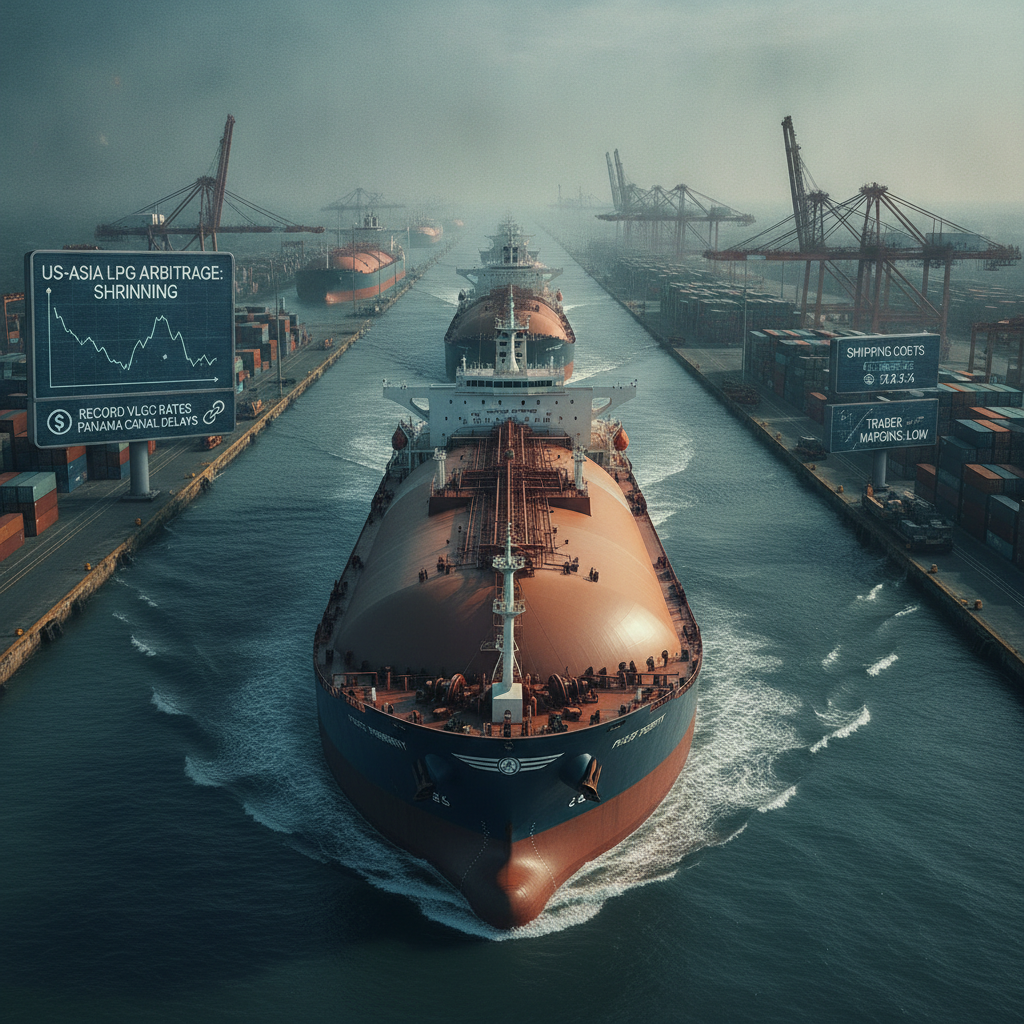
Market Shifts in the US-Asia LPG Freight Arbitrage
In 2026, logistics and shipping experts are closely monitoring a significant transformation in global energy trade. The US-Asia LPG freight arbitrage, once a highly lucrative route for traders, is experiencing an unprecedented squeeze. While US liquefied petroleum gas (LPG) exports to Asia surged to record highs as buyers sought alternatives to Middle Eastern supplies, the associated costs of moving these barrels have shifted from a routine expense to a dominant market force. In fact, US LPG exports were projected to jump 6% in 2025, keeping Gulf Coast export terminals operating at peak capacity.
Key Factors Squeezing the US-Asia LPG Freight Arbitrage
Despite robust demand, several logistical constraints are actively narrowing the US-Asia LPG freight arbitrage. High transit costs and shifting shipping routes have inflated overall voyage expenses, making the economic viability of these shipments increasingly volatile. Specifically, market reports indicate that shipments scheduled for August 2026 loadings faced cancellations as the arbitrage economics deteriorated.
- Panama Canal Congestion: Competition for limited transit slots pushed special auction fees for Neopanamax transits to $850,000 to $1.5 million, sharply driving up voyage costs.
- Rerouting via Cape of Good Hope: To avoid delays, approximately 43% of US LPG carriers bound for Asia rerouted via the Cape of Good Hope, adding significant ton-mileage.
- Surging Freight Rates: The benchmark Houston-Chiba Very Large Gas Carrier (VLGC) spot freight rate climbed from $190/mt to $275/mt by mid-2026.
- Record Terminal Fees: With US export terminals operating near full capacity, spot terminal fees skyrocketed, directly eroding trader netbacks.
The Future of the US-Asia LPG Freight Arbitrage
Looking ahead, the logistics premium is expected to remain the new baseline. Unless global shipping bottlenecks ease or terminal capacities expand significantly, the US-Asia LPG freight arbitrage will remain narrow. Traders must factor in elevated freight rates, geopolitical premiums, and transit delays when calculating spot cargo viability.
References
Vortexa, Cape of Good Hope captures 43% share of US-Asia LPG voyages.
OPIS, Mideast Conflict Widens US-Asia LPG Arbitrage Window.
Argus Media, US LPG exports: how freight and logistics are narrowing the Asia arbitrage.
Drewry, LPG trade growth will be curbed in 2025 due to US terminal capacity limitations.
OPIS, US-Asia LPG Cargoes Cancelled as High Panama Canal Costs Squeeze Arbitrage.