Surging Export Volumes Expose Capacity Shortages
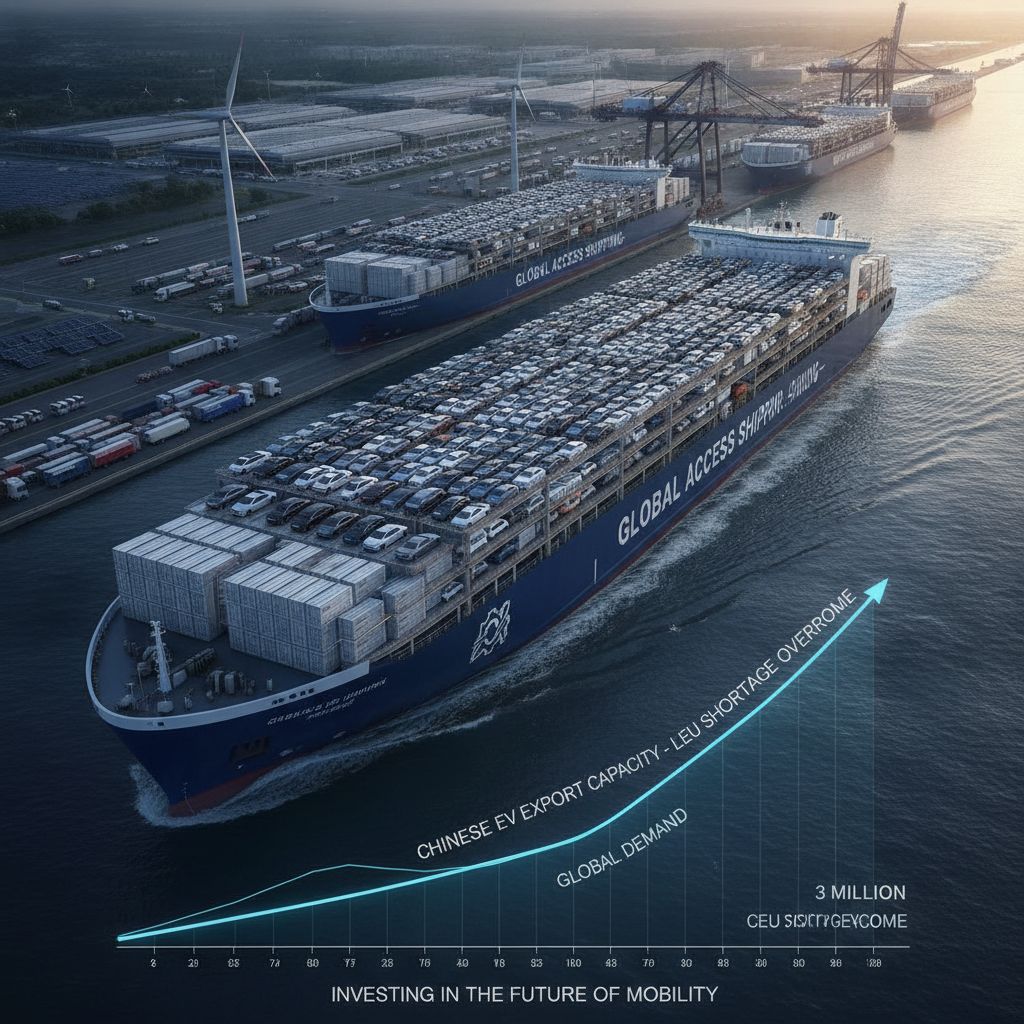
As China’s automotive industry accelerates its global expansion, Chinese vehicle export shipping capacity has become a critical bottleneck for international supply chains. In June 2026, Chinese vehicle exports exceeded one million units in a single month for the first time, pushing the half-year cumulative total past five million vehicles. Despite this unprecedented volume, the global pure car and truck carrier (PCTC) fleet is facing an estimated annualized shortfall of three million car equivalent units (CEU). Consequently, logistics operators are increasingly turning to alternative transport modalities, with up to two million vehicles projected to be shipped via standard shipping containers in 2026. To offset this strain, one-year time-charter rates for 6,500-CEU vessels surged to approximately $95,000 per day by September 2026, forcing a structural pivot in how automotive logistics are managed.
Strategic Fleet Investments and Mega-Vessels
To secure long-term Chinese vehicle export shipping capacity, major automakers and shipping conglomerates are aggressively acquiring their own tonnage. A landmark joint investment of $2.5 billion by COSCO Shipping, BYD, and SAIC Anji Logistics will fund twenty-one 11,000-CEU ultra-large car carriers. Concurrently, BYD is reportedly expanding its proprietary fleet with an order for ten additional 9,200-CEU vessels, aiming for an annual export capacity of 2.5 million cars. Chinese shipyards, dominating the sector, secured nearly 97 percent of all global car carrier orders between January and August 2026. This massive procurement wave, surpassing 100 newbuild contracts this year, signals a definitive shift toward direct supply chain control by original equipment manufacturers (OEMs).
References
Robin Assasfina, 2026; The Loadstar, 2026; Veson Nautical, 2026; Hylios, 2026; ECG Association, 2026; Hellenic Shipping News, 2026; China Academy, 2026; Xinde Marine News, 2026.