Metrics of Global Container Fleet Capacity Expansion
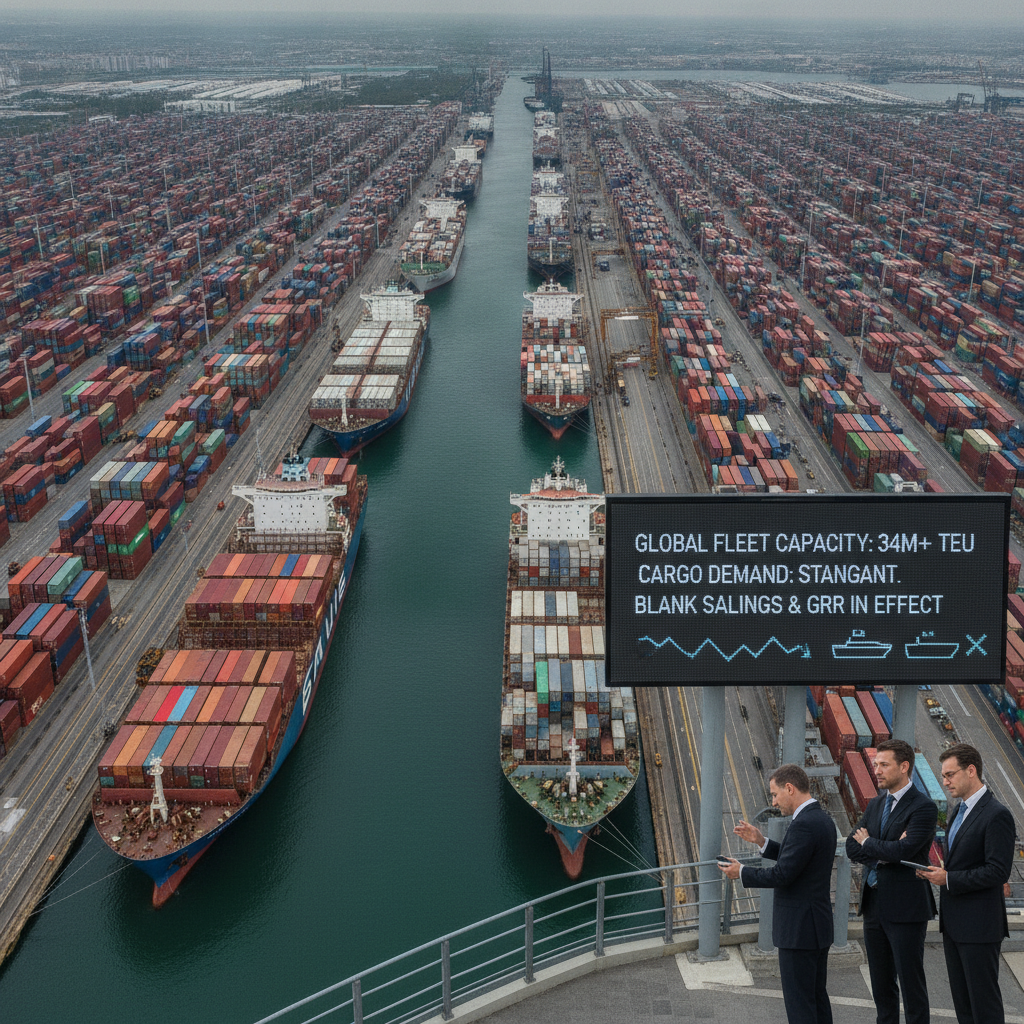
The global shipping industry is currently navigating a period of historic tonnage injection. Recent BIMCO data reveals that the world’s container fleet surpassed the 34 million TEU milestone in late 2026, adding a record 10 million TEU in just five and a half years. This aggressive global container fleet capacity expansion is fundamentally altering market dynamics, as new ship deliveries hit record highs while recycling activity remains remarkably low, with fewer than 300,000 TEU recycled over the same period.
Market Impacts of Global Container Fleet Capacity Expansion
This structural supply surplus is heavily impacting ocean freight economics. According to UNCTAD maritime trade data, global container fleet capacity expansion outpaces international cargo volume growth, creating sustained oversupply pressure across major open shipping markets. Consequently, mid-tier liner carriers face narrowing profit margins on core east-west trade lanes, a situation exacerbated by a 17.2% year-on-year increase in average fuel costs per container unit as reported by the Freightos Baltic Index.
Future Outlook for Global Container Fleet Capacity Expansion
To combat persistent spot rate depreciation stemming from this supply glut, major international liner carriers are coordinating stringent capacity management strategies. Shipping alliances are increasingly utilizing controlled blank sailings, route efficiency optimizations, and aggressive General Rate Restorations (GRR) to stabilize pricing levels. As the market heads toward 2027, logistics directors must adapt procurement strategies to navigate these dynamic off-peak pricing corrections.
References
Sources: BIMCO Container Fleet Capacity Report 2026 (https://www.bimco.org); UNCTAD Maritime Trade Data 2026; Alphaliner Fleet Monitoring 2026; JCtrans Freightos Baltic Index (FBX) 2025-2026 Analysis.