Can China NEV Export Logistics Overcome the 2026 RoRo Shortage?
The global shipping sector is confronting unprecedented bottlenecks as China’s booming electric vehicle production outpaces maritime infrastructure. In October 2026, automakers exported a record 582,000 passenger new energy vehicles, marking a 144.7% year-on-year surge. With 2025 NEV exports hitting 2.615 million units, the critical challenge for supply chain experts is whether China NEV Export Logistics can adapt to a severe roll-on/roll-off (RoRo) vessel shortage.
Surging Charter Rates and The Container Pivot
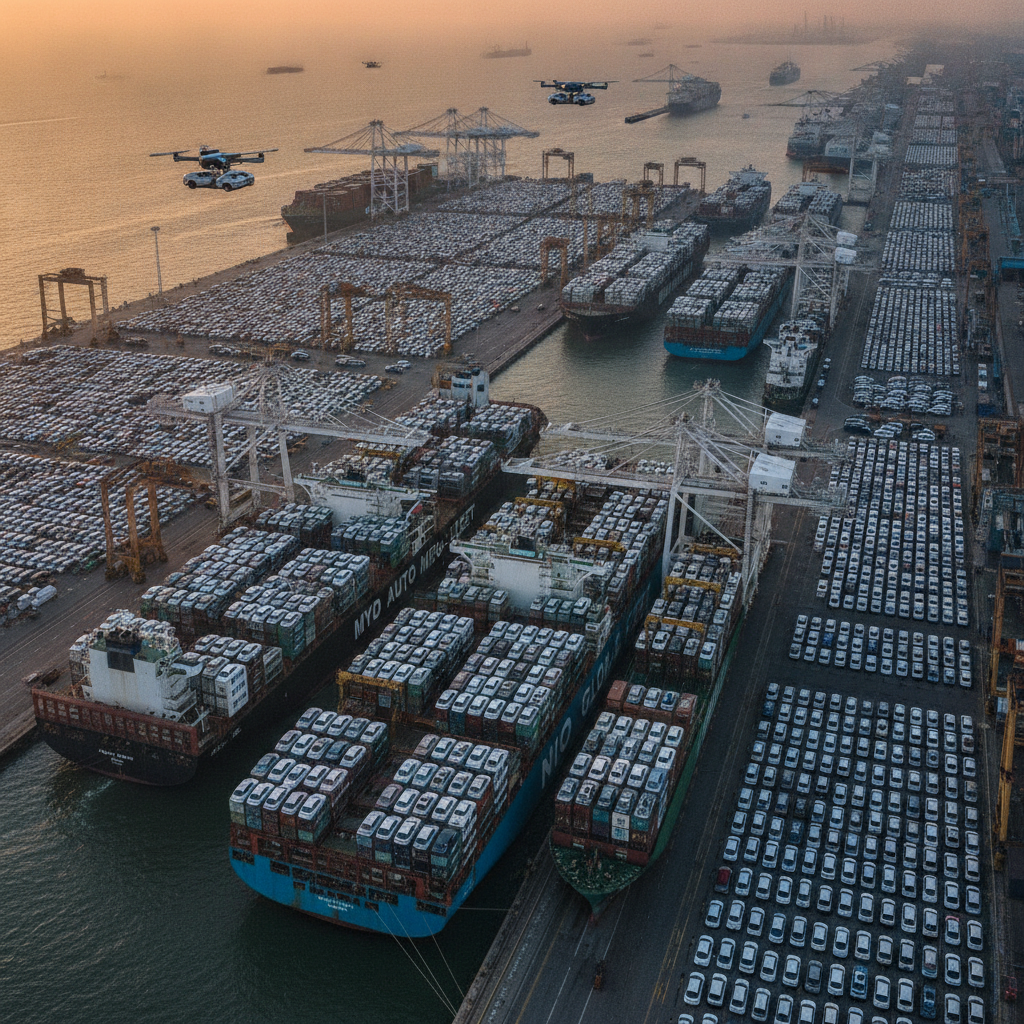
In 2026, charter rates for pure car and truck carriers surged by an astonishing 65%. Because specialized RoRo fleets departing Asia are operating at maximum utilization, logistics managers are forced to adapt. Currently, an estimated two to four million vehicles are exported annually via non-RoRo modalities, such as standard 20-foot and 40-foot shipping containers. While RoRo shipping remains cost-effective at $900 to $1,600 per mid-size car, container shipments cost between $1,400 and $2,600 but offer superior weather and handling protection for high-value vehicles.
Aggressive Fleet Expansion Strategies
To secure future supply chains, Chinese automotive and shipping conglomerates are rapidly transforming into ocean logistics providers. Industry giants are investing approximately $2.5 billion to construct twenty-one massive 11,000-CEU car carriers. Following the 2025 launch of the 9,200-vehicle capacity BYD SHENZHEN, major automakers plan to expand their maritime fleets significantly by 2029. Until these next-generation mega-ships are fully integrated into global service, industry experts must maintain agile routing strategies to sustain China NEV export logistics growth.
References
Logistics Great: Will China EV RoRo Export Capacity Overcome The 2026 Crisis? GlobalChinaEV: China NEV exports hit record 582,000. RoRo vs Container Shipping for Used EV Export 2026. Xinhua: China’s NEVs deliver global gains.