The State of IoT Freight Monitoring in 2026
As the global supply chain faces mounting pressures, IoT freight monitoring has evolved from a luxury to an operational necessity. Recent 2025 and 2026 industry insights reveal that advanced logistics technologies are fundamentally transforming how companies manage cargo visibility and condition tracking [1]. With global freight congestion costing economies billions—such as Australia’s estimated $25 billion annual loss, projected to hit $40 billion by 2030—logistics providers are rapidly adopting Internet of Things (IoT) solutions to mitigate inefficiencies [2].
Advancements in IoT Freight Monitoring
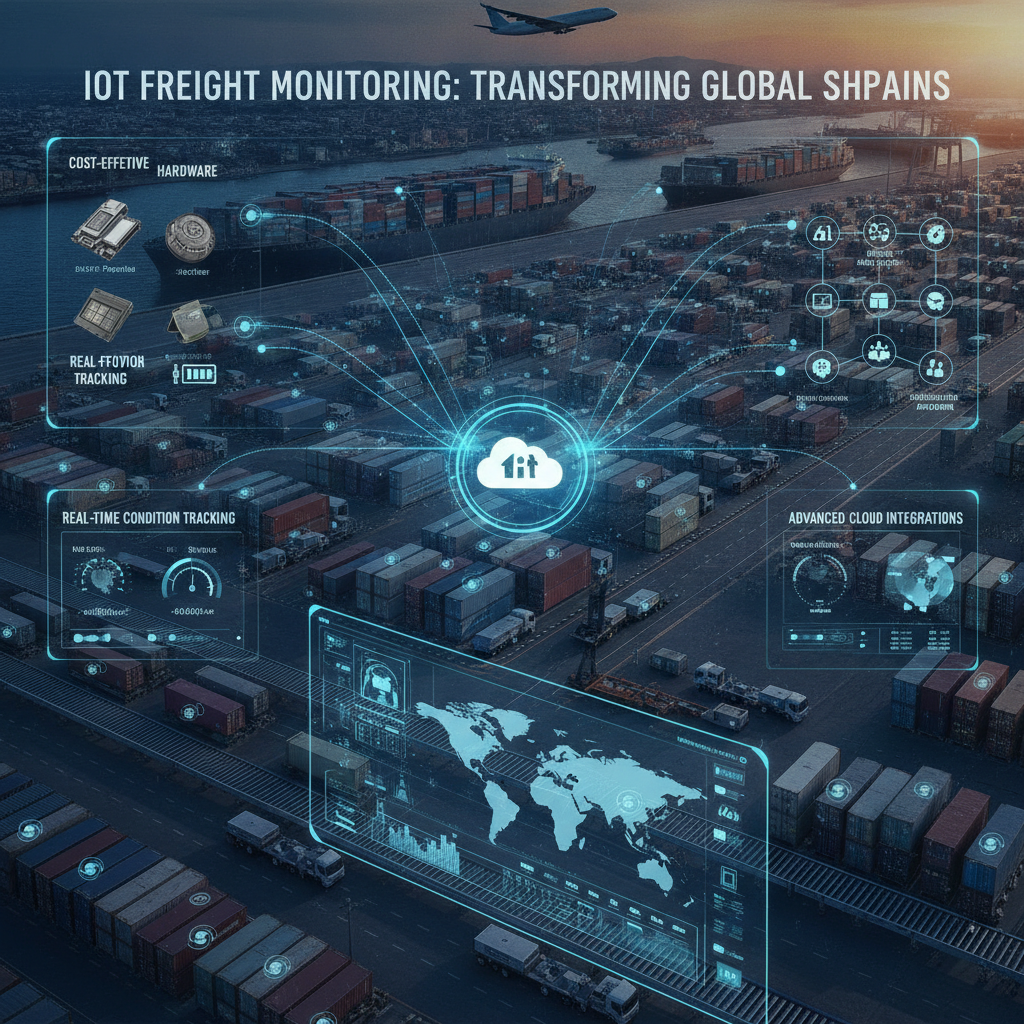
Today’s IoT freight monitoring systems provide unprecedented real-time intelligence for transport operators. Recent management consulting studies indicate that 52% of enterprises have increased their interest and investment in 5G and IoT infrastructure to accelerate their digital transformation [3]. These modern hardware solutions are specifically designed to overcome historical size, cost, and power limitations.
- Cost-Effective Hardware: Next-generation IoT sensors have become highly accessible, with large-scale unit production driving device costs down to approximately $50 per unit [2].
- Advanced Condition Tracking: Modern devices integrate microcontrollers, GNSS modules, and sensors for temperature, humidity, and shock, ensuring total cold chain integrity [1].
- Cloud Integration: Over-the-air management and seamless API integrations with existing Transportation Management Systems allow for real-time analytics and predictive alerts [4].
The Strategic Advantage of IoT Freight Monitoring
Implementing IoT freight monitoring directly addresses the fragmented nature of the global transport ecosystem. By relying on LTE cellular networks and onboard flash memory to retain data during network blackouts, these low-powered systems guarantee continuous supply chain visibility [2]. For logistics professionals, the transition to IoT-driven tracking translates to enhanced risk management, improved customer transparency, and a highly resilient operational framework.
References
[1] CII Tech Know (2026). The Role of IoT in Real-Time Freight Tracking and Monitoring.
[2] iMOVE CRC (2025). The Internet of Things and the tracking and monitoring of freight.
[3] Fiber Connect Council MENA. Delivering 5G to power the smart city of the future.
[4] ULS Freight (2026). The Future of Smart Logistics.