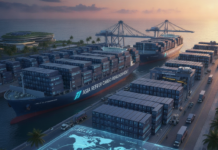
Analyzing Middle East Trade Disruptions and Route Diversions
The global maritime industry continues to grapple with severe challenges as Middle East Trade Disruptions fundamentally restructure shipping networks. Throughout 2025 and into late 2026, persistent geopolitical instability in the Red Sea and Gulf of Aden has forced logistics experts to rethink traditional routing strategies. Rather than treating these blockages as temporary hurdles, supply chain managers are now accepting extended transits as the operational default.
Recent industry analysis indicates that transpacific container freight rates are currently running 40% above pre-crisis baseline levels due to these ongoing Middle East Trade Disruptions. With major carriers systematically diverting vessels around the Cape of Good Hope, voyages between Asia and Europe have incurred an additional 10 to 14 days in transit time. This massive rerouting has severely absorbed fleet capacity across global shipping lanes, restricting swing tonnage and driving up operational bunker costs significantly.
Strategic Adjustments for Middle East Trade Disruptions
For logistics professionals, mitigating the economic fallout from Middle East Trade Disruptions requires moving far beyond traditional schedule planning. Freight forwarders are actively renegotiating long-term service contracts with Cape routing fully integrated and are restructuring inventory buffers to accommodate prolonged, unpredictable lead times. Key adaptation strategies now dominating the modern maritime sector include:
- Deploying multi-route contingencies to bypass volatile geopolitical chokepoints reliably.
- Increasing investments in regionalized supply chains and nearshoring logistics hubs.
- Utilizing advanced fuel efficiency analytics and automated navigation technologies to offset elevated bunker costs.
Ultimately, as this polycrisis environment continues, navigating these restricted maritime corridors demands unprecedented agility and strategic foresight from global shipping experts.
References
Slimstock, Super El Niño 2026: Is your food supply chain ready for the storm?, August 2026.
Suaid Global, Red Sea Shipping Crisis 2026: Impact on Your Supply Chain, September 2026.
The Cooperative, Red Sea Shipping Disruption 2026: Lessons for Forwarders, June 2026.