The Rise of AI Supply Chain Assistants in 2026
The global logistics landscape is rapidly moving from reactive dashboards to autonomous operational models. At the forefront of this shift are AI Supply Chain Assistants, which have evolved into sophisticated, agentic decision-makers. The global AI in supply chain sector is projected to surge from $7.3 billion in 2024 to $63.8 billion by 2030, representing a massive 42.7% CAGR. For shipping experts and procurement managers, these intelligent assistants are now critical infrastructure for mitigating disruptions and optimizing complex freight flows.
How AI Supply Chain Assistants Drive Automation
Unlike traditional rule-based software, modern AI Supply Chain Assistants possess true agency, meaning they can perceive incoming data, reason through scenarios, and execute actions autonomously. A recent industry study revealed that 64% of Chief Supply Chain Officers state generative AI is completely transforming their workflows. Furthermore, Gartner predicts that by 2028, 33% of enterprise software applications will include agentic AI. This evolution empowers logistics professionals to shift from manual coordination to strategic oversight. Key capabilities of these systems include:
- Real-time Exception Management: Automatically detecting carrier delays and proposing alternate routing mitigations.
- Dynamic Inventory Allocation: Analyzing SKU levels across global warehouses to balance cost and service-level trade-offs.
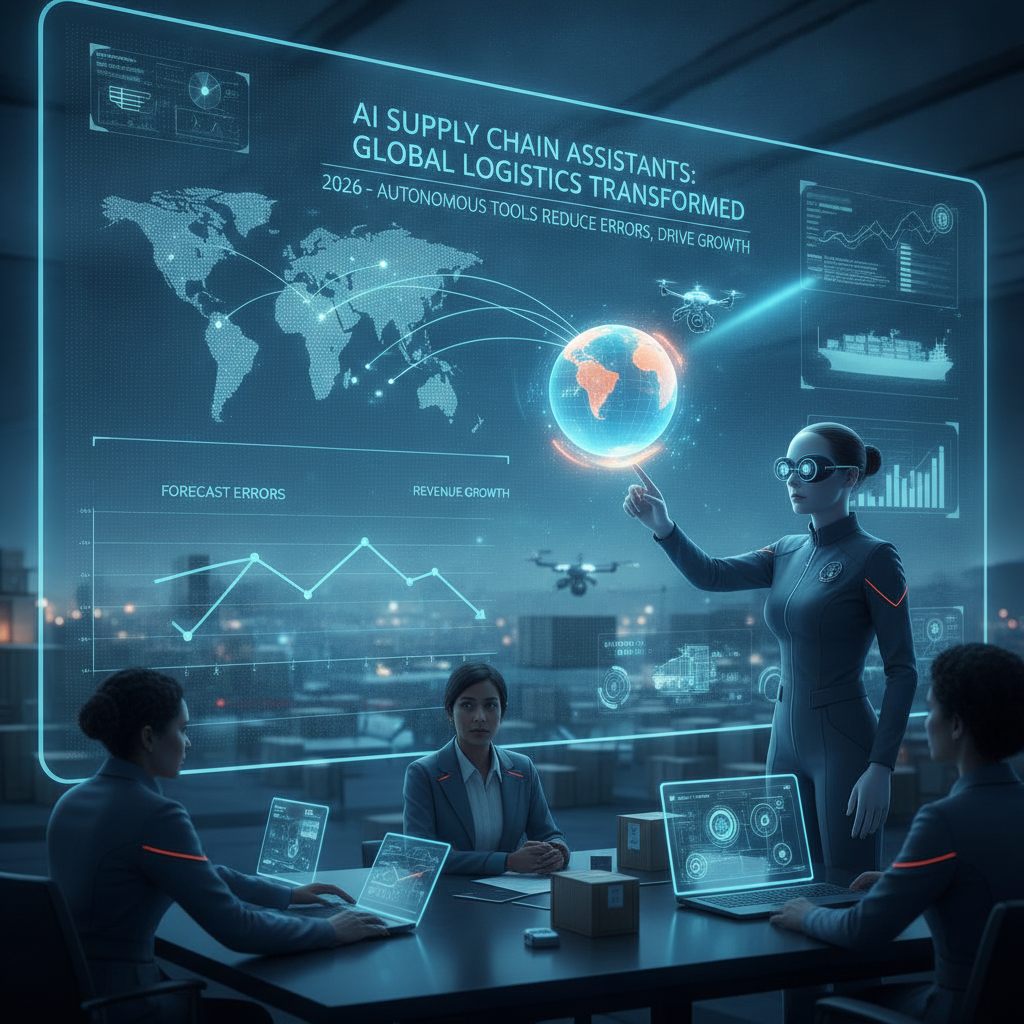
- Predictive Demand Sensing: Utilizing proprietary machine learning models to reduce forecast errors by up to 30-40%.
Financial Impact for Shipping Experts
The financial impact of deploying AI Supply Chain Assistants is undeniable. Organizations that heavily invest in AI-driven supply chain operations report revenue growth 61% greater than their industry peers. By consolidating historical freight data and real-time trade variables, these intelligent systems serve as real-time decisioning engines that significantly reduce logistics spend. As global manufacturing complexity rises, logistics leaders must rely on AI to maintain sustainable and resilient supply chains.
References
- Canvas Business Model: Brief History of e2open Company
- IBM: AI Agents in Supply Chain
- SAP: Supply Chain Management Planning Assistant
- IBM: The intuitive, AI-powered supply chain
- Strategic Market Research: AI In Supply Chain Market 2026