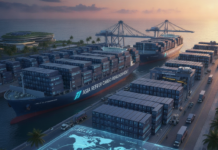
Navigating the Extended Peak Season: A New Reality
The traditional shipping calendar has been fundamentally altered. In 2026, logistics professionals are grappling with a persistent Extended Peak Season that has redefined global import cycles and strained network capacities.
Drivers Behind the Extended Peak Season Surge
Unlike previous years, the current surge is not a temporary spike but a prolonged plateau. Recent data from the National Retail Federation’s Global Port Tracker projected September 2026 to handle 2.31 million TEUs, marking a 9.6% year-over-year increase and establishing it as the busiest month of the year. Several key factors are driving this Extended Peak Season:
- Geopolitical and Route Disruptions: Ongoing Red Sea diversions around the Cape of Good Hope and structural delays at the Panama Canal have extended transit times.
- E-commerce Capacity Monopolization: Major Asian e-commerce platforms have heavily reserved capacity, pushing global air freight rates up by 26% in September.
- Preemptive Inventory Loading: Shippers have front-loaded cargo to mitigate risks from inflation, regional conflicts, and anticipated port labor disputes.
Impact of an Extended Peak Season on Port Congestion
This Extended Peak Season has placed immense pressure on infrastructure. According to recent shipping data, global port congestion approached a staggering 4 million TEUs in late September 2026, profoundly reshaping container shipping capacity and availability. Furthermore, air cargo networks out of Asia experienced nearly 90% utilization during the summer, leaving limited spot capacity for last-minute freight.
Strategic Adaptation for Shippers
To survive this flattened but elevated demand curve, supply chain leaders must pivot from seasonal agility to sustained volume management. Building flexible transpacific routings and integrating predictive AI for demand forecasting are no longer optional strategies but essential survival tools for the modern logistics landscape.
References
MHL News, Import Cargo’s Peak Season Not Over Yet, 2026. FreightWaves, Air cargo sector rides elongated peak season. DHL Global Forwarding Market Update, 2026. Cargo Facts, Air Cargo Traffic, 2026.