How Connected Trade Corridors Are Rewiring 2026 Supply Chains
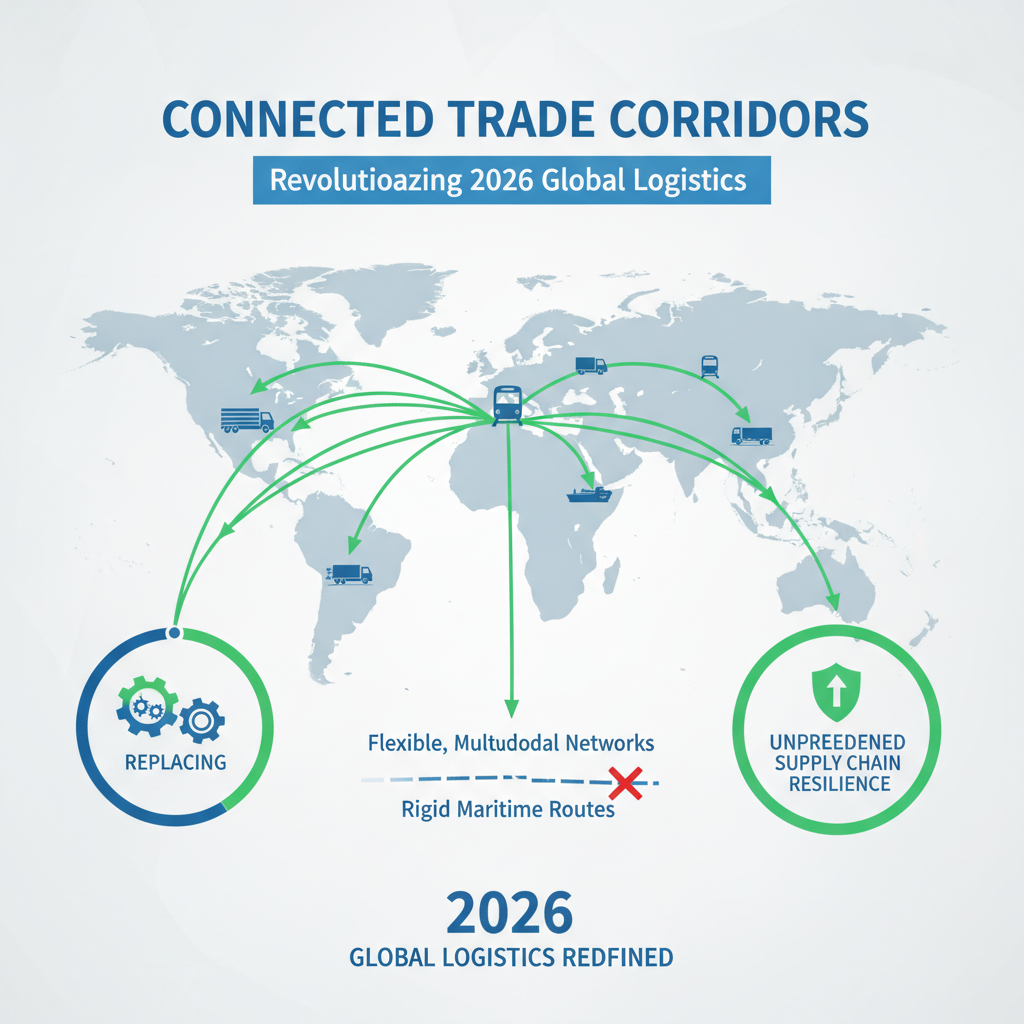
As the global logistics sector faces ongoing geopolitical friction and climate-related disruptions, the industry is moving away from traditional, rigid transit routes. According to DP World’s late-2026 whitepaper, Navigating the Future of Maritime Trade, the solution lies in building Connected Trade Corridors. This emerging framework shifts the focus from purely cost-driven efficiency to supply chain resilience and routing optionality.
The Shift Toward Flexible Networks
Currently, more than 80% of global merchandise trade by volume moves by sea, representing approximately $14 trillion in containerized goods. However, structural shifts in global manufacturing are demanding smarter logistics infrastructure. Connected Trade Corridors integrate deep-sea shipping, short-sea feeder networks, inland waterways, and digital intelligence into a cohesive ecosystem. By linking these transport modes, logistics providers can quickly activate alternative pathways when established maritime chokepoints face pressure.
Data Driving the 2026 Outlook
Despite structural disruptions, industry leaders remain highly optimistic about international commerce. The 2026 Global Trade Observatory report reveals compelling statistics driving the adoption of Connected Trade Corridors:
- Resilient Growth: A staggering 94% of over 3,500 surveyed supply chain executives expect 2026 trade growth to match or exceed 2025 levels.
- South-South Expansion: Merchandise exports between developing economies surged from $500 billion in 1995 to $8.8 trillion by 2025, heavily influencing new corridor developments.
- Multimodal Integration: Corridors combining rail, road, and port infrastructure are creating vital redundancy for emerging hubs in Southeast Asia, the Middle East, and Latin America.
The Future of Logistics
Moving forward, the success of Connected Trade Corridors will rely on predictive data and interoperable digital customs platforms. By embedding flexibility into their operations, global shipping leaders are successfully transforming vulnerabilities into resilient trade advantages.
References
- DP World: The future of maritime trade
- SMI Digital: Resilience of maritime trade
- DP World: Global Disruption Puts Resilience In Focus
- Port Technology International: DP World warns trade corridors
- DP World: Regional Shipping Routes Gain Importance
- Logistics Update Africa: Middle East trade resilience