
Asia-Europe Shipping Recalibration: The 2026 Maritime Shift
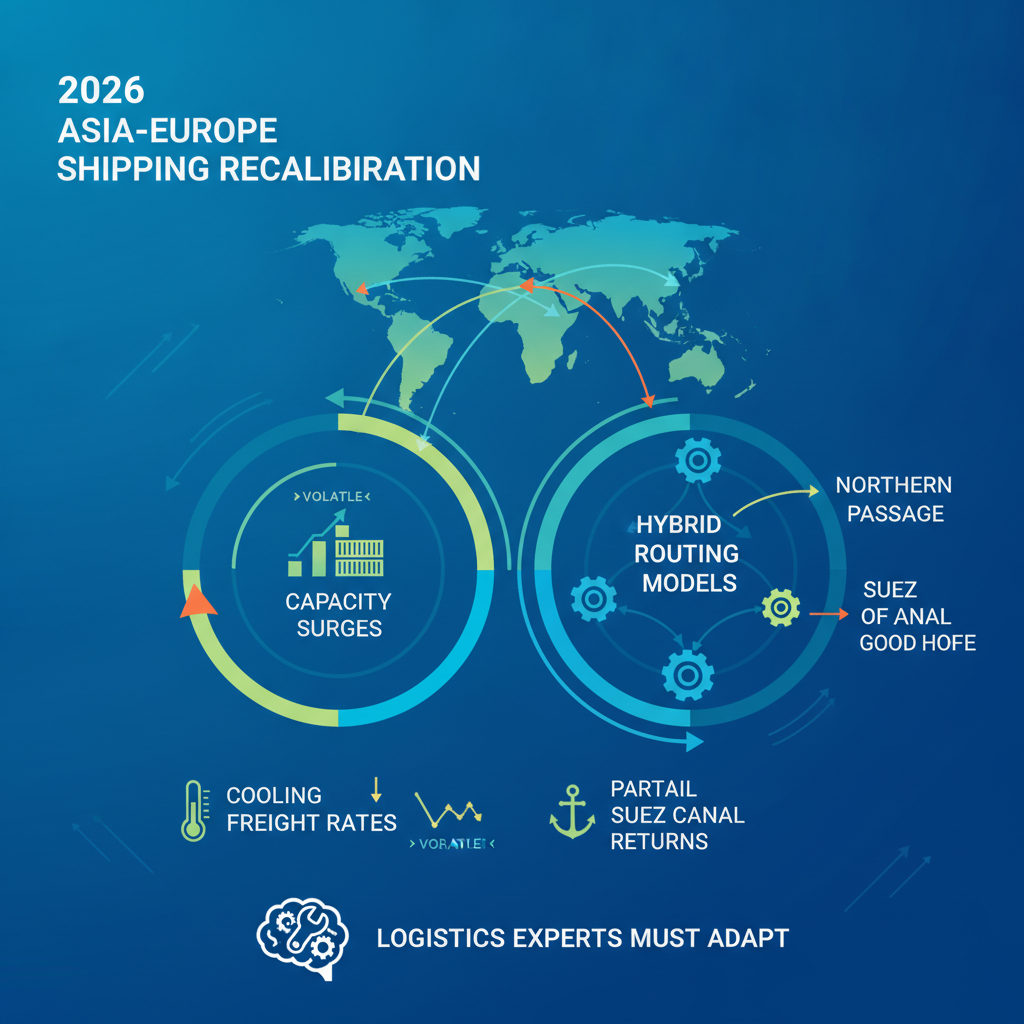
The global logistics sector is experiencing a major Asia-Europe Shipping Recalibration as carriers adapt to volatile trade environments in late 2026. After prolonged diversions around the Cape of Good Hope, ocean carriers are executing limited returns to the Suez Canal. This shift alters transit times, injects new capacity, and forces experts to rethink inventory strategies.
Capacity Surges in the Asia-Europe Shipping Recalibration
As vessels adjust to hybrid routing, the market is absorbing massive capacity injections. During the 2026 Golden Week, Asia-North Europe trade experienced a 27% year-on-year capacity surge, reaching 1.50 million TEUs. This influx, alongside easing port congestion, triggered a softening in costs. September 2026 Drewry data indicates rates from Shanghai to Rotterdam dropped to $3,485 per FEU, cooling off from previous highs.
Strategic Priorities for Logistics Leaders
To navigate this evolving market, logistics professionals must adopt agile frameworks. Critical operational adjustments include:
- Monitoring schedules closely, as Cape-Suez routing volatility increases late voyage cancellations.
- Recalibrating transit expectations, given that limited Red Sea passages account for only a small fraction of total planned services.
- Deploying multimodal contingencies, such as China-Europe rail or Dubai sea-air networks, to bypass chokepoints.
While freight rates stabilize, structural volatility demands constant risk management. Shippers must prioritize flexibility to thrive in this recalibrated era.
References
- Blooming Trade Data, Sept 2026.
- Port Technology, Sept 2026.
- Suaid Global, Sept 2026.
- Drewry Maritime Research, Sept 2026.