
Are Carrier Blank Sailing Strategies Reshaping Ocean Freight?
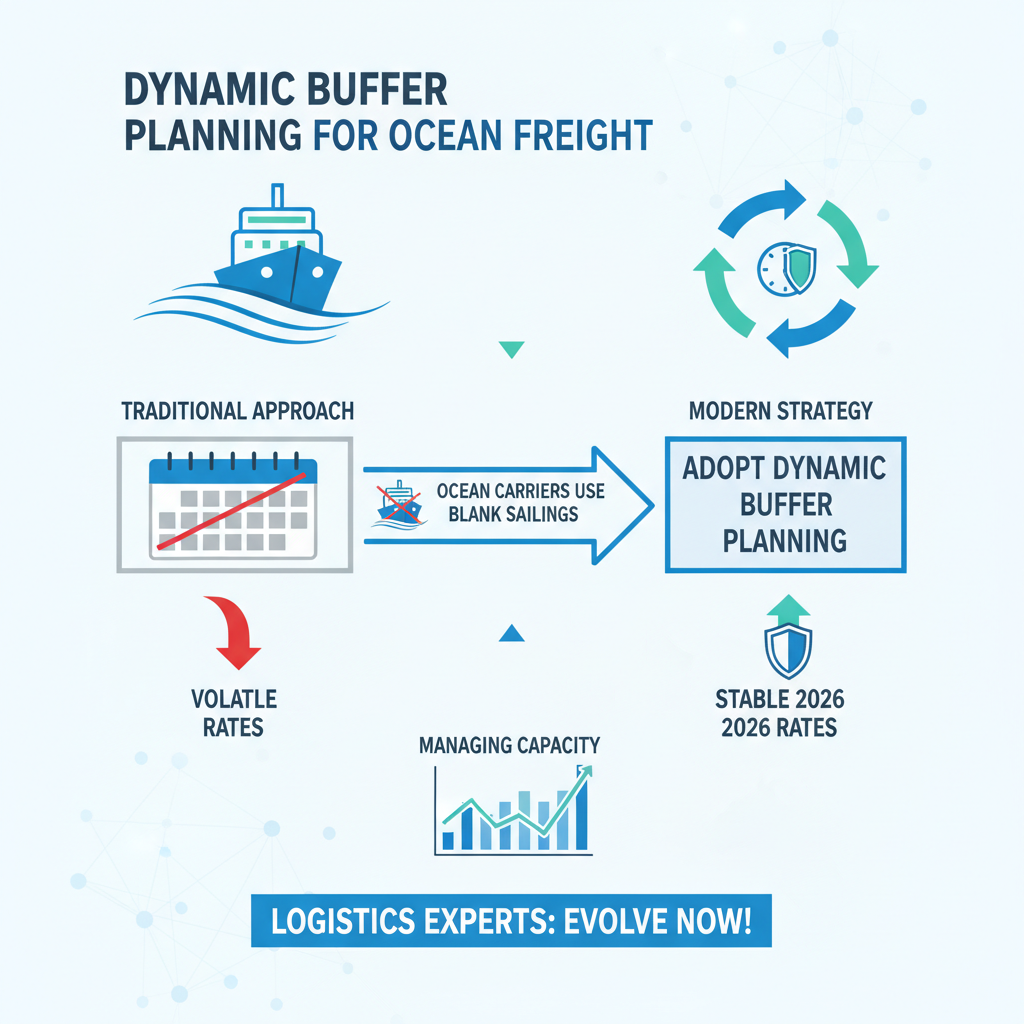
In the volatile landscape of 2025 and 2026, carrier blank sailing strategies have evolved into permanent market tools. Carriers increasingly omit scheduled voyages to manage capacity against fluctuating demand and geopolitical tensions. Data from 2025 indicated a 35% year-over-year increase in blank sailings, driven by Red Sea rerouting and port congestion. This aggressive trend continues in 2026, forcing logistics professionals to rethink container booking protocols.
The Dual Nature of Carrier Blank Sailing Strategies
Historically, alliances used sailing cancellations defensively to survive low freight rates. Today, modern carrier blank sailing strategies serve both defensive and offensive purposes. By proactively pulling capacity, carriers stabilize spot rates and offset structural oversupply from new vessel deliveries. In late September 2026, Drewry tracked 58 canceled sailings across major East-West trades, an 8% cancellation rate out of 712 planned voyages. This capacity withdrawal keeps freight rates profitable despite weaker trade forecasts.
Adapting to Carrier Blank Sailing Strategies in 2026
Fixed-timetable scheduling is no longer viable for freight forwarders. To navigate erratic carrier blank sailing strategies, logistics experts must adopt dynamic resilience plans. Relying on static schedules leads to terminal demurrage costs and deteriorated shipper retention.
- Implement intelligent buffer planning to absorb transit delays.
- Diversify carrier alliances and explore alternate port routes.
- Utilize predictive tracking to anticipate string cancellations.
References
- FreightAmigo: Mitigation Strategies 2025
- Drewry: Cancelled Sailings Tracker 2026
- JCtrans: Scheduling around volatile windows
- Market Insights: Strategies behind blank sailings