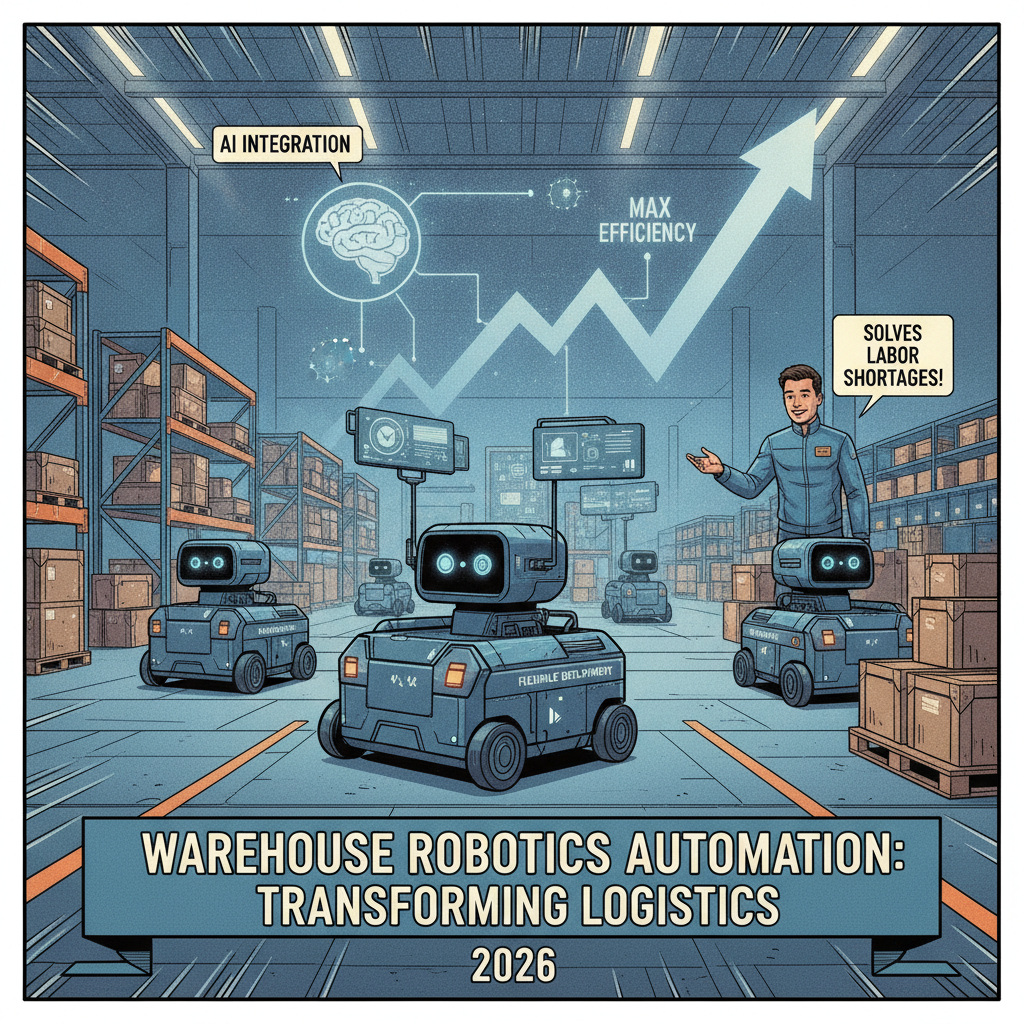
The global supply chain is undergoing a massive operational shift, and Warehouse Robotics Automation stands at the center of this transformation. As e-commerce demand stabilizes and labor shortages persist, logistics leaders are pivoting from expanding physical footprints to maximizing internal efficiency through advanced autonomous technologies.
The Data Behind the Robotic Shift
Recent market analysis reveals that the Warehouse Robotics Automation sector is projected to grow from roughly $32.21 billion in 2025 to over $69.03 billion by 2035. This surge is driven by a recognized need for technological resilience. According to a 2026 industry census, 55% of logistics occupiers identify warehouse robotics and automation as a primary investment area. Current operations highlight several dominant trends:
- AMR Expansion: Autonomous Mobile Robots are expected to outpace other categories, expanding at a 19.4% CAGR through 2035 due to flexible navigation capabilities.
- AI Integration: Facilities leveraging AI within automated systems report 20-40% faster pick rates and significant reductions in logistics costs.
- Collaborative Workflows: Advanced robotics now work synergistically alongside human employees to improve workplace safety.
Bridging the Hardware-Software Gap
Adding robots alone does not guarantee warehouse efficiency. The true value of Warehouse Robotics Automation in 2026 lies in software integration. Modern Warehouse Execution Systems (WES) serve as the operational connective tissue, coordinating real-time tasks across human labor, automated storage, and AI-driven robots. By prioritizing modular automation over rigid setups, logistics centers can dynamically respond to market volatility.
Reference Materials
1. Market Research Future (2026) – Warehouse Robotics Automation Market Size. 2. Tritax Big Box (2026) – Future Space Census. 3. Manhattan Associates (2025) – Navigating the Future of Warehouse Robotics.