Why ASEAN Multi-Shoring Logistics is Shaping 2026 Supply Chains
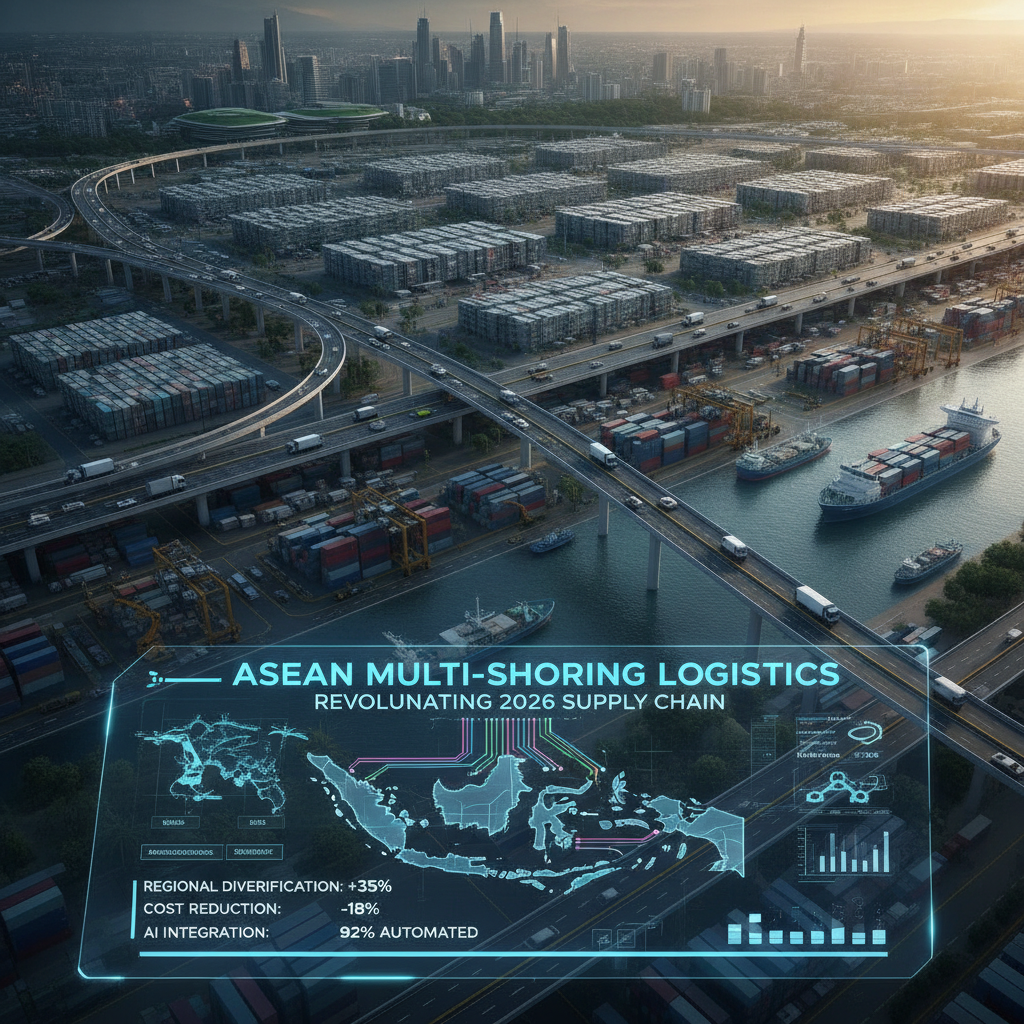
As global supply chain restructuring accelerates, ASEAN Multi-Shoring Logistics has emerged as the critical operational blueprint for shipping and logistics experts. Moving beyond traditional single-node strategies, multinational enterprises are now aggressively spreading production across multiple Southeast Asian geographies to mitigate concentration risks. Recent industry reports reveal that 73% of companies are advancing dual-sourcing capabilities, while 60% are actively regionalizing their supply networks across the Asia-Pacific.
Key Drivers of ASEAN Multi-Shoring Logistics
The transition toward multi-shoring is heavily supported by significant technological and infrastructural investments. A 2025 industry brief highlighted that 99.5% of Asia-Pacific supply chain leaders identify visibility as a top strategic priority, utilizing multi-shoring to expand supply bases and neutralize geopolitical disruptions. Furthermore, executing strategic facility relocations within ASEAN can yield an 18-22% reduction in overall supply chain costs within 18 months. Key catalysts driving this logistics transformation include:
- Technological Integration: High adoption of AI-driven supply chain orchestration for real-time visibility across complex regional routing lanes.
- Targeted Manufacturing Hubs: Thailand’s rapid push to become the EV manufacturing epicenter by 2025, heavily supported by multi-user logistics networks.
- Strategic Connectivity: Malaysia’s role as the 2025 ASEAN Chair accelerates regional integration, offering a highly conducive ecosystem for cross-border trade.
The Future of ASEAN Multi-Shoring Logistics
Ultimately, successfully navigating ASEAN Multi-Shoring Logistics requires more than simply securing warehouse space in different countries. It demands sophisticated supplier management, rigorous regulatory compliance, and fully integrated multimodal transport systems to avoid single-point-of-failure vulnerabilities. As shipping complexities increase, logistics providers who master these multi-node regional networks will secure long-term competitive advantages.
References
Nearshoring, Reshoring, Friendshoring – MASEconomics (April 2026) | Multi-Shoring: How To Build Supply Chain Resilience – FedEx Japan (Sept 2026) | AI Supply Chains Boost ANZ Resilience: IDC Report (May 2025) | Factory Relocation Service Market Research Report 2034 – Dataintelo (May 2026) | Navigating Thailand’s fast-evolving landscape – DHL (March 2026) | MIDA Malaysian Investment Development Authority (June 2026).