The Accelerating Shift in Freight Decarbonization Technologies
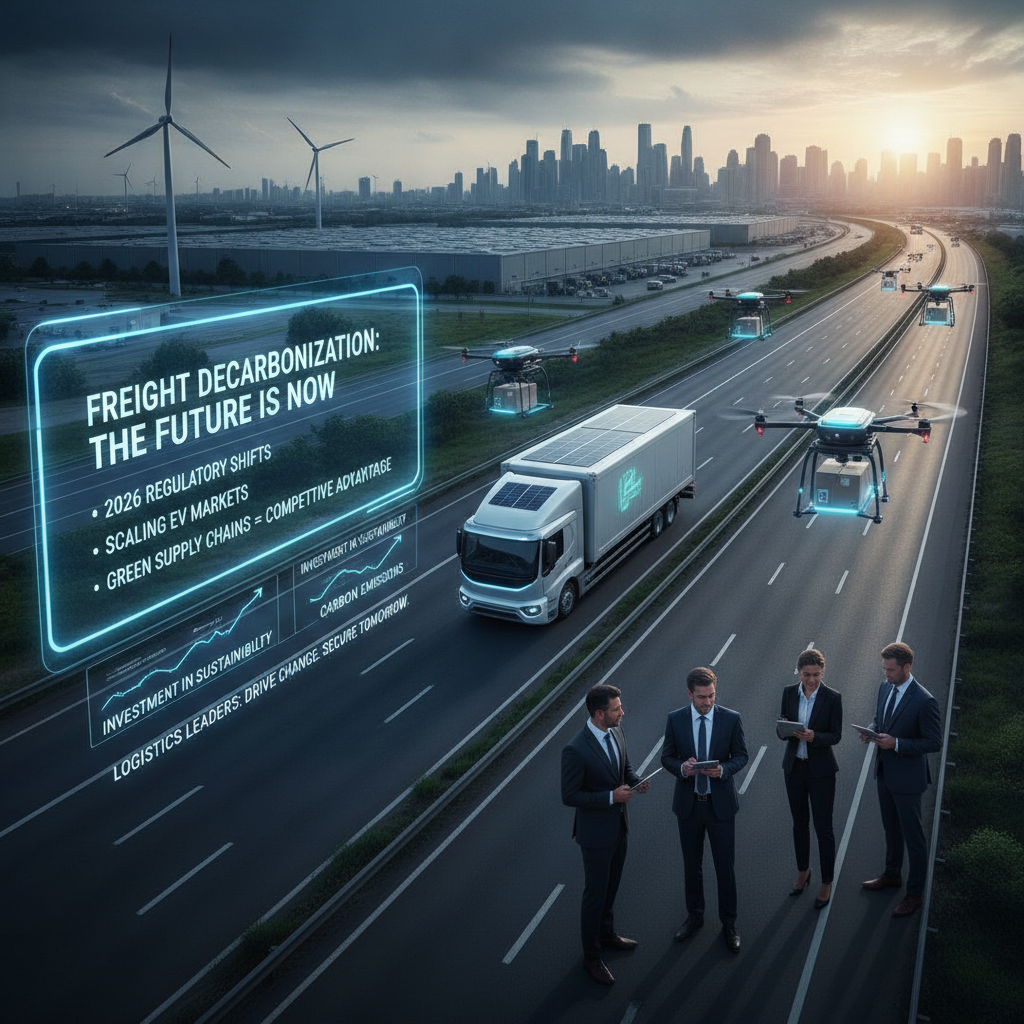
The global logistics sector is rapidly transitioning from pilot programs to scalable network solutions. Industry experts are already defining 2026 as the era of the electric corridor, driven by aggressive investments in heavy-duty electric vehicles and alternative maritime fuels. Market data reveals that by late 2025, new energy heavy-duty vehicles captured an annual average market share of 29% in dominant manufacturing markets like China, crossing the critical threshold required for self-sustaining industry adoption. This milestone indicates that the integration of Freight Decarbonization Technologies is no longer speculative but operationally inevitable.
Maritime Regulatory Pressures and Innovations
In the shipping sector, regulatory frameworks are forcing rapid technological adaptation. Under the European Union’s Emissions Trading System, vessel operators are mandated to surrender allowances for 70% of reported emissions in 2026, scaling to 100% by 2027. This regulatory timeline has accelerated the deployment of several core Freight Decarbonization Technologies.
- Book-and-Claim Systems: These frameworks are enabling global logistics companies to access verified lower-carbon fuels without relying on direct physical supply chains.
- Alternative Fuels: There is a significant upscaling in the adoption of green methanol and port-side clean energy infrastructure.
- Electric Highway Pantograph Systems (EHPS): Emerging as highly eco-efficient solutions for long-haul road transport, these systems can slash operational carbon dioxide emissions by up to 90% compared to diesel counterparts.
The Economic Imperative for Logistics Leaders
The global sustainable logistics market is expanding exponentially, with the Asia-Pacific region alone reaching an estimated USD 544 billion in 2025. Logistics providers are aggressively leveraging Freight Decarbonization Technologies to secure premium green freight contracts. As the window for gradual transition closes, companies must pivot toward systemic decarbonization strategies, combining fleet electrification, strategic corridor infrastructure, and carbon-optimized routing to maintain market dominance.
References
International Journal of Advanced Research in Science, Communication and Technology, Electric Highway with Pantograph System.
Sustainable Freight Centre, Freight Decarbonization 2026: The Year of the Electric Corridor.
Shell Global, Freight decarbonization needs demand, not just molecules, April 2026.
GEODIS, FuelEU Maritime: Transforming Shipping to Achieve Decarbonization.
Global Sustainable Logistics Market Share, Companies & Trends Report 2026-2031.