
How Are AI-Powered Warehouse Robotics Reshaping 2026 Logistics?
The logistics landscape is rapidly evolving, and AI-Powered Warehouse Robotics are at the forefront. As global e-commerce volumes approach a projected $6.88 trillion in 2026, supply chain experts face immense pressure to optimize fulfillment. To combat labor shortages, enterprises now treat intelligent automation as a foundational necessity.
Market Growth for AI-Powered Warehouse Robotics
The financial momentum behind these autonomous solutions is undeniable. As of August 2026, the global warehouse robotics AI market reached an estimated $17.8 billion, projecting a robust climb toward $45.7 billion by 2034. Recent developments highlight this surge; in March 2026, Geek+ secured a $100 million investment to expand its automated deployments. Additionally, automation leaders like Symbotic have achieved market caps exceeding $31 billion.
Operational Advantages of AI-Powered Warehouse Robotics
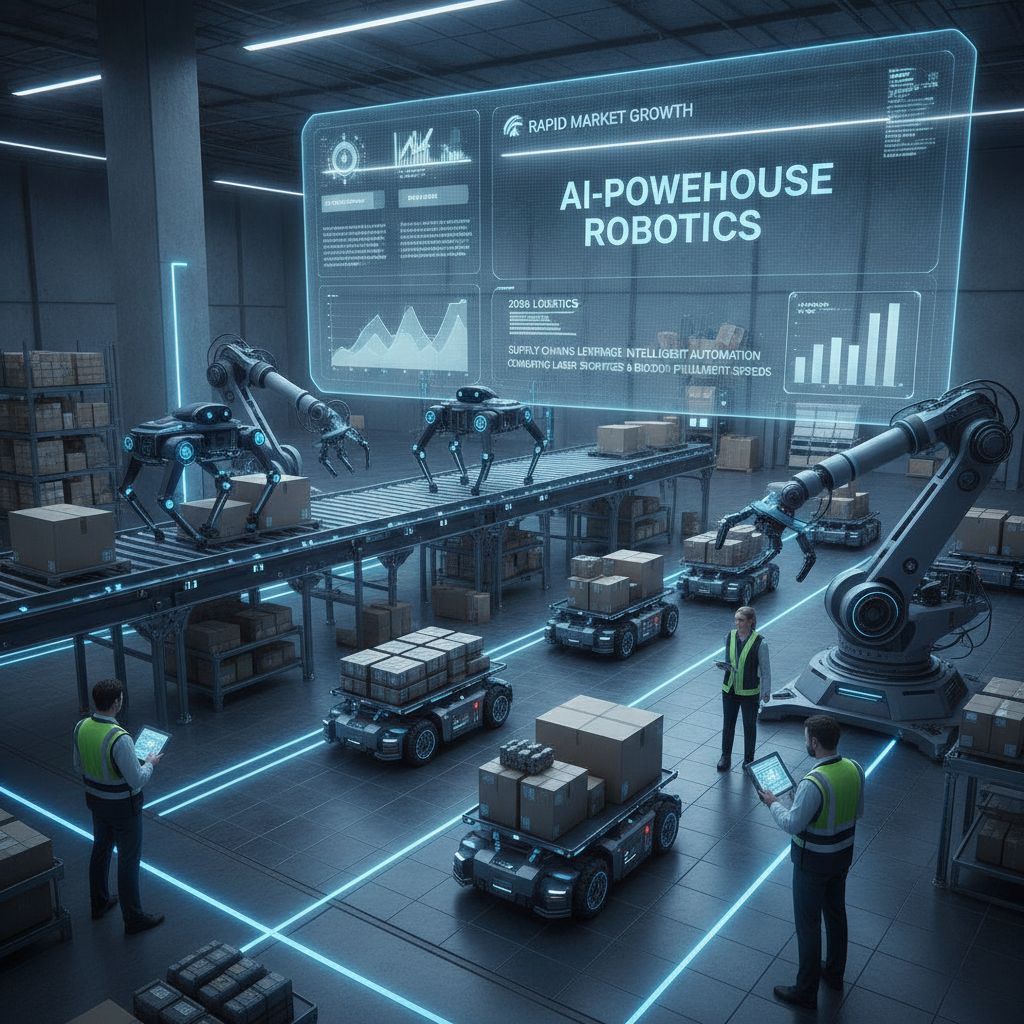
Modern facilities are transitioning to proactive, AI-driven resilience. By deploying autonomous mobile robots (AMRs) and smart sortation systems, logistics providers unlock vital performance enhancements. Key benefits include:
- Productivity: AI-coordinated swarms accelerate order fulfillment rates by up to 300%.
- Labor Optimization: Operators report a 30% to 40% reduction in manual labor costs.
- Rapid ROI: Distribution centers achieve capital payback in just 8 to 18 months.
In 2026, embracing AI-Powered Warehouse Robotics is the definitive standard for remaining competitive.
References
- Landbase (2026) – 13 Fastest Growing Warehouse Automation Tech Companies
- Straits Research (2026) – Sortation System Market Size
- Hvac Design (2026) – AI-Powered Robotics for Warehouses Guide