
State-Owned Maritime Infrastructure Security: Navigating 2026 Risks
For logistics and shipping experts, the landscape of State-Owned Maritime Infrastructure Security is rapidly evolving due to unprecedented cyber threats. The integration of Information Technology (IT) with Operational Technology (OT) has inadvertently exposed legacy maritime systems to sophisticated vulnerabilities. Recent 2026 industry intelligence reveals a critical paradigm shift, requiring immediate strategic responses from port authorities and fleet operators worldwide.
The Alarming Rise in OT and Ransomware Attacks
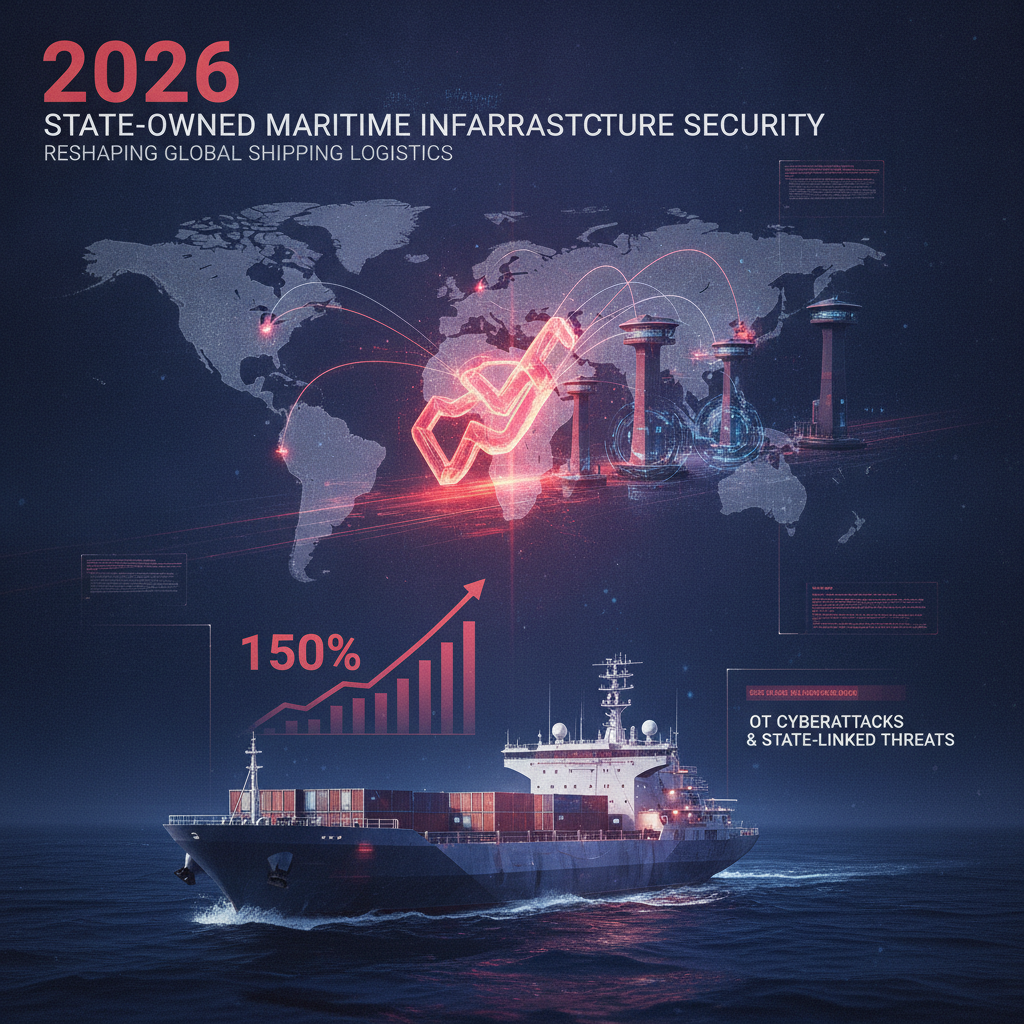
State-Owned Maritime Infrastructure Security is currently facing a massive surge in cyber incidents, particularly targeting operational technology. A March 2026 cybersecurity report identified a staggering 150% increase in maritime OT cyberattacks over the previous year. Hackers are no longer just targeting IT gateways; they are actively exploiting programmable logic controllers and interconnected edge devices.
- Ransomware now accounts for 87% of these OT-driven maritime cyberattacks.
- GPS spoofing incidents have surged dramatically, affecting up to 40,000 vessels daily.
- AI-driven autonomous threat discovery is accelerating the exploitation of zero-day vulnerabilities.
State-Sponsored Threats to State-Owned Maritime Infrastructure Security
Geopolitical tensions have transformed state-owned ports into primary targets for Advanced Persistent Threats (APTs). A recent NATO Cooperative Cyber Defence Centre of Excellence (CCDCOE) policy brief warned of high-frequency attacks on critical port facilities. These attacks, largely attributed to state-linked actors, focus heavily on continuous espionage, operational disruption, and strategic pre-positioning for future sabotage.
- Espionage campaigns frequently target access control and vessel traffic management systems.
- Approximately 80% of global trade flows through these increasingly targeted maritime nodes.
- Experts emphasize the urgent need for zero-trust network architectures and sector-specific threat intelligence sharing.
Strategic Path Forward for Logistics Leaders
Safeguarding state-owned port networks requires transitioning from reactive patching to proactive resilience. Fleet managers and logistics professionals must champion strict network segmentation and rapid anomaly detection within complex port ecosystems. Prioritizing engineering-grade security solutions is no longer optional for sustaining the stability of global supply chains.
References
NATO CCDCOE Policy Brief (https://ccdcoe.org/)
Silobreaker Threat Intelligence Report
Cydome 2026 Maritime Cybersecurity Report (https://industrialcyber.co/)