
Why Are Unseasonal Freight Import Volume Surges Hitting 2026?
The global logistics sector is currently grappling with unprecedented disruptions as the traditional peak shipping calendar is fundamentally rewritten. Most notably, unseasonal freight import volume surges are redefining supply chain capacity strategies for the second half of 2026. Rather than experiencing the typical post-summer cooldown, import levels are shattering expectations, forcing forwarders and shippers to aggressively adapt.
Understanding Unseasonal Freight Import Volume Surges
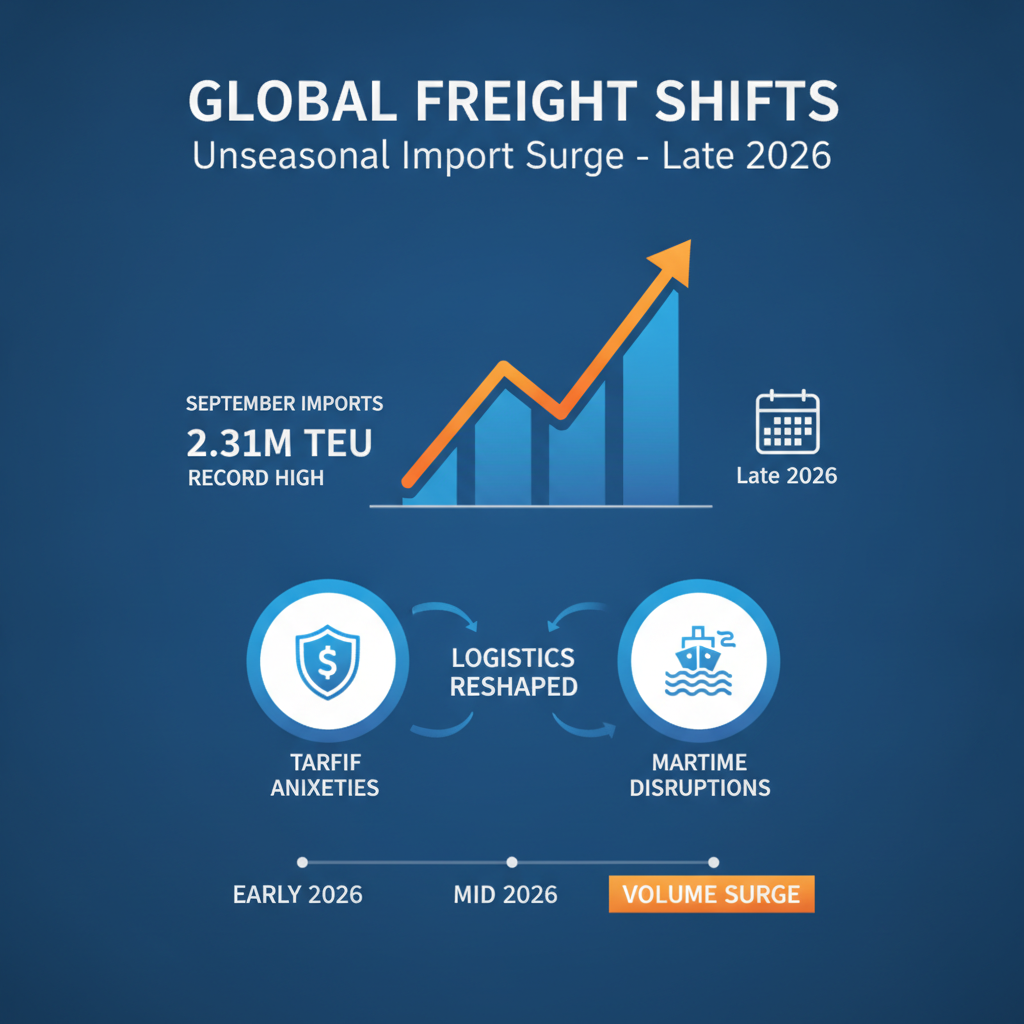
Recent data reveals a staggering extension of the 2026 peak season. According to the September 2026 Global Port Tracker report by the National Retail Federation and Hackett Associates, September imports are forecast to hit a record 2.31 million Twenty-Foot Equivalent Units (TEU). This represents a 9.6% year-over-year increase, overtaking May’s 2.24 million TEU to become the highest-volume month of the year. Such unseasonal freight import volume surges are catching many industry professionals off-guard, particularly as domestic trucking costs surged by 17.3% year-over-year by mid-2026 due to severe capacity constraints.
Drivers Behind Unseasonal Freight Import Volume Surges
Several compounding macroeconomic factors are driving these elevated container flows. Industry experts point to a convergence of geopolitical volatility, environmental factors, and surprisingly stubborn consumer demand.
- Tariff Anxiety: Shippers aggressively front-loaded ocean cargo to outpace looming U.S.-China tariff deadlines and emerging North American trade policies.
- Maritime Disruptions: Persistent vessel delays from severe weather in China and rerouting away from the Panama Canal have pushed massive import waves into the early fall.
- Consumer Resilience: Despite high inflation and rising fuel prices, resilient retail spending continues to mandate heavy inventory replenishment.
For logistics leaders, navigating this high-pressure environment requires a complete departure from traditional forecasting strategies. The market demands agile routing, AI-enabled capacity planning, and diversified sourcing to mitigate the downstream ripples of these historic volume spikes.
References
1. DataPortuaria, September Imports Surge to 2.31M TEU as U.S. Peak Season Extends Longer Than Expected (September 2026).
2. Westgate Global Logistics, Mid-Year 2026 Freight Industry Insights (June 2026).
3. Logistics Management, September could pace all 2026 U.S.-bound import volumes, reports Port Tracker (September 2026).