
Introduction to the 2026 Market Surge
For logistics professionals navigating the complex global shipping environment, understanding the trajectory of Trans-Pacific ocean freight rates is critical for late 2026 planning. In August 2026, the market is experiencing a significant two-speed dynamic. While Asia-Europe trade lanes face downward pressure, Trans-Pacific ocean freight rates are surging due to resilient U.S. import demand, persistent geopolitical disruptions, and aggressive capacity management by major shipping alliances.
Key Drivers of Trans-Pacific Ocean Freight Rates
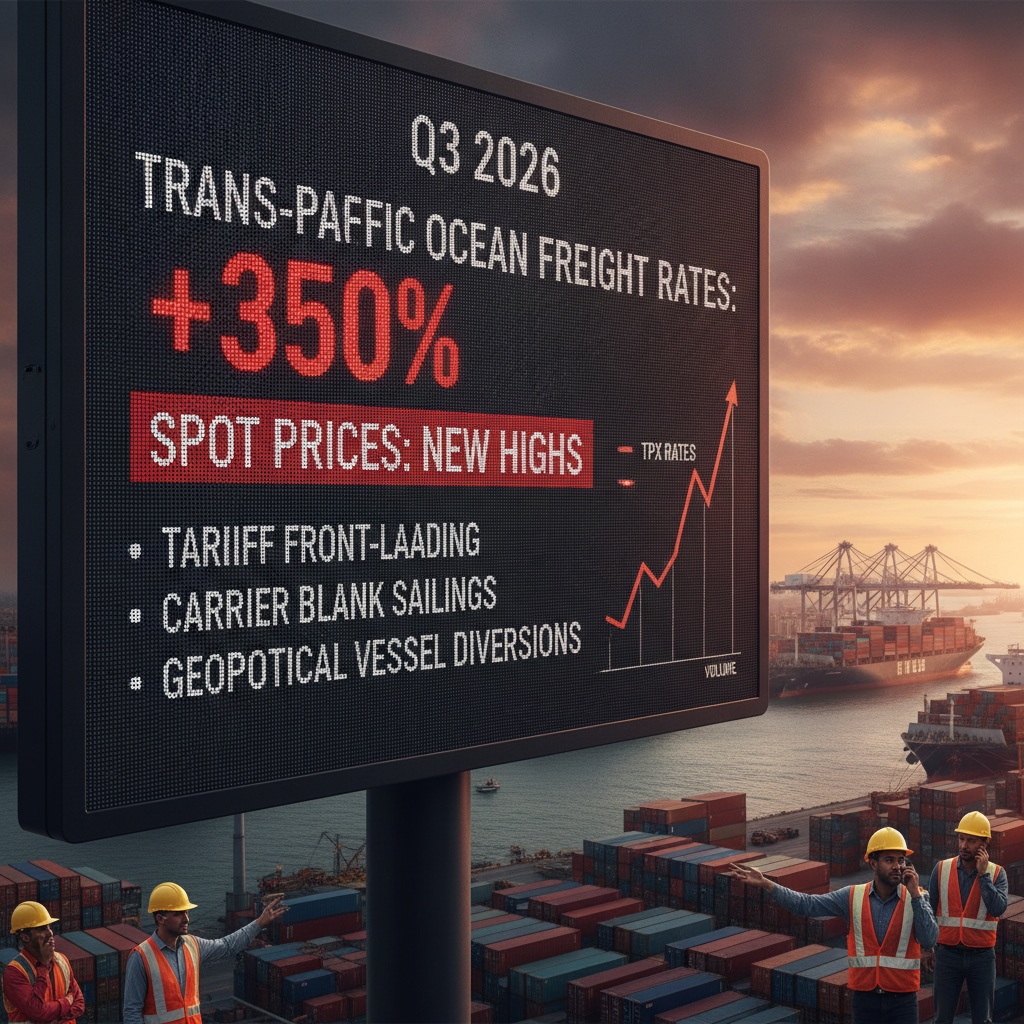
The recent spike in pricing is not merely a seasonal fluctuation. According to the Drewry World Container Index, mid-August 2026 saw the composite index rise to $4,526 per 40-foot container (FEU), propelled largely by the Trans-Pacific corridor. Several fundamental factors are keeping these prices elevated:
- Tariff Front-Loading: U.S. importers rushed to move cargo out of China ahead of potential regulatory changes and Section 301 tariff adjustments, sustaining peak season conditions longer than anticipated.
- Strategic Blank Sailings: Ocean carriers are successfully defending their spot rates by actively restricting supply. By mid-August, numerous blank sailings were announced on the Asia-to-US East Coast lane, which contracted capacity by approximately 9% month-over-month.
- Geopolitical Routing Shifts: Ongoing conflicts in the Red Sea continue to force vessel diversions around the Cape of Good Hope, absorbing global capacity and sustaining a structural floor for pricing.
Spot Market Dynamics of Trans-Pacific Ocean Freight Rates
Evaluating specific lanes reveals the true volatility of Trans-Pacific ocean freight rates. Spot prices from Shanghai to New York recently jumped by 9% to reach $9,507 per FEU, while rates from Shanghai to Los Angeles climbed to $6,802 per FEU. Furthermore, constraints at the Panama Canal and impending regional surcharges are expected to maintain upward pressure on U.S. East Coast routes. Supply chain experts must move beyond global indices and negotiate lane-by-lane to mitigate financial exposure. Forward-looking procurement teams are advised to monitor inland congestion, particularly warehouse and drayage tightening on the West Coast, which could add hidden operational costs.