
Is 2026 Pre-Golden Week Port Congestion Threatening Your Supply Chain?
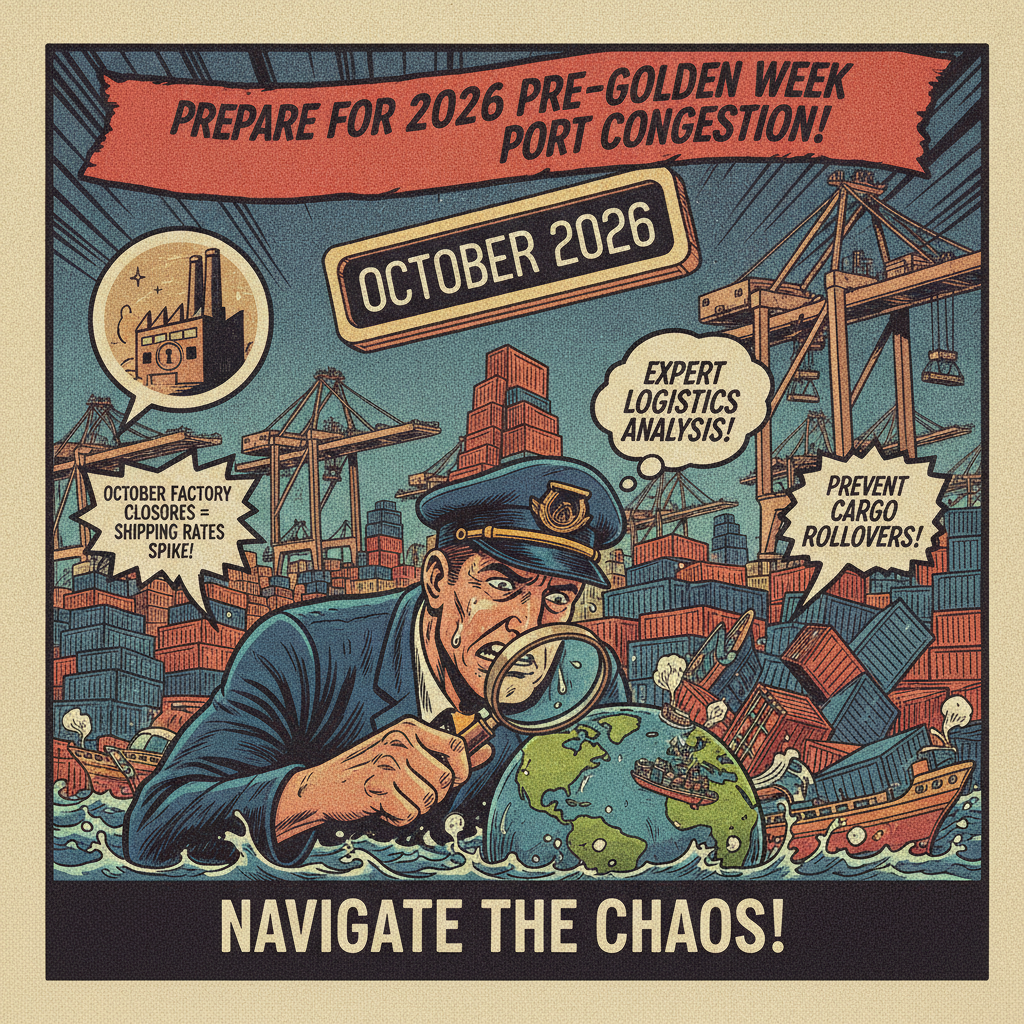
As the international trade calendar approaches October, supply chain directors are bracing for the inevitable 2026 Pre-Golden Week port congestion. With China’s factories scheduled to shut down completely from October 1 to October 7, importers are frantically rushing to clear origin ports before the gates close. This seasonal logjam generates immense pressure on global shipping infrastructure, resulting in choked terminals, skyrocketing spot rates, and severe equipment shortages.
The Anatomy of Pre-Golden Week Port Congestion
The weeks leading up to Golden Week represent a critical peak season, especially for global retail companies preparing for Q4 sales events. During this rush, Pre-Golden Week port congestion intensifies as manufacturers race to dispatch finished goods before logistics operations freeze. Shippers must contend with several structural supply chain challenges:
- Carrier Overbooking: Much like commercial airlines, shipping lines intentionally overbook vessel capacity by 15% to 20% to offset last-minute cancellations.
- Terminal Bottlenecks: Major hubs like Shanghai, Ningbo, and Shenzhen experience massive traffic jams at Container Freight Stations (CFS).
- Post-Holiday Blank Sailings: Carriers frequently implement blank sailings immediately after the holiday to artificially maintain high ocean spot rates.
Strategies to Mitigate Pre-Golden Week Port Congestion Risks
To safeguard bookings and avoid cargo rollovers, logistics managers must adopt defensive tactics by booking shipments four to six weeks in advance. As ocean freight schedules falter, air freight becomes a vital pressure-release valve for urgent, high-value cargo. By pre-clearing commercial documents and prioritizing critical SKUs, businesses can effectively shield operations from the worst impacts of Pre-Golden Week port congestion.