
The China-Europe Arctic Route: A 2026 Logistics Breakthrough
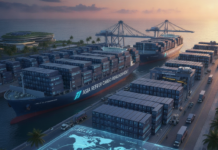
In mid-August 2026, the global logistics sector witnessed a landmark shift as the China-Europe Arctic route initiated regular weekly summer operations. Operated by Sea Legend Shipping, the 2026 navigation season officially commenced with the departure of the container ship Dubai Tower from Ningbo-Zhoushan Port to Northern Europe. This bold expansion of the “Ice Silk Road” marks a crucial diversification of international maritime networks.
Why the China-Europe Arctic Route Maximizes Efficiency
The China-Europe Arctic route offers compelling advantages over traditional southern passages. By navigating the Northern Sea Route (NSR), vessels can reach European hubs like Felixstowe and Hamburg in just 18 to 22 days. This trajectory reduces transit times by roughly 20 days compared to the Suez Canal route and slashes carbon emissions by up to 50%. The current schedule features eight planned voyages utilizing seven ice-strengthened vessels, designed to transport high-value goods such as electric vehicle batteries, energy-storage systems, and photovoltaic modules.
Securing Supply Chains via the China-Europe Arctic Route
For supply chain experts, the strategic value of the China-Europe Arctic route extends well beyond speed. The route entirely bypasses high-risk geopolitical chokepoints, including the Red Sea and the Strait of Malacca, providing a stabilized alternative amid global maritime disruptions. While harsh weather and brief seasonal windows remain constraints, this northern passage serves as a vital hedge. By securing a faster and more resilient link between Asian manufacturing centers and European markets, the China-Europe Arctic route is proving to be an essential complement to global shipping architecture.