
Is Your China Supply Chain Due Diligence Compliance At Risk Now?
In 2026, global trade regulations are rapidly transforming how logistics professionals manage their overseas sourcing. The enforcement of the Uyghur Forced Labor Prevention Act (UFLPA) and the EU Corporate Sustainability Due Diligence Directive (CSDDD) has made China Supply Chain Due Diligence Compliance a critical operational mandate. Companies can no longer rely on superficial tier-one audits to satisfy customs authorities.
Evolving China Supply Chain Due Diligence Compliance Rules
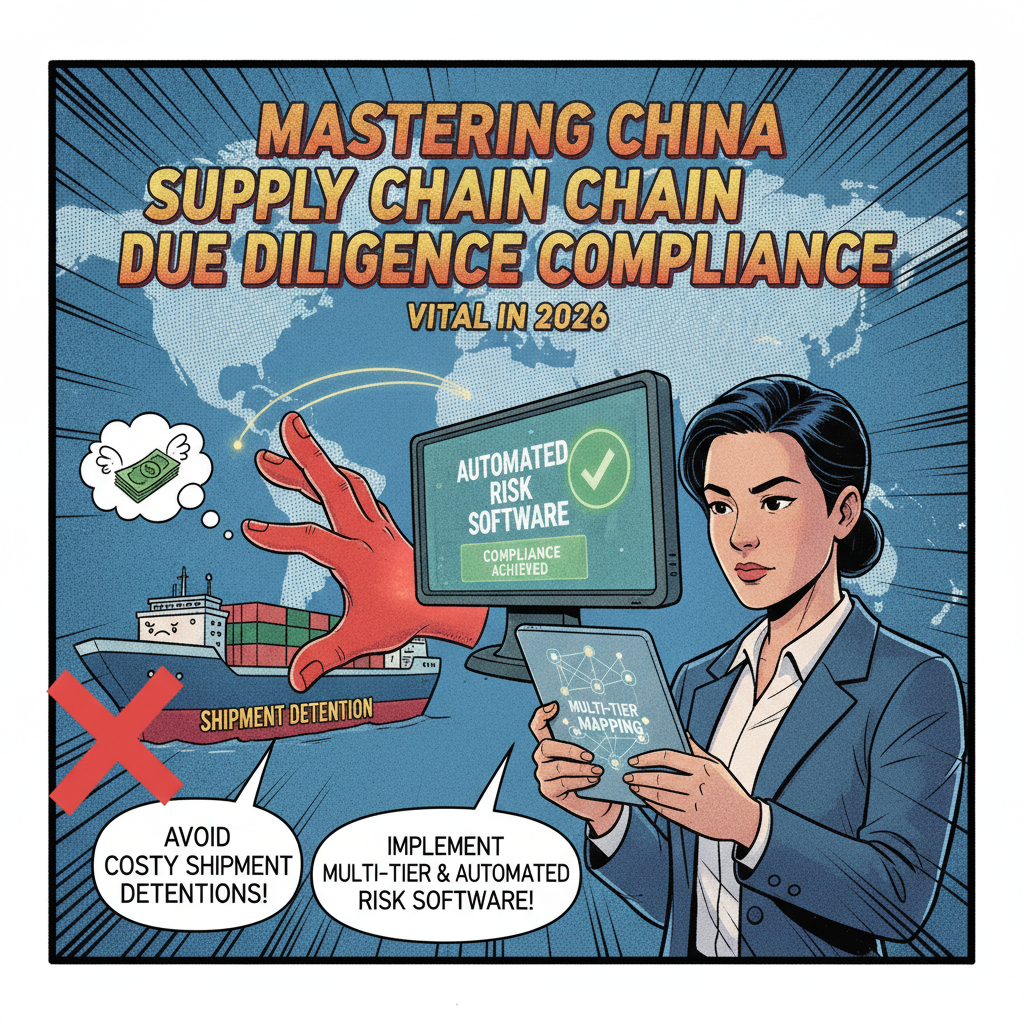
Recent enforcement statistics highlight the escalating risks of regulatory non-compliance. In fiscal year 2025, U.S. Customs and Border Protection (CBP) denied entry to more than 8,000 shipments under UFLPA mandates. The regulatory burden falls entirely on importers, requiring clear and convincing evidence that no forced labor was involved anywhere in the production process. To navigate these strict China Supply Chain Due Diligence Compliance requirements, logistics experts must implement several foundational strategies:
- Deploy multi-tier supply chain mapping to trace raw materials back to their origin.
- Implement continuous real-time monitoring of the ever-expanding UFLPA Entity List.
- Align documentation practices simultaneously with both U.S. restrictions and EU CSDDD environmental and human rights mandates.
Future-Proofing China Supply Chain Due Diligence Compliance
Supply chain visibility software and automated risk identification have become indispensable tools for modern logistics. According to industry data, automated due diligence solutions can reduce manual supplier assessment efforts by up to 70 percent and deliver significant return on investment over a three-year period. As scrutiny over global trade intensifies in 2026, proactive compliance mapping is no longer just a legal necessity, but a competitive advantage. Shipping leaders must adapt their sourcing networks to ensure complete transparency.