Unprecedented Asian Petrochemical Sourcing Shortages in 2026
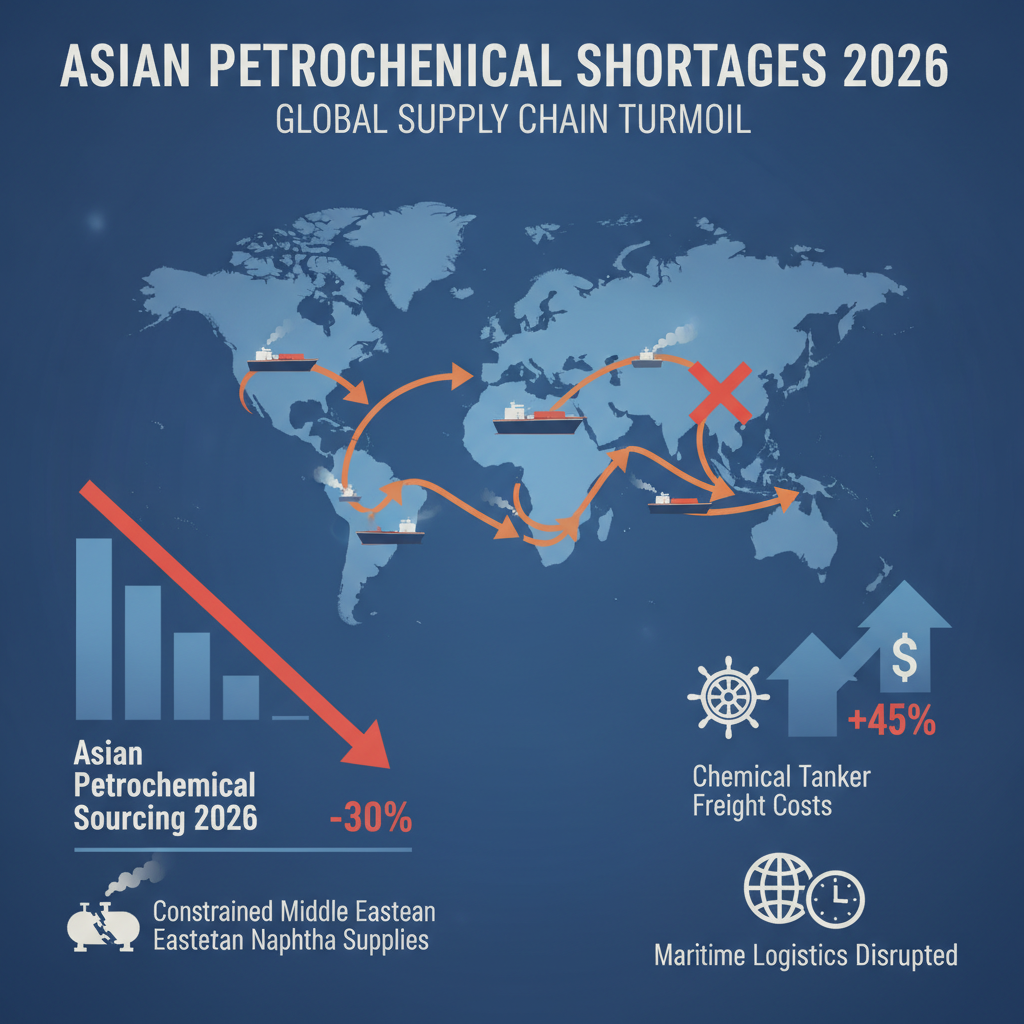
The global shipping sector is navigating extreme Asian Petrochemical Sourcing Shortages following severe disruptions in the Strait of Hormuz. Before the 2026 geopolitical conflicts, the Middle East supplied nearly 65% of Asia’s naphtha imports, a critical feedstock for industrial manufacturing. With key maritime trade routes constrained, the steady flow of petrochemical raw materials has been abruptly halted, sending shockwaves through downstream supply chains.
Maritime Disruption and Supply Chain Impact
The logistics of transporting vital chemicals has been thrown into chaos. To offset the Asian Petrochemical Sourcing Shortages, buyers are increasingly sourcing cargoes from the Mediterranean, utilizing LR1 tankers and significantly increasing ton-mile demand. This rapid shift in supply routes introduces intense logistical complexities. The immediate fallout includes:
- Force majeure declarations by major petrochemical producers across Singapore, South Korea, and Indonesia due to raw material unavailability.
- Asian steam cracker utilization rates plummeting to historical lows between 50% and 67% during the height of the supply crunch.
- A steep rise in shipping insurance premiums, freight rates, and transit times as vessels avoid traditional chokepoints.
Strategic Shifts for Logistics Experts
Despite recent ceasefire announcements, logistical conditions in critical energy corridors remain highly fragile, keeping cargo availability constrained. Shipping experts and supply chain planners must account for sustained risk premiums and longer alternative routes. Moving forward, the industry is accelerating the diversification of feedstock sourcing, permanently reshaping chemical tanker routing and regional import structures across the Asia-Pacific.