
Understanding Global LNG Carrier Rate Volatility in 2026
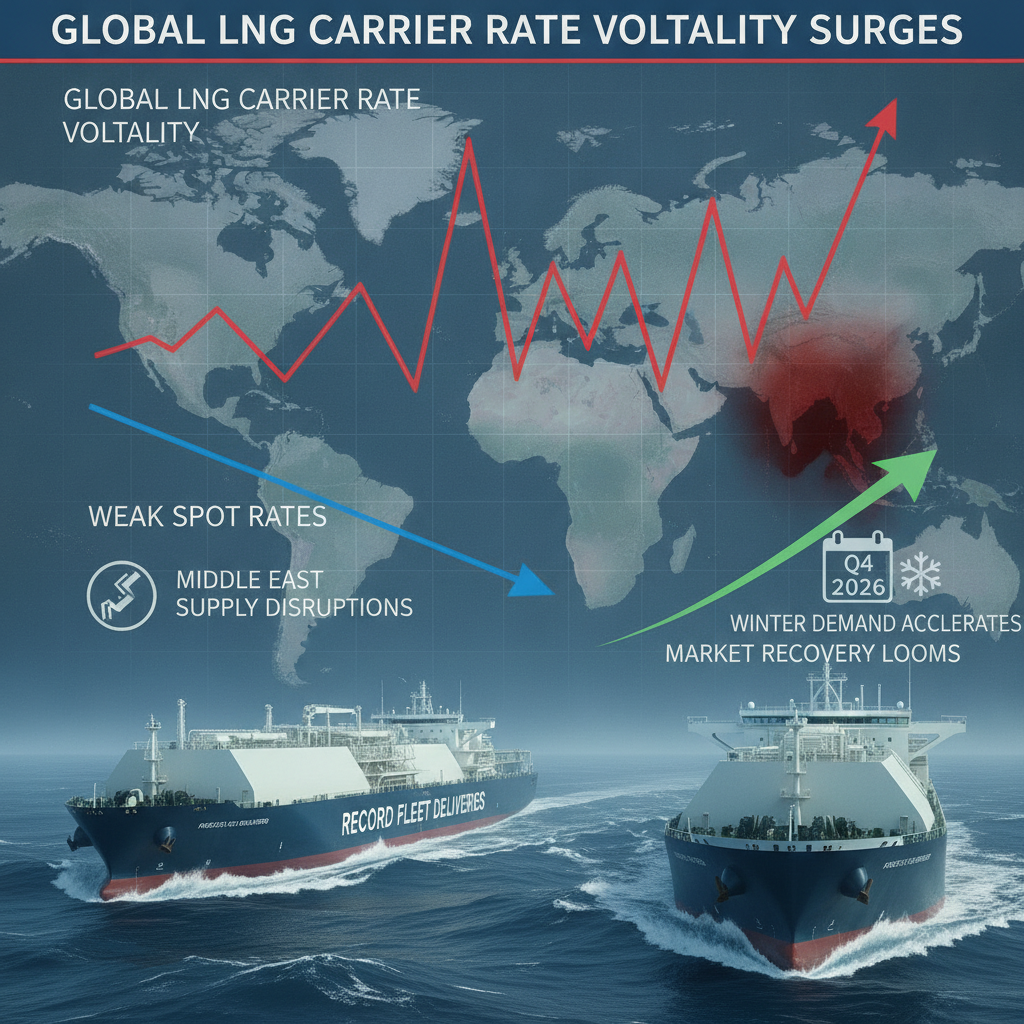
The shipping sector is currently experiencing unprecedented Global LNG Carrier Rate Volatility as a massive influx of new vessels collides with intense geopolitical disruptions. Despite ongoing tensions in the Middle East and the Strait of Hormuz, spot rates have corrected sharply downward from earlier wartime peaks. This growing disconnect between geopolitical risk and vessel demand is primarily driven by sluggish European imports and a record-breaking fleet expansion.
Key Drivers Behind Global LNG Carrier Rate Volatility
The current freight market is heavily bifurcated between the Atlantic and Pacific basins. As of mid-August 2026, Atlantic spot rates languish near $40,000 per day, while Pacific rates hold stronger around $69,000 per day. Several factors are actively fueling this Global LNG Carrier Rate Volatility:
- Record Fleet Expansion: Shipyards delivered 55 new LNG vessels in the first seven months of 2026, with up to 45 additional ships expected before year-end.
- Basin Dislocation: Middle Eastern outages have forced buyers to pull more US LNG toward Asia, tightening prompt vessel availability in the Pacific.
- Sluggish Atlantic Demand: European gas storage remains below historical averages at 59%, causing delayed charter commitments during the summer transition period.
Navigating the Future Market Outlook
While the influx of newbuilds continues to drag down immediate pricing, the outlook for Q4 2026 suggests potential tightening. Experts project that as Asian winter demand accelerates and European storage requirements become urgent, the current oversupply of available ships could quickly evaporate. For logistics professionals, managing this volatility requires a delicate balance between leveraging weak short-term spot rates and securing long-term tonnage ahead of the anticipated 2027 global liquefaction capacity boom.