
Navigating 2026 Markets with AI-Driven Freight Forecasting
As the logistics sector moves deeper into 2026, relying on historical averages for market strategy is rapidly becoming obsolete. Artificial intelligence is no longer an experimental asset; it has transitioned into a mandatory operational baseline. According to a late 2025 Descartes Systems Group study, an overwhelming 96% of global transportation professionals now utilize generative AI in their operations, with 35% specifically deploying AI-driven freight forecasting. This shift underscores transportation management’s evolving role, which 81% of shippers and logistics service providers now view as a critical competitive weapon.
Efficiency in AI-Driven Freight Forecasting Algorithms
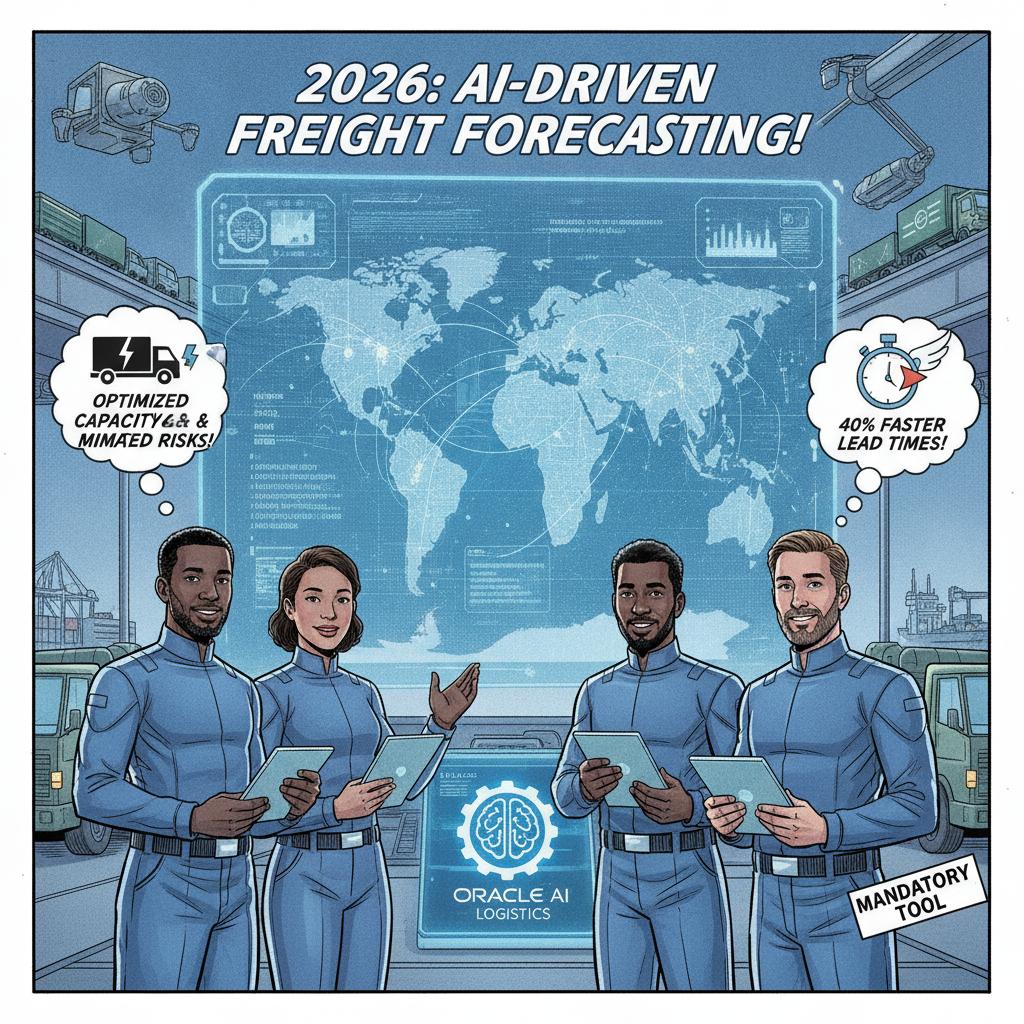
The financial impact of intelligent predictive modeling is undeniable for modern supply chains. The global AI in logistics market skyrocketed to a valuation of $20.8 billion in 2025, driven by the persistent demand for real-time agility. Today’s multi-modal supply chains face constant threats from geopolitical instability, fuel fluctuations, and extreme weather. By integrating machine learning with physical network conditions, companies utilizing AI-driven freight forecasting achieve 30% to 40% faster lead time adjustments during unexpected capacity shifts.
Modern forecasting engines deliver unprecedented value across several operational areas:
- Dynamic Route Optimization: Analyzing weather, port congestion, and fuel prices in real-time to adjust transit paths.
- Automated Load Matching: Streamlining capacity sourcing without requiring human intervention.
- Predictive Analytics: Anticipating seasonal volume surges before they materialize to optimize carrier negotiations.
The Future of Smart Logistics
As we navigate 2026, AI-driven freight forecasting operates less as a standalone software and more as an integrated supply chain control tower. Logistics experts who aggressively replace disparate legacy systems with unified, AI-powered predictive environments are securing superior market intelligence. This transition empowers supply chain leaders to proactively mitigate disruptions by up to 50%. Moving forward, algorithmic decision-making will separate the market leaders from the laggards.