
Is Asia-Latin America Maritime Connectivity Reshaping Trade?
The landscape of global shipping is undergoing a structural shift as Asia-Latin America Maritime Connectivity evolves from a secondary trade lane into a primary strategic corridor.
How Chancay Drives Asia-Latin America Maritime Connectivity
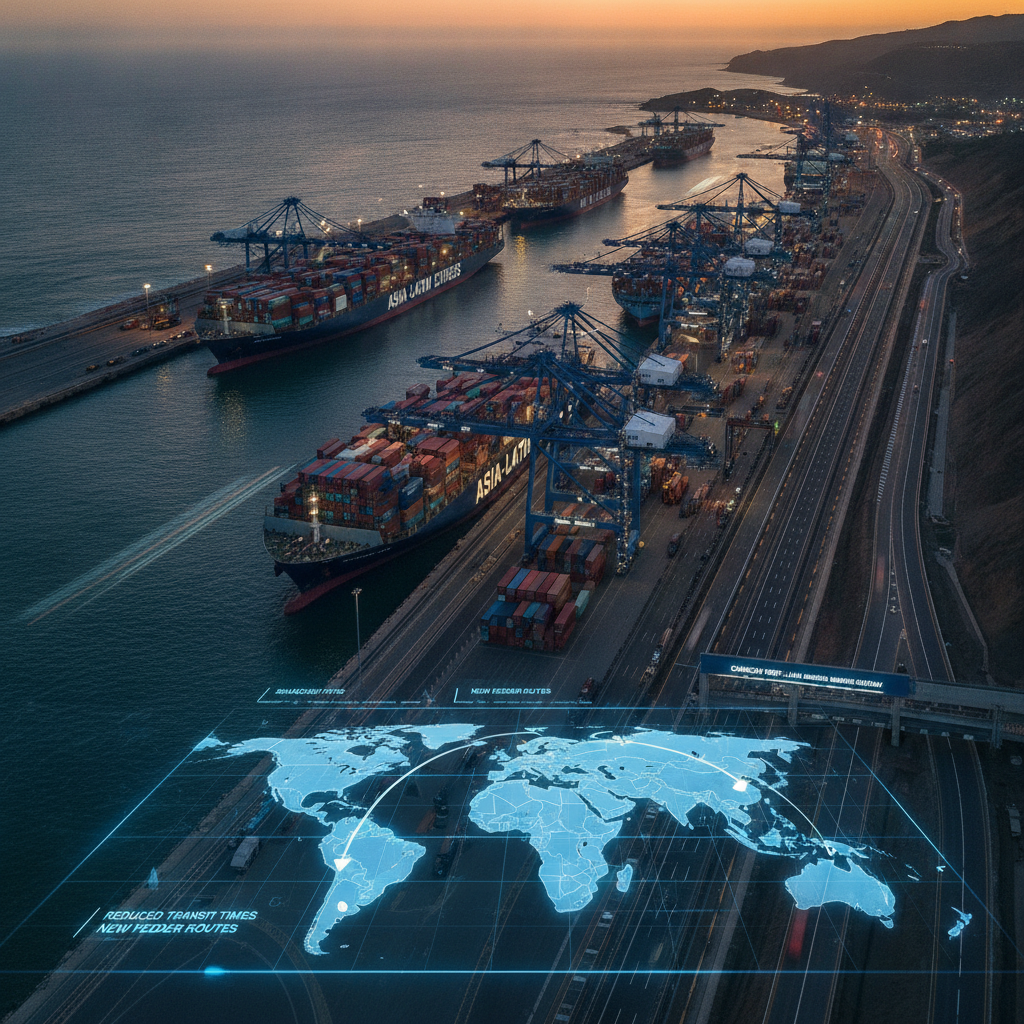
The inauguration and scale-up of the Port of Chancay in Peru have fundamentally redefined transpacific logistics. Operating as South America’s first smart green port, the Chancay-Shanghai route handled 154,000 tons of goods worth $547 million between January and September 2025. This direct link has slashed average transit times between China and Peru to roughly 23 days, effectively reducing ocean logistics costs by over 20 percent.
Capacity and Rate Trends in Asia-Latin America Maritime Connectivity
Strong consumer demand and vehicle exports have heavily strained vessel capacity across these lanes. By mid-2026, freight rates from China to the South American East Coast surged to between $4,100 and $4,400 per 40-foot container. Ocean carriers have actively managed capacity through structural blank sailings, while major lines implemented Peak Season Surcharges of up to $1,000 per container on Far East to Latin America routes.
Expanding Regional Feeder Networks
To capitalize on this maritime momentum, carriers are launching localized services. In August 2026, COSCO Shipping Lines launched the CHX3 feeder service, connecting Peru’s Paita and Chancay ports with Costa Rica’s Caldera Port. This strategic routing allows shippers to:
- Bypass traditional transshipment bottlenecks in North America.
- Establish dynamic transshipment hubs on the South American West Coast.
- Accelerate transpacific agricultural and technology trade exchanges.