

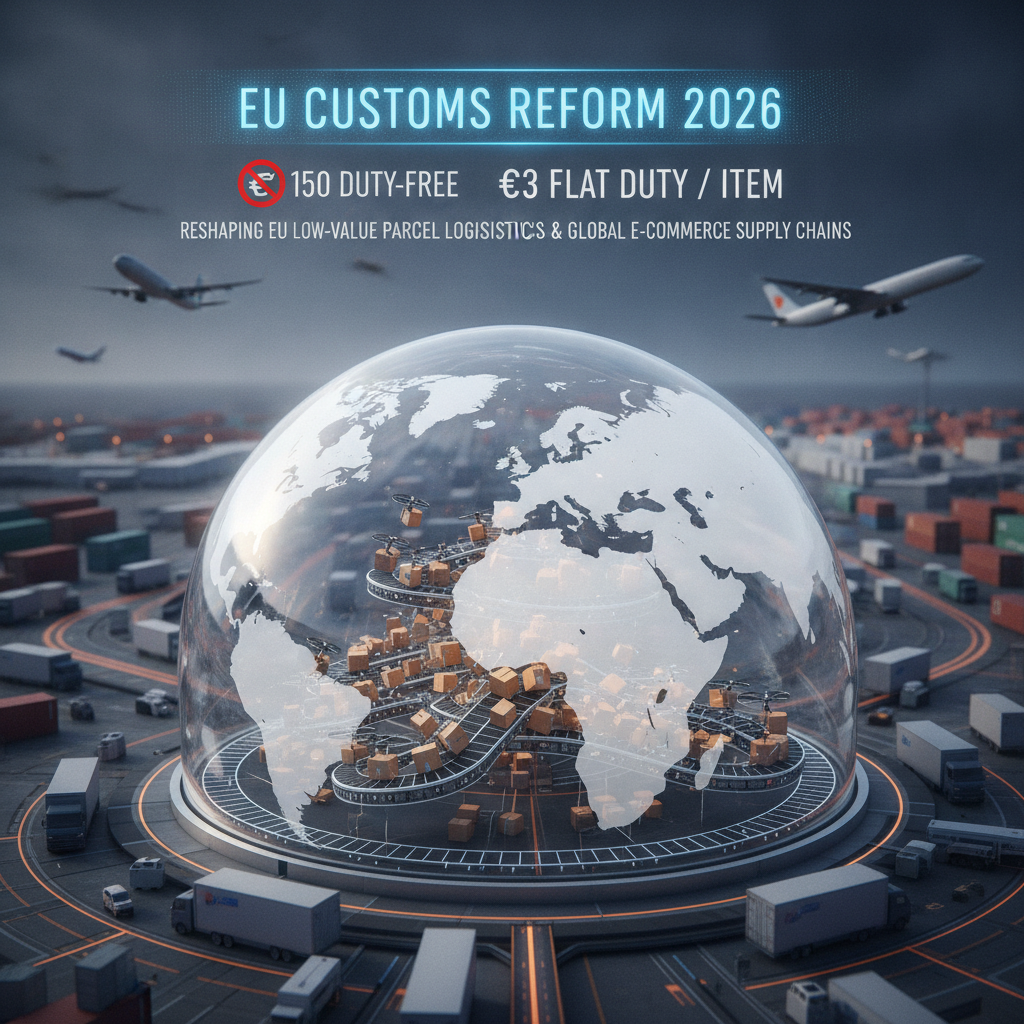
The Shift in EU Low-Value Parcel Logistics
The cross-border e-commerce landscape is currently undergoing a monumental transformation. Effective July 1, 2026, the European Union has officially abolished the long-standing €150 customs duty exemption for low-value consignments. This critical regulatory shift fundamentally alters EU Low-Value Parcel Logistics, forcing non-EU sellers, dropshippers, and global marketplaces to rapidly restructure their supply chains.
The Data Driving EU Low-Value Parcel Logistics Reform
The sheer volume of cross-border trade catalyzed this legislative overhaul. In 2025, a staggering 5.9 billion low-value items entered the EU, accounting for almost 98% of all imported items but merely 2.1% of the total import value. Lawmakers enacted the reform to combat unfair competition for domestic retailers, mitigate environmental damage from split shipments, and block non-compliant goods.
Strategic Shifts in EU Low-Value Parcel Logistics
To navigate this complex regulatory environment, supply chain professionals must adapt to strict new mandates. The most critical operational impacts include:
- A temporary flat-rate customs duty of €3 per item or tariff subheading applied to all B2C distance sales imported into the bloc.
- Direct compliance and data responsibility shifting directly to major online marketplaces, functioning as deemed importers.
- Enhanced data transparency rules requiring precise product identifiers for successful customs clearance.
Experts emphasize that traditional direct-to-consumer fulfillment from outside the bloc may no longer remain profitable for low-margin goods. Logistics leaders are actively transitioning toward bulk import strategies, utilizing regional fulfillment hubs to sustain competitiveness.