
The Rise of Warehouse Digital Twins
In the fast-paced logistics sector, Warehouse Digital Twins have transitioned from experimental concepts to essential operational frameworks. By creating a real-time, virtual replica of physical warehouses, supply chain leaders can simulate disruptions, test automation layouts, and optimize workflows without risking actual downtime. Recent data indicates a massive shift toward these end-to-end connected logistics applications as operations mature.
Warehouse Digital Twins: 2026 Market Statistics
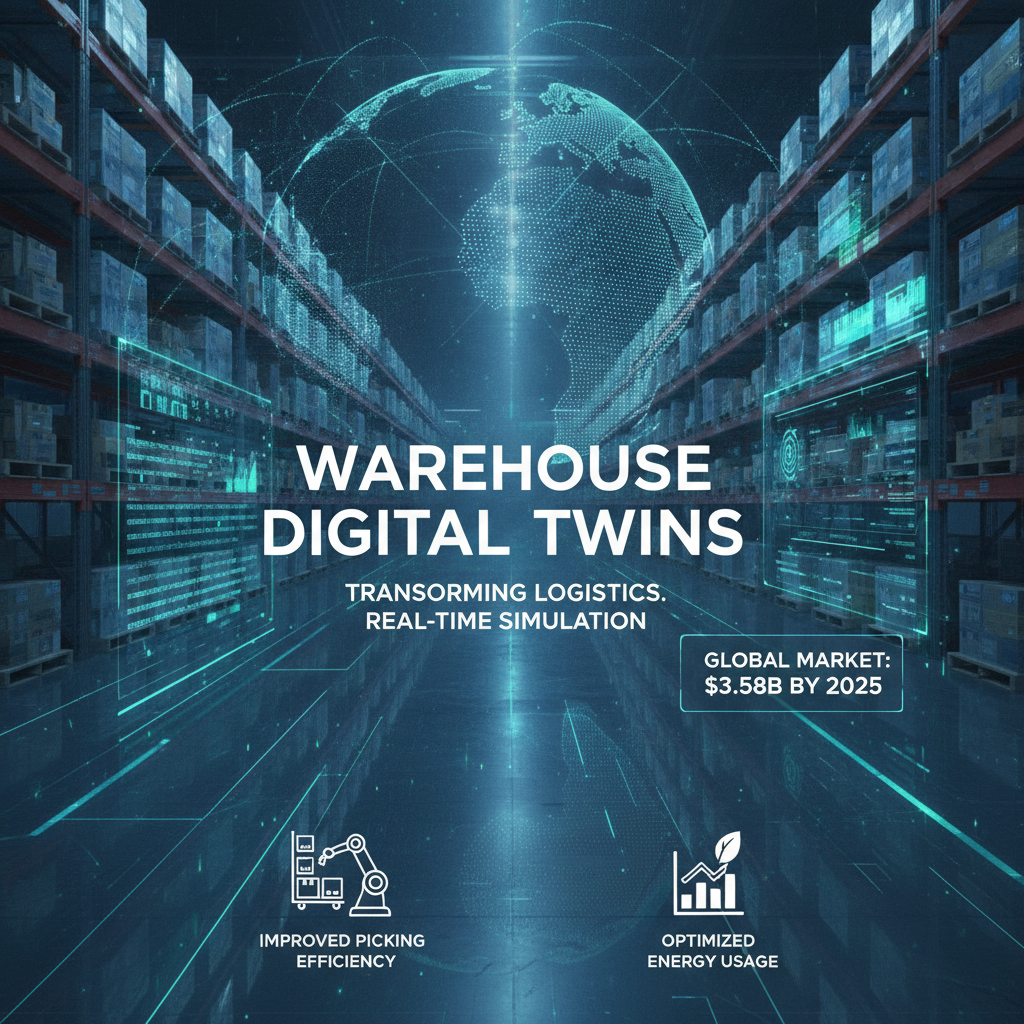
The financial backing for this technology is surging globally. According to 2025-2026 market estimates, the supply chain digital twin market was valued at approximately $3.58 billion in 2025 and is projected to reach $10.07 billion by 2034, exhibiting a CAGR of 12.19%. Furthermore, research notes that the broader digital twin market is expected to skyrocket, reflecting widespread adoption across the supply chain. Logistics companies are increasingly prioritizing these virtual models to quantify trade-offs between storage costs, transport expenses, and overall service levels.
Key Trends Shaping Warehouse Digital Twins
- Energy Management: In 2026, digital twins are highly utilized to model power consumption, helping facilities manage peak load surcharges and stagger autonomous mobile robot (AMR) charging cycles.
- Picking Optimization: Advanced predictive algorithms deployed via digital twins have been shown to reduce picker travel distances by 25-40%, drastically improving throughput.
- Self-Healing Supply Chains: Combining artificial intelligence with live spatial data allows these models to detect and resolve operational bottlenecks automatically, shifting from reactive to proactive risk management.
As we move deeper into 2026, Warehouse Digital Twins will remain a non-negotiable asset for enterprises striving for resilience and peak readiness.