
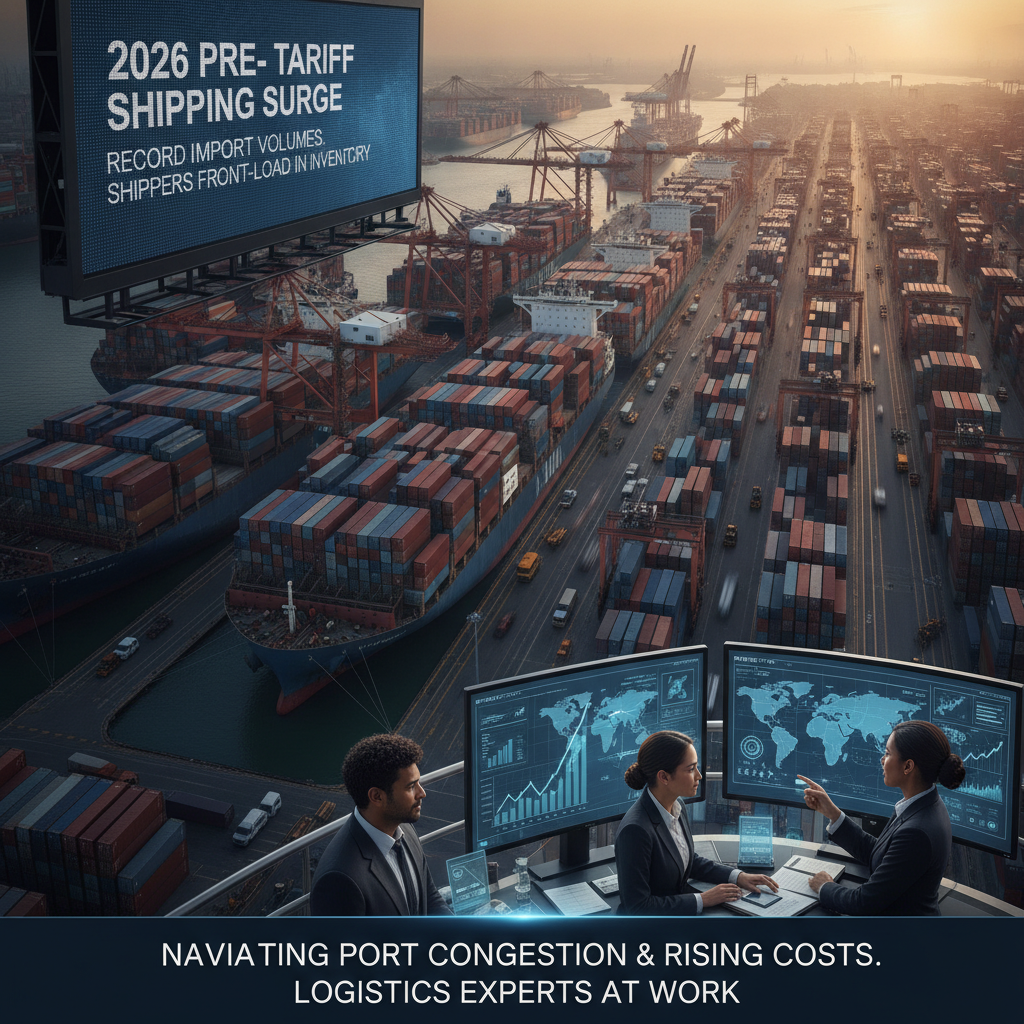
The global logistics sector is currently experiencing a massive Pre-Tariff Shipping Surge as shippers aggressively front-load inventory. Facing impending tariff deadlines and rising operational costs, retailers are rapidly moving their peak season replenishment cycles forward. This urgency has fundamentally reshaped inbound supply chains throughout mid-2026.
Several converging factors are creating this unprecedented volume spike. Importers are rushing to beat the late July tariff deadlines, pushing port operations to their limits. Furthermore, geopolitical tensions, including Middle East shipping detours, have exacerbated these front-loading strategies.
- Record Volumes: The National Retail Federation projected July 2026 imports to reach a historic 2.47 million TEU, surpassing the May 2022 pandemic record.
- Rising Costs: War-driven fuel surcharges and bunker adjustments have added up to $400 per FEU for Asia-to-US shipments.
- Port Congestion: The simultaneous arrival of front-loaded inventory has pushed terminal congestion to multi-year highs.
Logistics experts must adapt to these lane-level shocks by restructuring their capacity planning. With e-commerce demand remaining steady, inventory is hitting warehouses long before standard fulfillment cycles dictate. Supply chain managers must build robust contingency plans to handle elevated inland costs and sustained volatility into late 2026.
References
U.S. Imports Expected to Set New Record Ahead of Tariffs and Cost Increases. Transportation Industry Trends: June 29-July 3, 2026. E-Commerce Logistics in 2026 – Constancy Researchers. US imports to hit record high in July amid pre-tariff push: retailers – S&P Global. The Impact of Tariffs on Logistics – Transload Distribution Association.