
In 2026, the ongoing Red Sea Shipping Disruptions have shifted from a temporary crisis to a structural reality for maritime trade. With attacks persisting in the Bab el-Mandeb Strait, carriers have cemented the Cape of Good Hope as the default routing for Asia-Europe lanes. This volatility forces logistics experts to fundamentally rethink supply chain resilience.
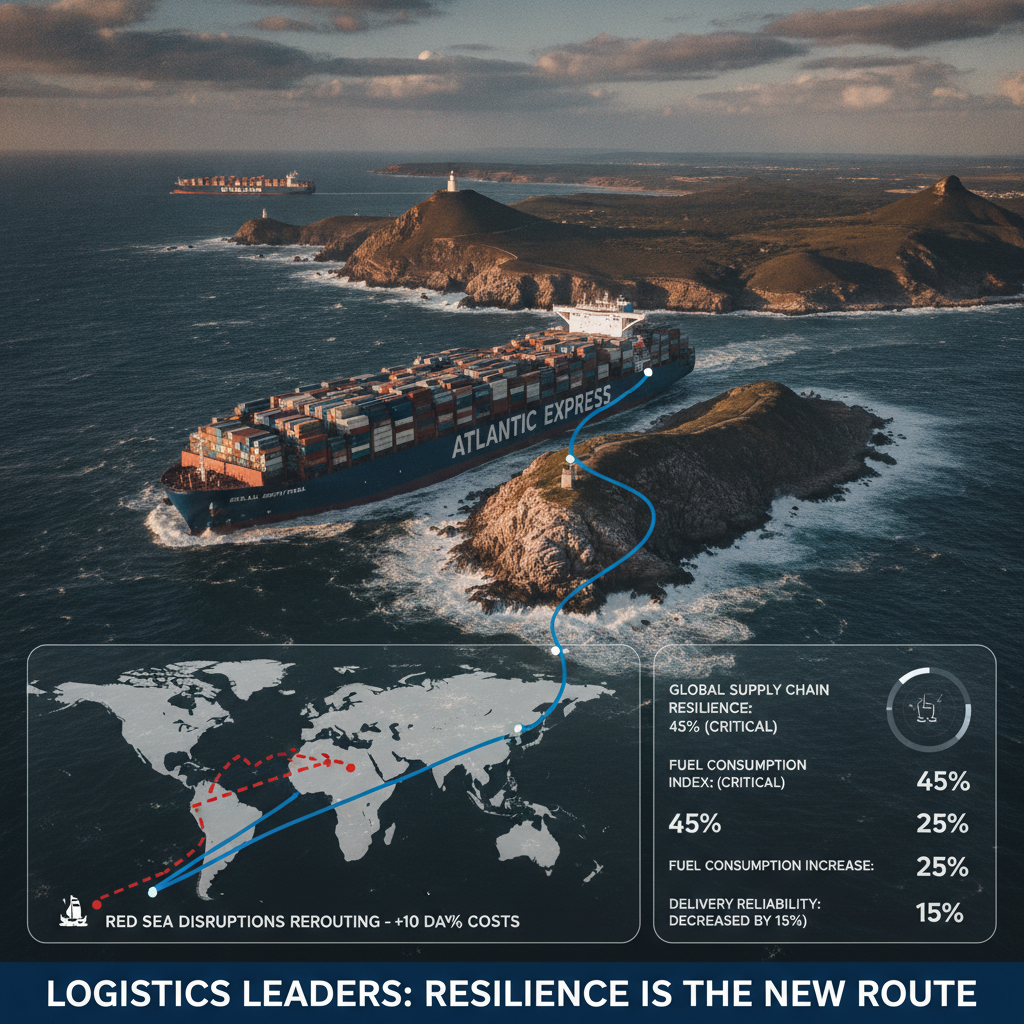
The operational consequences of avoiding the Suez Canal remain severe, with throughput reductions reaching 52.5% to 90%. Rerouting dictates significant structural adjustments for global freight:
- Extended Transit Times: Diverting adds 3,000 to 4,000 nautical miles, extending voyages by 10 to 15 days.
- Elevated Freight Rates: Asia-Europe spot rates run 25-40% higher than pre-crisis baselines due to capacity constraints.
- Surging Insurance Premiums: Vessel war risk premiums jumped from 0.05% to 1.25% of vessel value.
- Fuel Consumption: Large vessels require 800 to 1,000 extra tons of fuel per voyage.
Forecasts indicate Red Sea Shipping Disruptions will persist through 2027, prompting leaders to embrace proactive logistics engineering. Modern networks prioritize diversified routing and predictive risk forecasting. Reliability now outpaces speed as the ultimate currency in global freight.
References
Logistics Great. (2026). Red Sea Shipping Disruptions: How Will Global Supply Chains Adapt?
FreightAmigo. (2026). How Geopolitical Factors Affect Red Sea Shipping Rates.
MDPI. (2026). Analysis of maritime geopolitics on early 2026: The Red Sea Factor.
Suaid Global. (2026). Red Sea Shipping Crisis 2026: Impact on Your Supply Chain.
DocShipper. (2026). Red Sea Crisis Update: Route Alternatives & Cost Impacts on Global Shipping.