

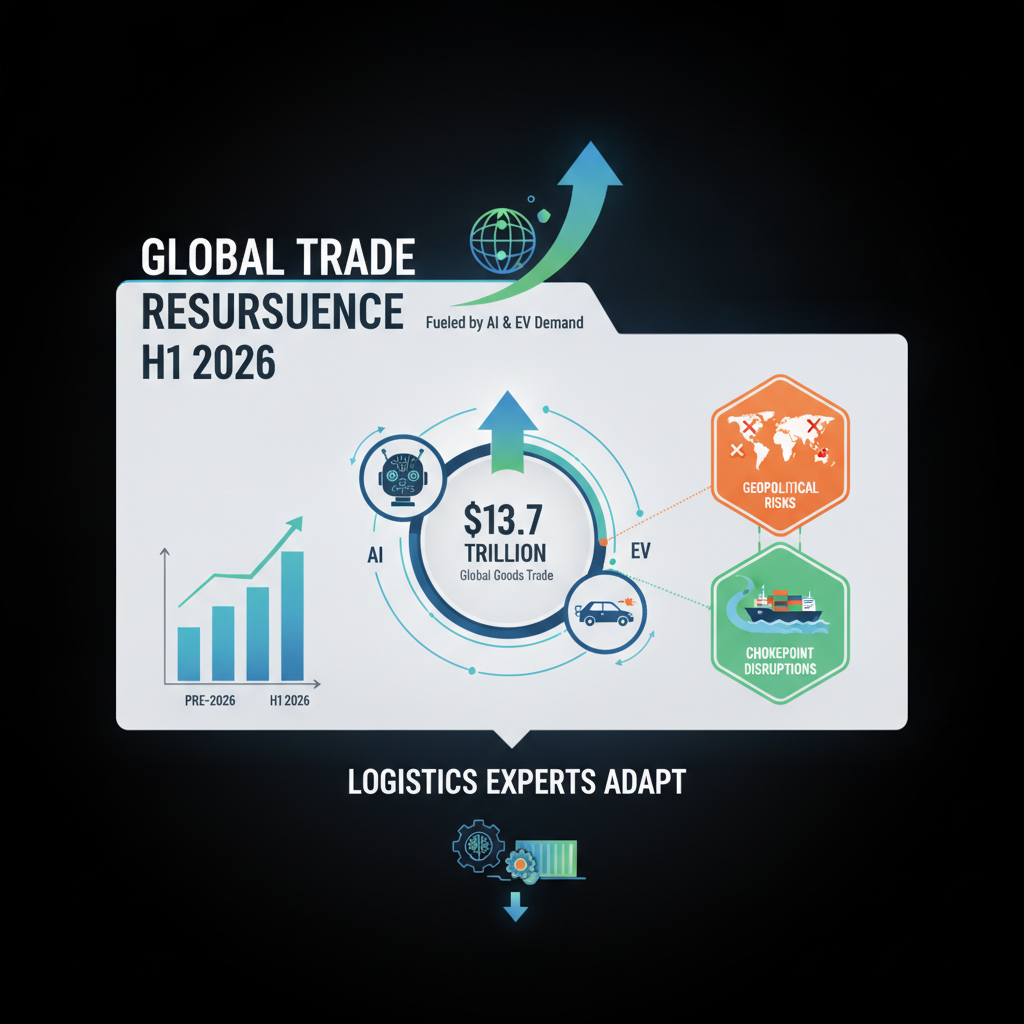
The global logistics and shipping industry is currently witnessing a remarkable Global Goods Trade Resurgence. According to the UNCTAD July 2026 update, global goods trade expanded by an estimated 12.5% in the first half of 2026, reaching an impressive $13.7 trillion. This vigorous recovery has set the stage for record annual trade values, defying earlier conservative economic forecasts.
This unprecedented Global Goods Trade Resurgence is largely propelled by specific high-demand sectors. The rapid adoption of next-generation technologies has forced shipping networks to adapt to new volume spikes. Key drivers include:
- Artificial Intelligence (AI) components and semiconductors, which constituted a massive portion of trade growth.
- Electric vehicle (EV) supply chains, driving complex international logistics demands.
- Front-loading of imports by North American buyers anticipating new tariff implementations.
Despite the current Global Goods Trade Resurgence, logistics experts must prepare for volatile headwinds. The World Trade Organization (WTO) warned that geopolitical tensions, particularly disruptions in the Strait of Hormuz, could severely impact supply chain stability. If energy prices remain elevated due to Middle Eastern conflicts, WTO economists project that full-year merchandise trade growth could decelerate to 1.4%. Furthermore, rising protectionism and shifting global supply chain corridors require highly agile freight forwarding strategies.
References
- UNCTAD Global Trade Update (July 2026): https://unctad.org/
- WTO Global Trade Outlook (March 2026): https://www.wto.org/