
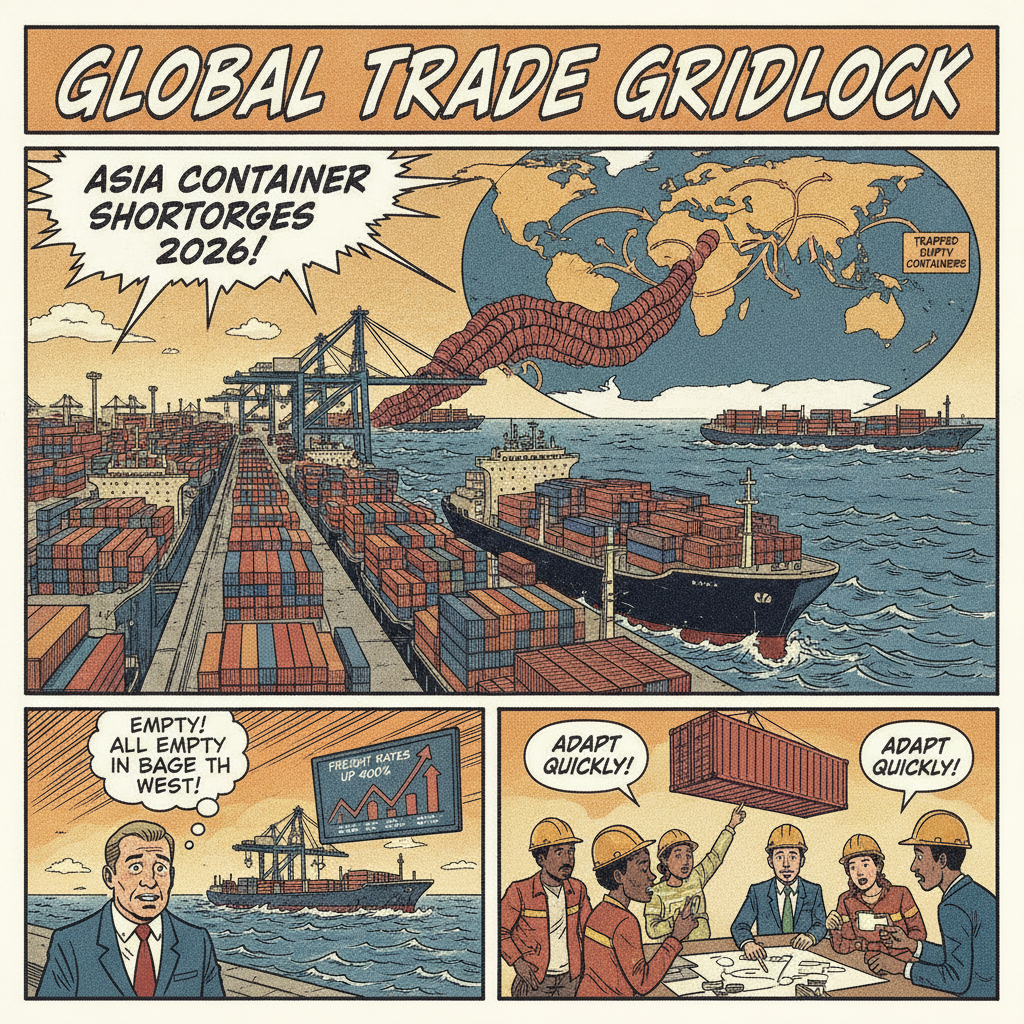
The global shipping industry is facing unprecedented headwinds in 2026, driven by geopolitical instability and compounding maritime disruptions. At the center of this turmoil are severe Asia Container Shortages, which are artificially suppressing functional capacity and driving up global freight rates. As the 2026 peak season arrives earlier than usual, logistics experts are scrambling to secure allocations amidst a tightening market.
A primary driver of the current equipment deficit is the ongoing Red Sea and Strait of Hormuz crisis. With the majority of commercial vessels rerouting via the Cape of Good Hope, transit times have increased by 10 to 14 days. This extended loop has severely degraded the efficiency of empty container repositioning, leaving vital equipment trapped in Europe and the Americas while creating structural Asia Container Shortages, particularly for 40-foot high cube (40HC) units. Consequently, shippers in Chinese hubs are facing premium fees just to secure priority equipment.
Compounding the equipment scarcity is a widespread surge in port congestion. By mid-2026, nearly 11% of the global container fleet—approximately 3.7 million TEUs—was immobilized awaiting berths, marking a four-year high. North Asian ports currently account for 38% of global congestion, with major gateways like Shanghai and Singapore experiencing multi-day delays. Because vessels cannot maintain schedules, carriers are forced into blank sailings, effectively removing more capacity from the market and pushing Asia-North Europe spot rates past $5,000 per FEU.
- Secure equipment bookings weeks in advance to buffer against structural Asia Container Shortages.
- Pivot between sea, air, and land freight modalities to avoid long procurement cycles.
- Monitor regional dwell times and utilize alternative port gateways to bypass major congestion zones.
References
1. Trans-Border Global Freight Systems: Asia-Europe Ocean Rates Climb as Peak Season Demand Tighten Capacity (July 2026)
2. The Loadstar: Rate rises loom as port congestion hits four-year high (June 2026)
3. High Freight Rate Era Fades: 2026 Shipping Market Analysis (Feb 2026)