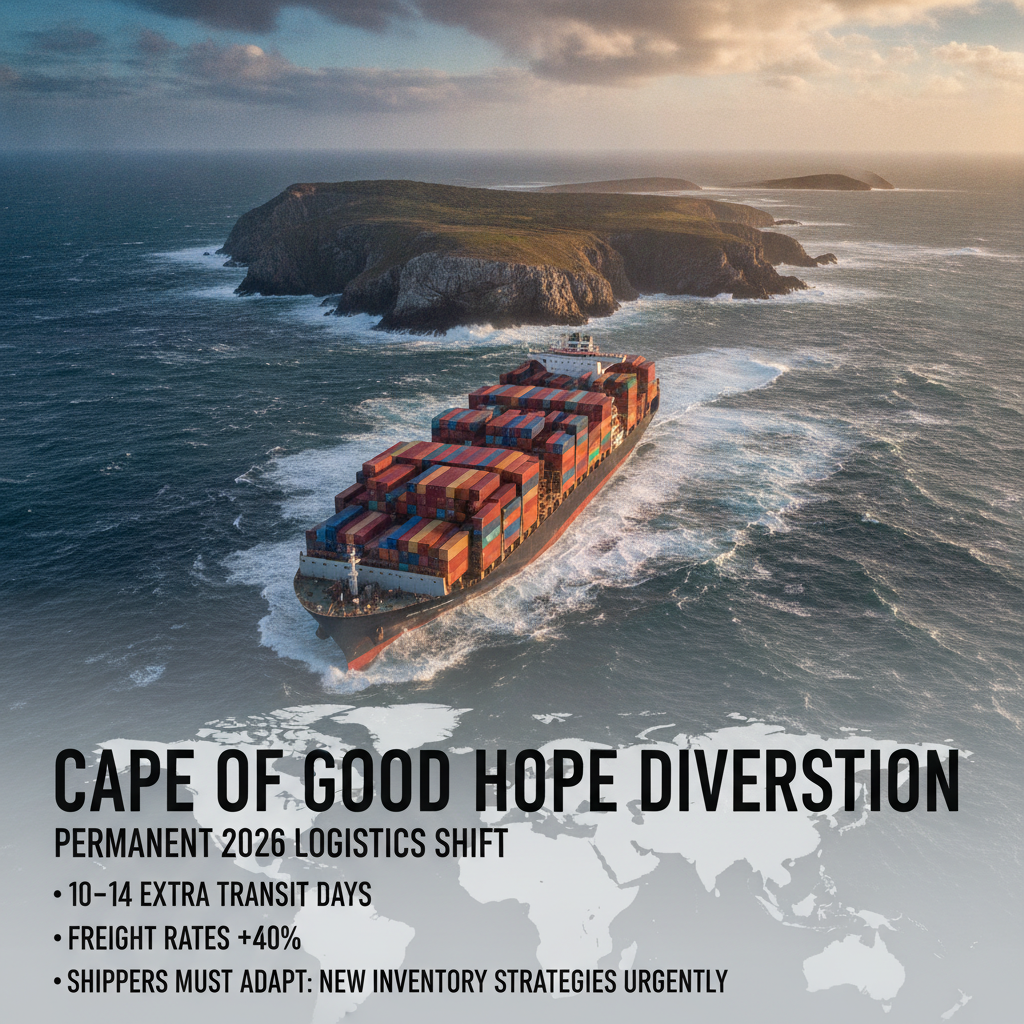
The Cape of Good Hope Diversion has transitioned from an emergency workaround to a permanent fixture in 2026. Following renewed escalations in the Red Sea and Strait of Hormuz, major carriers like Maersk and Hapag-Lloyd have hard-wired African diversions into their long-term networks. This structural shift is reshaping ocean freight, demanding urgent adjustments from supply chain experts.
Rerouting vessels around Africa profoundly affects global vessel availability. Logistics professionals must account for these realities:
- Extended Voyages: Rerouting adds 10 to 14 days to standard Asia-Europe sea freight transits.
- Capacity Squeeze: With vessels tied up longer, analysts estimate that 5% to 7% of the global container fleet has been effectively removed from circulation.
The economic toll of this prolonged crisis is substantial. Rerouting has triggered a 25% to 40% surge in freight rates on Asia-to-Europe lanes compared to pre-crisis levels. Additionally, the simultaneous arrival of diverted vessels has created severe bottlenecks. Hubs in Northern Europe and African ports like Durban are experiencing critical port congestion and elevated container dwell times.
With war-risk insurance premiums persistently high, the Suez Canal route remains unviable. Relying on just-in-time inventory is no longer sustainable. Experts recommend increasing safety stocks and securing alternative air freight capacity for critical deployments to mitigate the delays.
References
- FurtherAfrica: Cape Route Shift (2026)
- Suaid Global: Red Sea Shipping Crisis 2026
- FLEX Logistics: Middle East Shipping Disruptions
- UN Cargo & Logistics: Resilient Supply Chains
- Strait of Hormuz Closure 2026 Logistics
- Analysis of Maritime Geopolitics 2026
- StoneX: Red Sea Disruption Logistics