
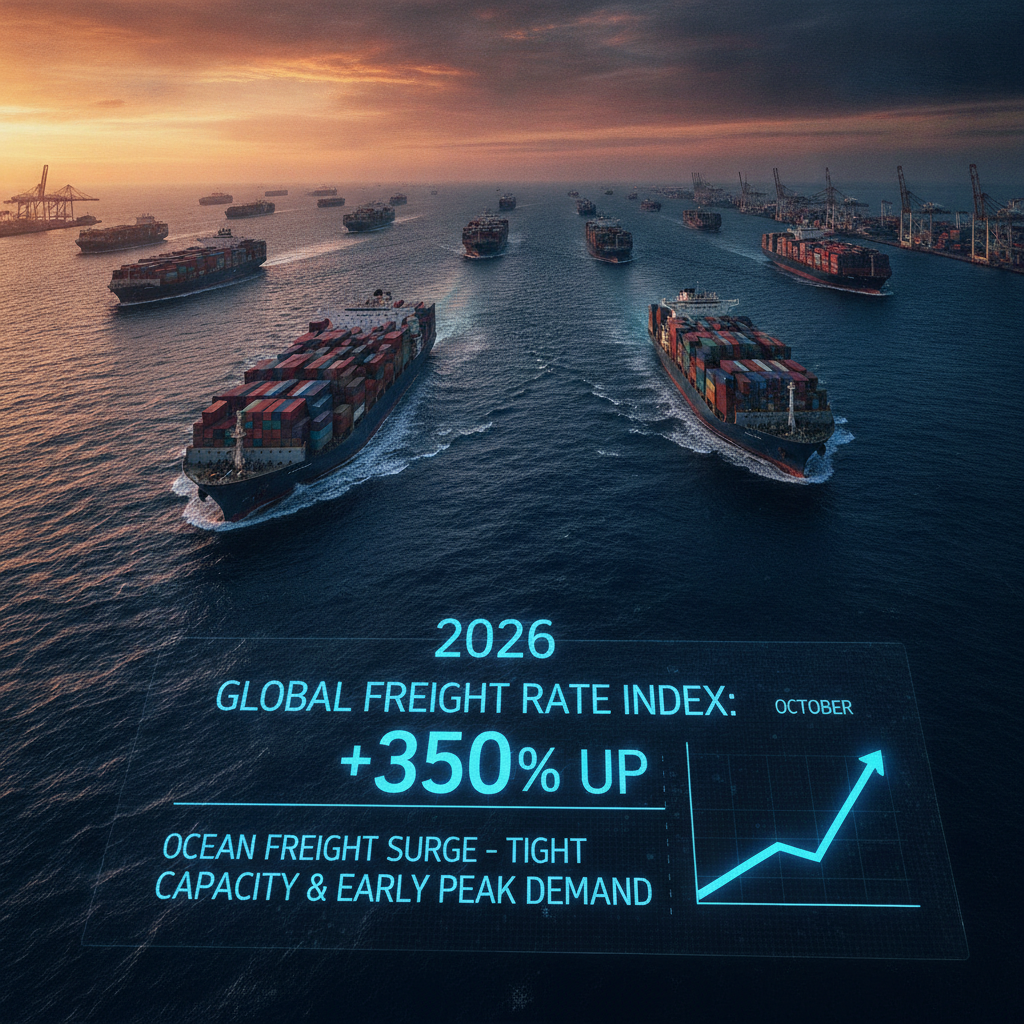
The global logistics sector is currently grappling with a severe Ocean Freight Rate Surge that has disrupted initial 2026 forecasts. According to recent industry readings from June 2026, the Shanghai Containerized Freight Index (SCFI) skyrocketed to 2,572 points, marking a 34.5% increase in just one month. For logistics professionals and supply chain operators, this volatility signals a higher pricing baseline rather than a short-term anomaly.
Unlike previous pandemic-era spikes, the current Ocean Freight Rate Surge is fueled by a convergence of overlapping structural forces:
- Capacity Constraints: Carriers maintain strict capacity discipline, removing approximately 25% of Transpacific Eastbound sailings around the recent May holidays.
- Geopolitical Disruptions: Ongoing Suez Canal detours and Red Sea instability continue to stretch global fleet utilization and add significant transit times.
- Early Peak Season: Global ocean freight demand increased 4% year-to-date, driven by front-loading and aggressive inventory building out of Asia.
The financial impact is undeniable. By mid-2026, spot rates from Asia to the U.S. East Coast reached approximately $3,800 per FEU, while the Shanghai-Rotterdam route climbed to $3,460 per FEU. Carrier executives recently confirmed to shareholders that these elevated freight rates are expected to persist well into October 2026.
For global shippers, the strategy of waiting for the spot market to cool off in Q3 is no longer viable. Procurement teams must adapt to this Ocean Freight Rate Surge by implementing hybrid strategies that balance long-term contract stability with spot market flexibility, prioritizing route diversification to build supply chain resilience.
References
- DHL Global Forwarding: June 2026 Ocean Freight Market Update
- SeaVantage: May 2026 Ocean Freight Market Update
- SCFI & Drewry World Container Index June 2026 Data
- iContainers: Ocean Freight Market Forecast 2026