
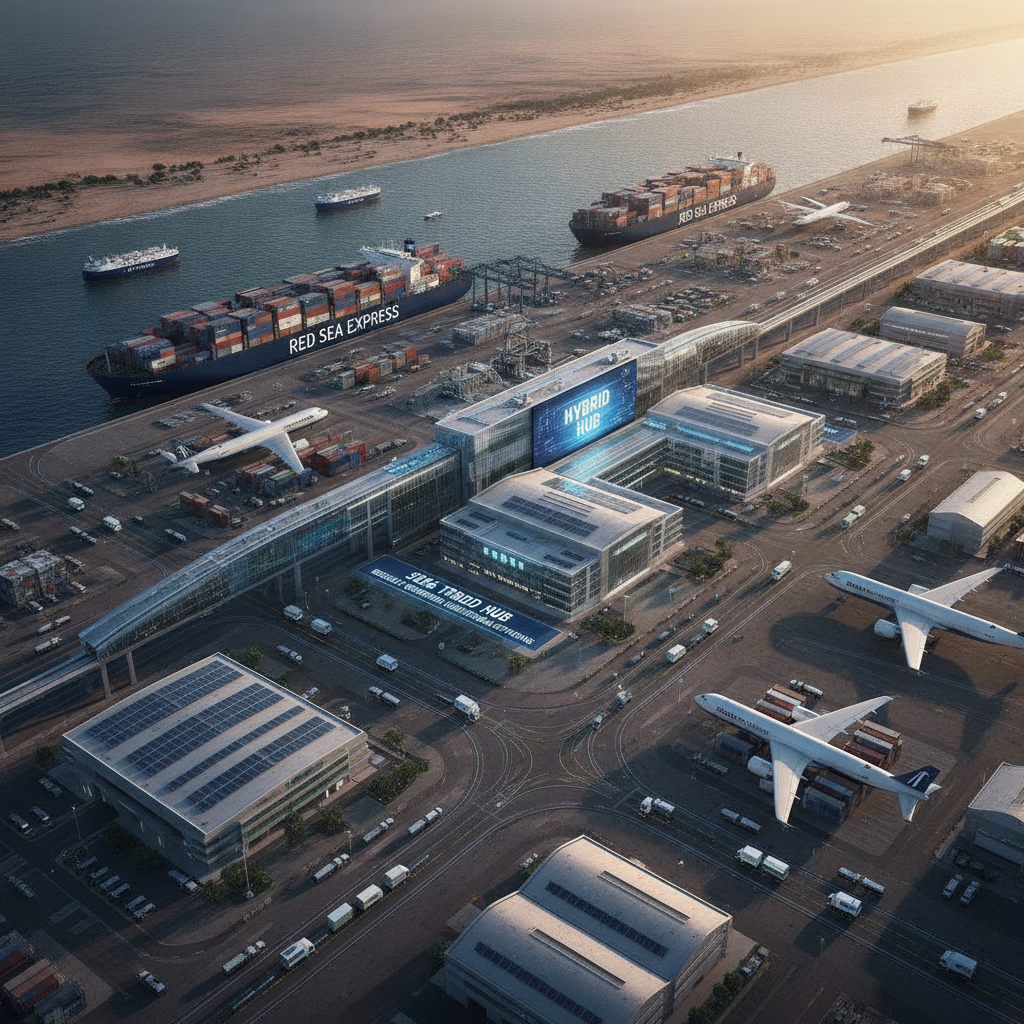
Due to ongoing geopolitical tensions, such as the prolonged Red Sea shipping disruptions extending into 2026, logistics professionals are fundamentally rethinking their global supply chain strategies. Sea-Air Cargo Conversion Trends have rapidly accelerated as shippers seek to bypass maritime delays while avoiding the premium costs of pure air freight. This hybrid multimodal approach perfectly balances the speed of aviation with the cost-efficiency of ocean transport.
The transition toward sea-air networks is driven by the need for operational resilience. While global schedule reliability for ocean freight has seen modest improvements, reaching 62.2% in March 2026, the global shipping network remains highly fragile. Consequently, supply chain managers are adopting sea-air solutions to optimize total landed costs.
- Cost Efficiency: Implementing a hybrid sea-air model can reduce total logistics costs by 30% to 50% compared to utilizing direct air freight.
- Strategic Rerouting: Logistics operators are increasingly utilizing strategic regional hubs, such as those in the Middle East and European logistics gateways, to seamlessly transfer cargo from sea to air.
- E-commerce Demand: Exponential cross-border digital trade volume requires accelerated transit timelines, making multimodal precision networks indispensable.
As the adoption of sea-air logistics scales, regulatory scrutiny is intensifying across major trade lanes. For example, enhanced safety protocols now mandate 100% X-ray security screening for sea-air multimodal cargo originating from China to strictly monitor for dangerous goods and hidden batteries. Moving forward, freight forwarders must prioritize proactive compliance and leverage predictive digital tracking tools to successfully navigate the evolving complexities of global cargo conversion.
References: TFG Global Freight Market Update (2026), Fact.MR Air Cargo Market Analysis, Xeneta Logistics Data.