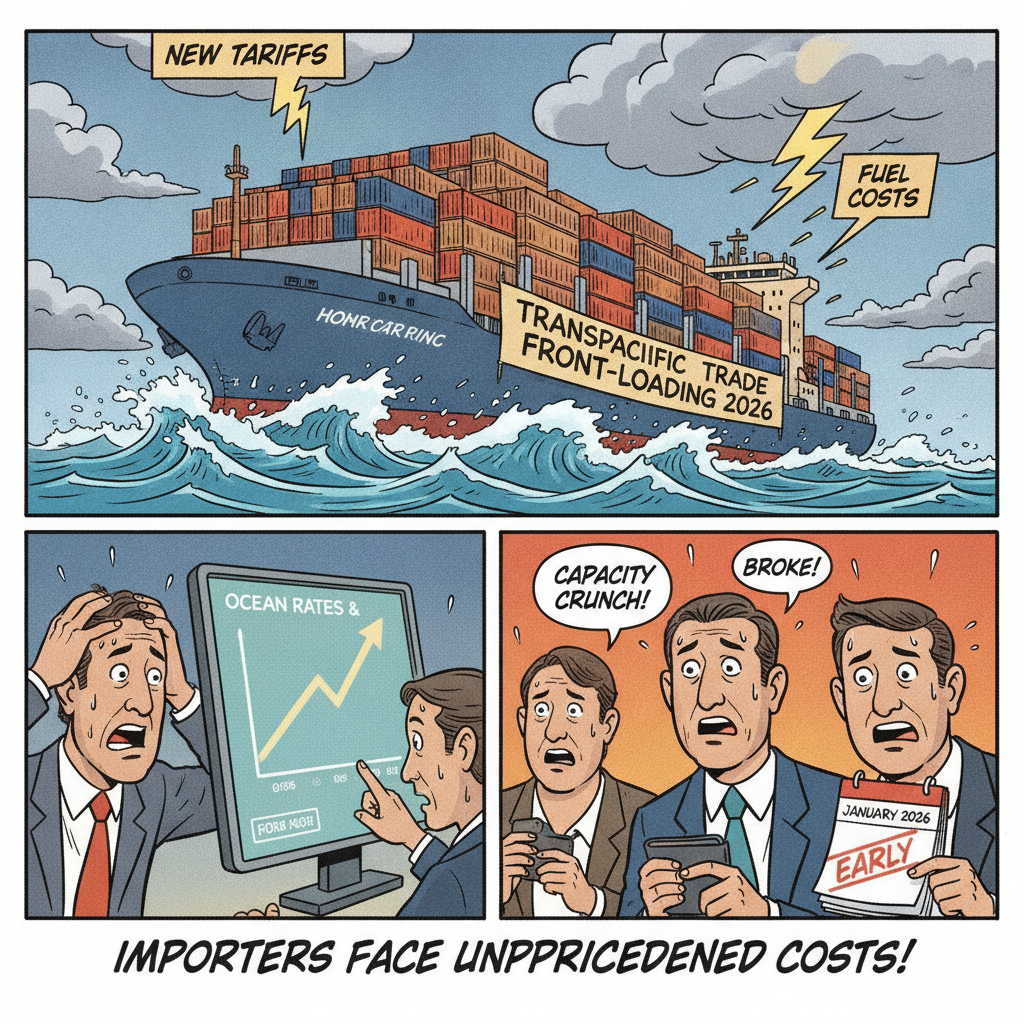
The global shipping sector is experiencing an unexpectedly early peak season in mid-2026, driven by aggressive Transpacific Trade Front-Loading. U.S. importers are accelerating shipments to bypass looming tariff deadlines and escalating fuel costs. Consequently, this massive demand surge has triggered a capacity crunch and sent spot rates skyrocketing for logistics experts.
Multiple macroeconomic factors compel shippers to advance their inventory cycles. The primary driver of Transpacific Trade Front-Loading is U.S. trade policy uncertainty. After broad 2025 tariffs were invalidated, temporary Section 122 tariffs were implemented, expiring in July 2026. Additionally, ongoing Middle East tensions have increased oil prices, dramatically driving up operating costs for container lines.
This rush for ocean freight has heavily impacted pricing across Asian export gateways. Recent Freightos Baltic Index data shows Asia-to-U.S. West Coast prices spiked 51% in a single week to $4,836 per FEU, while East Coast prices surged 25% to $6,336 per FEU. The immediate effects of Transpacific Trade Front-Loading include:
- Severe vessel space limitations at major hubs like Ningbo and Qingdao.
- New Peak Season Surcharges ranging from $500 to $1,000 per FEU in June 2026.
- Expected 80% increases in upcoming July bunker fuel surcharges.
Logistics professionals must now prioritize proactive supply chain planning to navigate these turbulent waters. References: https://www.freightwaves.com/news/frontload-frenzy-new-tariffs-fueling-early-trans-pacific-peak-season https://www.vizionapi.com/blog/trans-pacific-shipping-surge-drives-capacity-crunch-and-higher-rates https://www.indexbox.io/news/peak-shipping-season-underway-as-container-rates-surge-amid-tariffs-and-middle-east-tensions/