
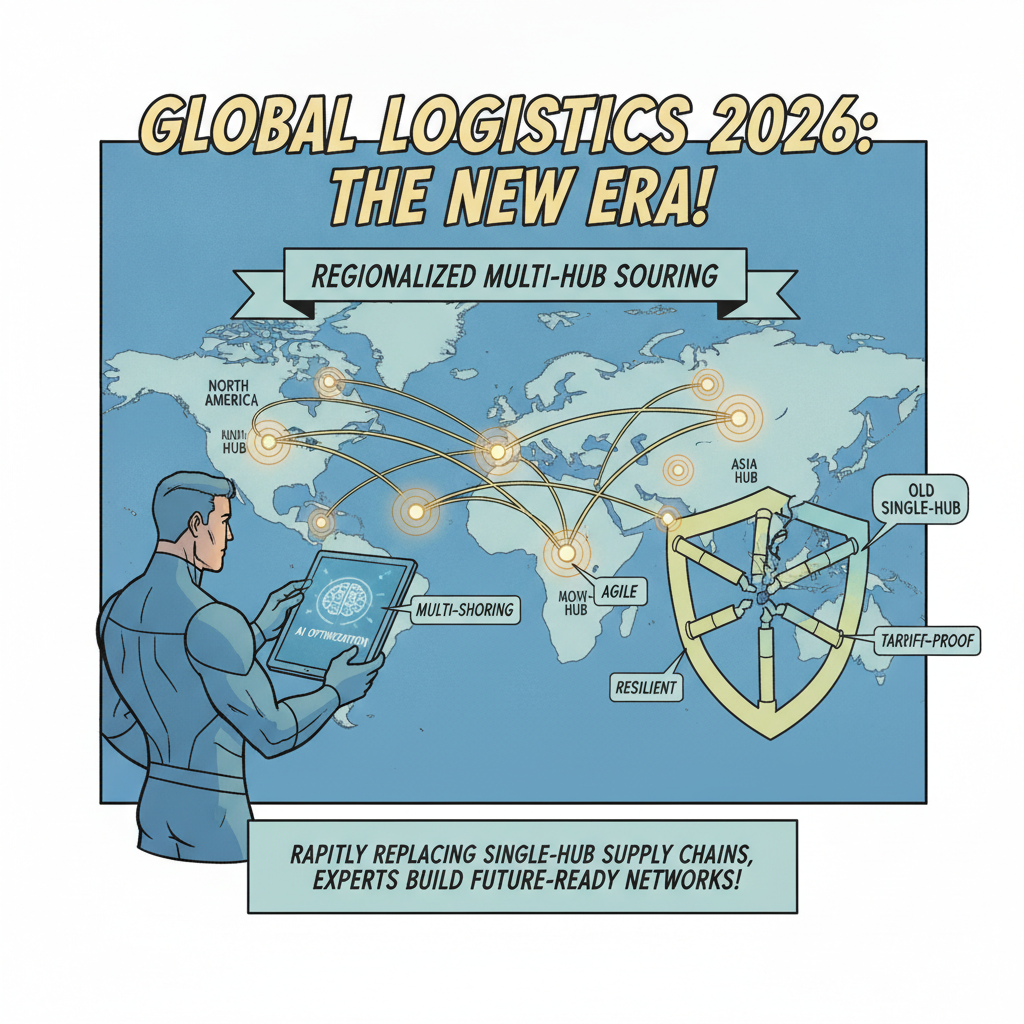
The global supply chain landscape is undergoing a massive transformation in 2026. Logistics experts are rapidly moving away from traditional, single-hub dependencies to embrace Regionalized Multi-hub Sourcing strategies. This pivot is driven by rising tariffs, port congestion, and geopolitical volatility that crippled linear networks in recent years.
Recent statistics reveal the sheer scale of this transition. According to industry reports, 43% of supply chains made notable geography changes in 2025 to mitigate tariff impacts. Furthermore, projections indicate that 50% of firms will soon adopt balanced multi-shoring sourcing strategies to distribute orders across multiple regions rather than relying on a single low-cost hub. The focus has moved from reacting to crises to proactively redesigning networks.
Why are shipping professionals doubling down on Regionalized Multi-hub Sourcing? The benefits extend far beyond risk mitigation:
- Enhanced Resilience: Distributing operations across regions like Mexico, Latin America, and Southeast Asia cushions against geopolitical shocks.
- Tariff Mitigation: Strategically relocating production nearer to demand bypasses stringent customs burdens.
- Supply Chain Agility: Shorter supply lanes drastically reduce transit times and lower transportation costs.
Executing this strategy requires robust digitization. Advanced predictive analytics and AI-driven mapping are now essential tools. Interestingly, fully mapped networks outperform linear chains on operational fronts ranging from quality control to overall costs, with 74% of logistics professionals planning further investments in supply chain digitization. As the industry matures, Regionalized Multi-hub Sourcing is no longer just a defensive maneuver; it is the new gold standard for competitive, resilient logistics.
References
- Inbound Logistics: Global Supply Chain Trends: Sourcing Shifts
- Nearshore Gains Ground in 2025 as Trade Dynamics Reshape Supply Chains
- EC Group: Top 5 Sourcing Strategies In 2026
- Procurement Tactics: Supply Chain Statistics — 70 Key Figures of 2026