The landscape of China-Latin America Freight Routing is undergoing a dramatic transformation in 2026. Driven by surging Chinese investments across South American manufacturing sectors, ocean freight capacity on this trade lane expanded by nearly 50% year-over-
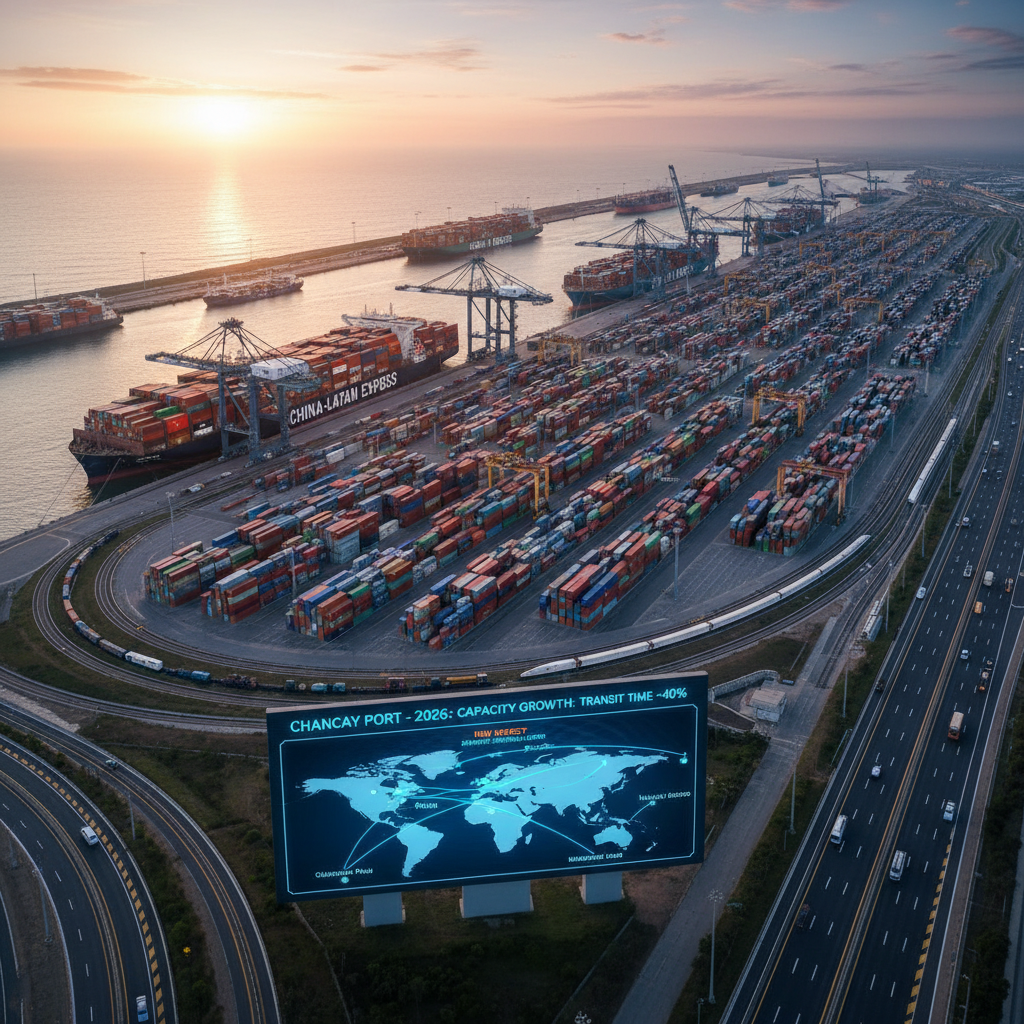
A defining factor in recent supply chain optimizations is the megaport of Chancay in Peru. Fully operational in 2026, this terminal successfully consolidates Asia-South America trade volumes. Direct maritime links, such as the newly inaugurated Nanjing-Chancay route in May 2026, have slashed transit times from over 30 days to roughly 23 days.
For shippers, this evolution in China-Latin America Freight Routing offers distinct advantages:
- Cost Reductions: Direct shipping lines have cut regional logistics expenses by 20% to 30%.
- Rate Stabilization: West Coast South America standard FAK rates softened, stabilizing around $2,800 per 40-foot container.
- Specialized Flow: New break-bulk services actively support the region’s energy and mining sectors.
Despite enhanced efficiencies, market volatility persists. Ocean carriers are upgrading Mexico and West Coast services to defend yields against fluctuating spot demand. Logistics experts must proactively secure specialized terminal capacity and leverage direct loops to bypass traditional bottlenecks. Prioritizing agile network design remains crucial for mastering this trade corridor.
References
- Market Updates: February 2026 – UPS (ups.com)
- Shipping from China to Latin America – YQN
- Nanjing Port New Route Opens (Nanjing Port)
- China break-bulk shipping to Peru (SCMP)
- Shanghai-Chancay route boosts trade (Shanghai Gov)
- Chancay Port trade gateway (China Daily)