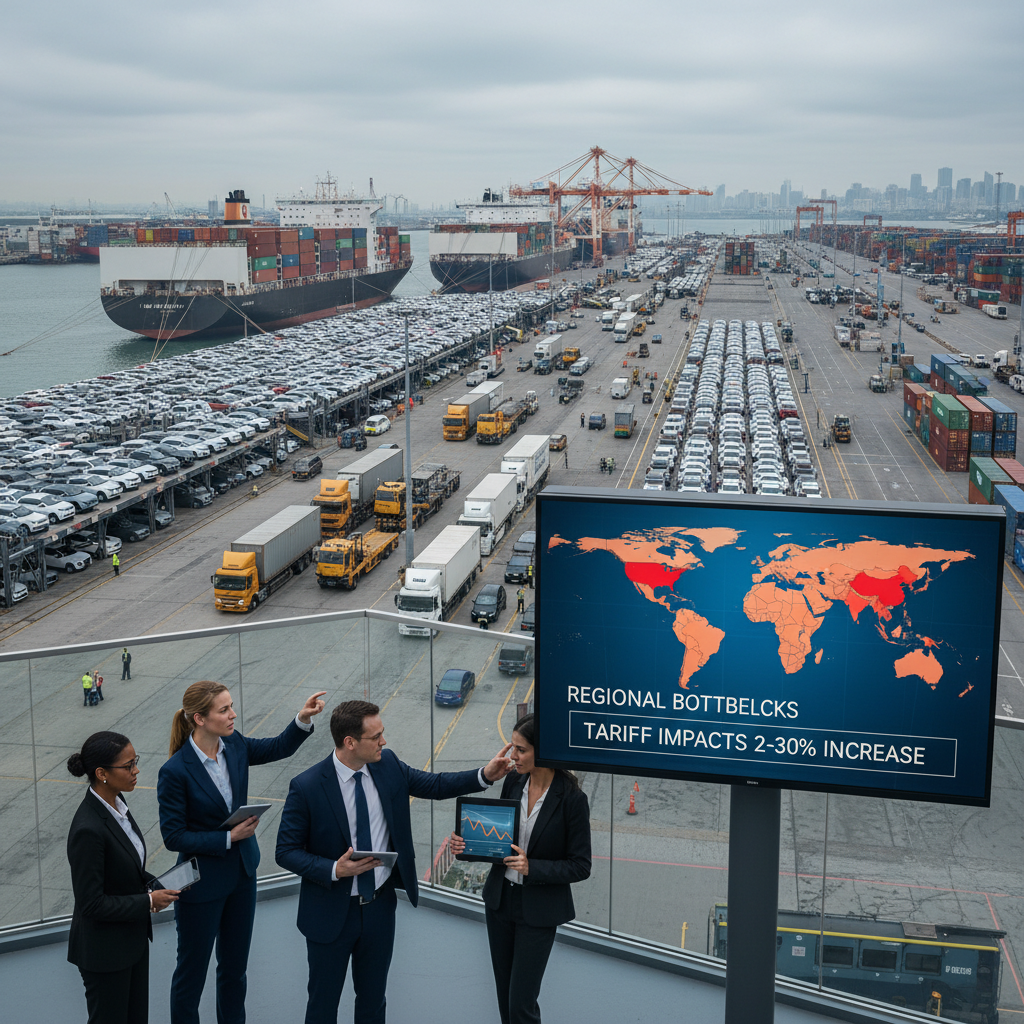
The global maritime logistics sector is facing a complex evolution as RORO Shipping Capacity Constraints shift from acute vessel shortages to regional bottlenecks in 2026. While the global roll-on/roll-off fleet is undergoing significant renewal—with 60 to 70 additional vessels scheduled for delivery in 2025—structural inefficiencies still challenge supply chains.
Despite newbuild orders aimed at alleviating historic RORO Shipping Capacity Constraints, demand remains high. Massive finished-vehicle exports from Asia, particularly electric vehicles (EVs), continue to absorb available capacity. Furthermore, approximately one million cars previously shipped in containers out of China are reverting to RORO modalities in the 2025-2026 cycle, keeping utilization intense.
Logistics professionals must navigate a fragmented landscape. Key constraints include:
- Port Congestion: European hubs like Rotterdam and Hamburg experience compounding delays extending into 2026 due to terminal constraints.
- Geopolitical Rerouting: U.S. auto tariff adjustments and Red Sea avoidance force carriers to alter deployments, over-saturating certain lanes.
- Infrastructure Limitations: Emerging markets lack dedicated RORO terminals, capping growth despite rising vessel availability.
To mitigate the impacts of RORO Shipping Capacity Constraints, logistics providers are adopting hybrid charter strategies and hub-and-spoke models. As high-capacity vessels launch through 2027, operational agility remains the defining advantage for automotive supply chains.
References
Market Reports World | Dataintelo | Vertex AI | Port Economics | Logisoft | West Coast Shipping | Marine Link