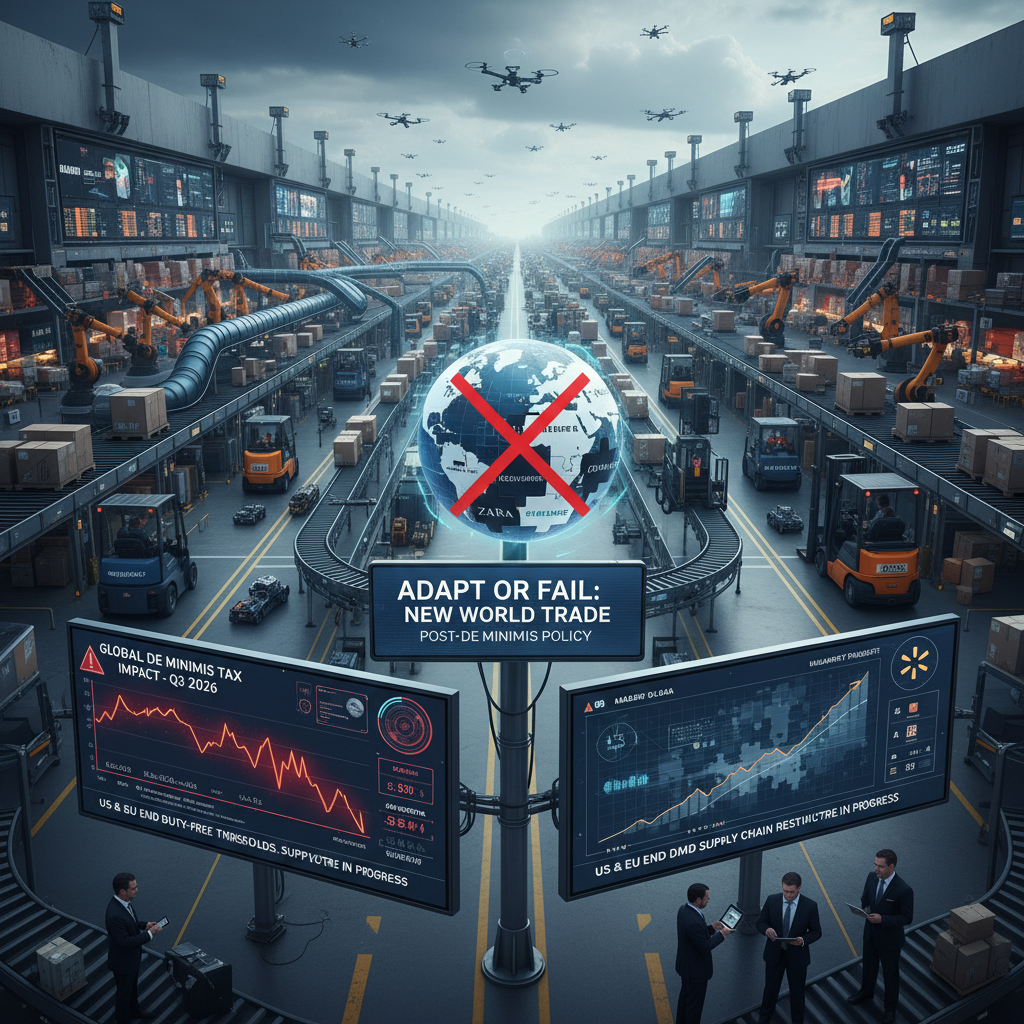
The 2025-2026 era marks the end of frictionless cross-border e-commerce, triggering a profound Global De Minimis Tax Logistics Impact. Following the United States’ complete suspension of its $800 exemption in August 2025, the European Union accelerated its own customs reforms. Starting July 1, 2026, the EU will abolish its €150 duty-free threshold, imposing a flat €3 customs duty per item category. This stringent regulatory shift mandates an urgent restructuring of international shipping models.
For decades, low-value direct-to-consumer parcels bypassed formal customs entry, enabling cheap and rapid deliveries. In 2024 alone, 1.36 billion de minimis shipments entered the US, while 4.6 billion arrived in the EU. The sudden removal of these lucrative exemptions requires robust compliance tracking and sophisticated new fulfillment strategies.
- Nearshoring and Bulk Freight: E-commerce retailers are transitioning from direct air cargo to bulk ocean freight and localized fulfillment centers to mitigate rising per-parcel costs.
- Strict Compliance Data: Shippers must now provide precise Harmonized System (HS) codes and formal entry data for every single transaction.
- Technology Integration: Logistics providers are deploying automated duty calculators to handle high-volume formal clearances efficiently and remain legally compliant.
Companies failing to adapt to these trade realities face severe customs bottlenecks. With the UK also eliminating its £135 threshold by 2029, the Global De Minimis Tax Logistics Impact will continually redefine supply chain resilience.
References
Vertex AI Search, EU De Minimis Changes 2026. DSCP Smart Fulfillment, EU De Minimis Rule Change 2026. Green Fulfilment, UK eCommerce Logistics. McKinsey, De minimis disrupted. OIA Global, De Minimus Elimination. FreightAmigo, Trade Rule Understanding. LMA Consulting Group, De Minimis Exemption Impact.