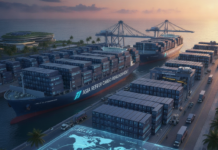


The Transpacific Shipping market is experiencing unprecedented volatility in mid-2026. Rather than the traditional August-September surge, the industry is witnessing an early peak season driven by temporary U.S. tariff suspensions and proactive cargo front-loading. Furthermore, geopolitical tensions, including disruptions near the Strait of Hormuz, are adding pressure to global shipping lanes.
Recent data indicates a tightening of available vessel slots. Transpacific Eastbound (TPEB) capacity deployment recently slipped to 82%, effectively removing 25% of market slots. Consequently, carriers are successfully implementing General Rate Increases (GRIs). Key market statistics include:
- Spot rates to the U.S. East Coast hovered between $3,800 and $4,300 per FEU in May 2026.
- West Coast rates climbed rapidly, exceeding $3,300 per FEU.
- Major carriers announced significant Peak Season Surcharges, up to $2,000 per FEU, effective June 1.
To navigate this unpredictability, freight forwarders must transition to proactive strategies. Implementing data-driven rate forecasting and tiered cargo allocation protocols is essential to secure contracted capacity for long-term projects. Balancing fixed-rate contracts with spot market agility will be crucial as carriers actively manage supply through blank sailings to stabilize elevated rates.
References
- JCtrans: Lock in stable transpacific freight rates before peak season capacity crunches hit
- SeaVantage: Ocean Freight Market Update May 2026
- Bertling Group: Ocean Freight Market Report
- 2026 Ocean Freight Outlook: Structural Pressure
- Supply Chain Dive: Transpacific ocean rates rise, demand softens
- Drewry: World Container Index (May 2026)
- Container Spot Rates Rise Again as Early Peak Season Drives Shipping Demand