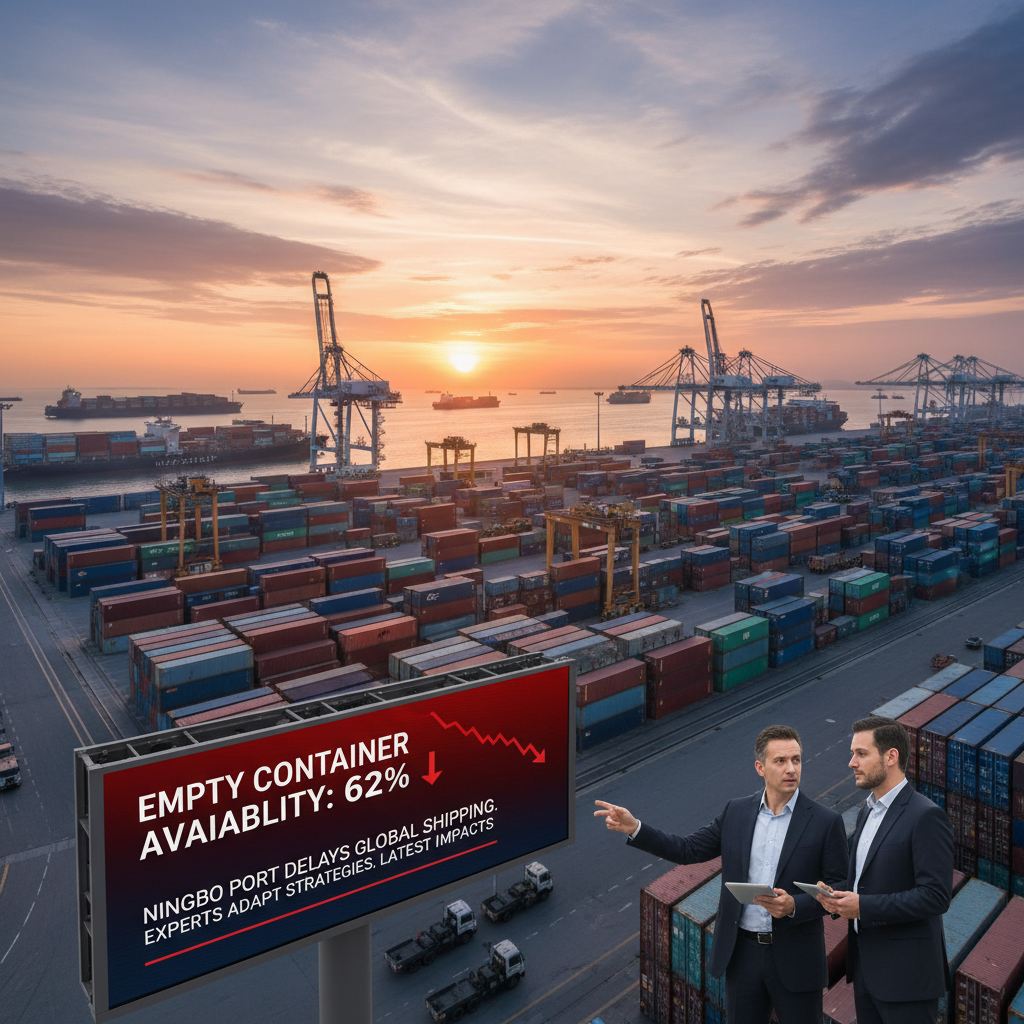
As of May 2026, the logistics sector is facing significant disruptions due to escalating Ningbo port container shortages. Empty container availability at Ningbo and neighboring ports has plummeted to 62%, marking the lowest level in 18 months. For logistics experts and supply chain managers, understanding the root causes of these shortages is critical for minimizing export delays.
The current Ningbo port container shortages stem from a confluence of over-booking, extended vessel dwell times, and an imbalance in empty container repositioning. Yard utilization at major terminals has reached nearly 95%, triggering strict appointment-only gate-in protocols.
- Vessel Rollovers: Shipping lines report over-booking rates up to 60% above capacity, pushing rollover rates to 30%.
- Cost Increases: Transport constraints have driven trucking fees up by approximately 80%, severely inflating landside costs.
- Extended Lead Times: Factory-to-vessel lead times have doubled from 5-7 days to 10-14 days.
Mitigating the risks associated with Ningbo port container shortages requires proactive supply chain adjustments. Experts recommend securing bookings well in advance and diversifying routing options to avoid concentrated bottlenecks. As global demand for exports intensifies, maintaining agile equipment repositioning strategies will be essential.
References
- Yangtze River Delta Ports Empty Container Shortage 2026
- Trucking Fees Surge 300%, Major Chinese Ports Severe Congestion
- Hylios – Ningbo Port Congestion Worsens