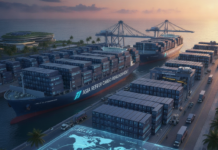
The global logistics sector is currently navigating one of the most severe operational disruptions in modern history. The ongoing Middle East supply chain crisis has evolved from regional security threats into a systemic global trade challenge. With escalated conflicts shutting down critical maritime chokepoints in early 2026, shipping and procurement experts are being forced to completely restructure their global freight networks.
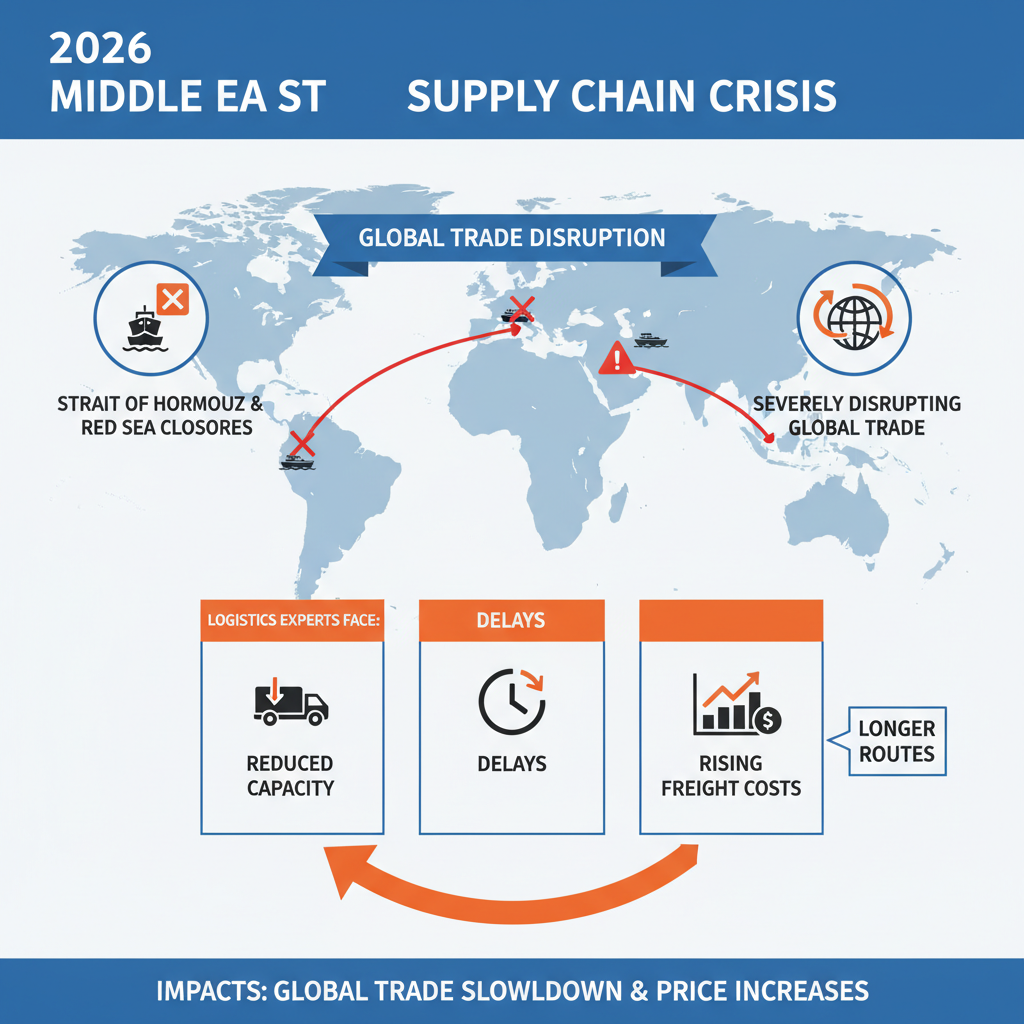
Recent escalations have paralyzed major maritime corridors. While the Red Sea and Suez Canal diversions previously dominated headlines, the functional closure of the Strait of Hormuz in March 2026 has drastically intensified the Middle East supply chain crisis. Before the crisis, over 30,000 vessels transited the Strait annually, but daily crossings plummeted to just two outbound commercial vessels by mid-March 2026. Furthermore, Gulf aviation hubs like Dubai and Doha experienced airspace closures, resulting in over 21,300 canceled flights and severely constraining global air cargo capacity.
The cascading effects of these choke point closures are drastically impacting lead times, capacity, and freight costs. Logistics professionals managing the Middle East supply chain crisis are observing the following critical data points:
- Extended Transit Times: Ocean freight diverted around the Cape of Good Hope adds 7 to 15 days to Asia-Europe routes.
- Capacity Reductions: The disruptions have caused an effective 10% capacity reduction across ocean networks and a 22% global reduction in air cargo capacity.
- Emissions Increases: Diverted maritime routes have triggered up to a 30-40% increase in fuel emissions.
- Suez Canal Declines: January 2026 saw a 16.7% year-over-year decline in container ship transits through the Suez Canal, marking the weakest January traffic in a decade.
To mitigate these bottlenecks, organizations must transition from reactive measures to proactive risk management. Supply chain leaders are urged to secure capacity allocations early, diversify carrier gateways, and deploy multimodal land bridge solutions across the Gulf. Real-time shipment visibility and agile inventory planning will be the defining factors for maritime and aviation freight survival throughout the remainder of 2026.
References
Maersk: Red Sea and Gulf of Aden Situation Update
Lloyd’s List: Suez Canal traffic declines amid Red Sea disruption
Woodland Group: Middle East Conflict Supply Chain Disruption
Tive: Middle East Risks Resurface and Supply Chain Disruptions
DEN 16 Middle East Conflict: The 2026 Supply Chain Disruptions
Customer Advisory: Middle East Escalation and Ongoing Supply Chain Disruption