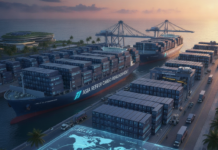


For logistics and shipping experts, achieving true semiconductor supply chain stabilization has become the ultimate priority in 2025 and 2026. Following years of severe volatility, the global semiconductor logistics market is projected to expand significantly, growing from $72.3 billion in 2024 to $180.8 billion by 2034 at a 9.6% CAGR. This massive growth is forcing industry leaders to shift their strategies from mere cost-efficiency to long-term resilience and risk mitigation.
Modern shipping strategies are undergoing rapid transformation. To support this market surge and ensure semiconductor supply chain stabilization, the industry allocated approximately $185 billion in capital expenditures for 2025 alone. Logistics professionals are leveraging these investments to overhaul traditional networks. Crucial trends reshaping the landscape include:
- Regionalization and Nearshoring: Companies are aggressively reducing their dependence on long global shipping routes to shorten lead times and bypass geopolitical bottlenecks.
- AI-Driven Planning: Predictive analytics and artificial intelligence are now standard tools used to forecast demand, optimize transit routes, and prevent costly delays.
- Strategic Buffering: Over 70% of companies have implemented dual sourcing, and inventory is now managed as a critical safety buffer rather than a strict liability.
While the overall semiconductor market is expected to reach nearly $697 billion, shipping experts must remain vigilant. Navigating semiconductor supply chain stabilization requires mastering complex, multi-nodal logistics networks and adapting to next-generation chip sizes. By embracing regionalized operations and intelligent tracking, the logistics sector can finally achieve sustainable stabilization.
References
SmartSemi: Navigating the Semiconductor Supply Chain in 2025. Market.us: Global Semiconductor Logistics Market Size, Share, Growth Analysis 2025-2034.