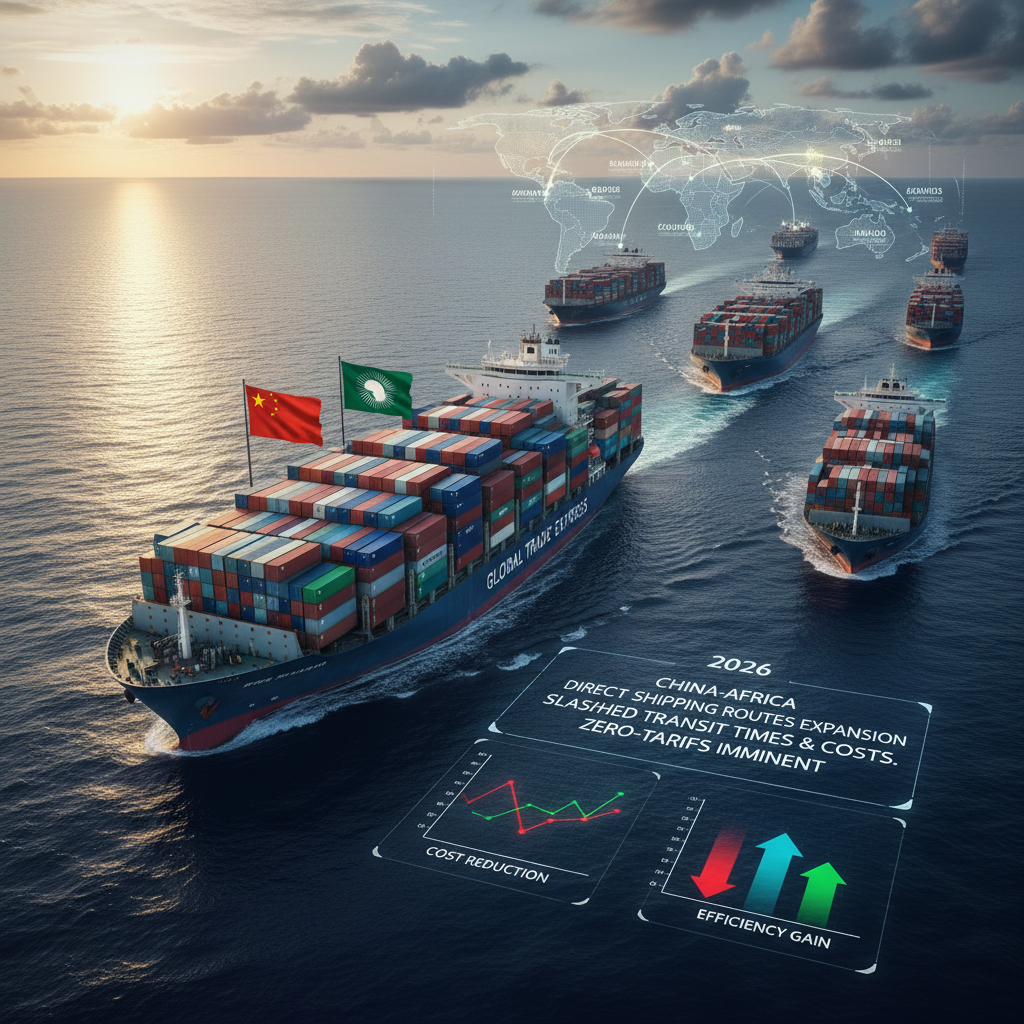
The global logistics landscape is witnessing a paradigm shift as the China-Africa direct shipping routes expansion accelerates in 2026 [1]. This strategic maritime development aims to bypass multi-stop transshipments, slashing transit times and reducing supply chain costs ahead of Beijing’s May 2026 zero-tariff policy for 53 African nations [2].
Major Chinese maritime hubs are rapidly adapting to this surge in bilateral commerce. In the first quarter of 2026, the tangible effects of these optimized supply chains became highly evident across key terminal operations [3].
- Qingdao Port: Recorded a 26.3% year-over-year growth in African exports, exceeding $6.37 billion in Q1 2026 [2].
- Yantai Port: Surpassed 2 million tons in quarterly throughput on its African breakbulk liner routes, marking a 31.9% increase [2].
- Tianjin Port: Launched new direct container services to South Africa, cutting transit times by 10 days to an average of 40 days [4].
The integration of these direct maritime corridors with the upcoming zero-tariff framework represents a structural transformation for international logistics. Industry analysts note that direct connectivity not only streamlines the export of Chinese machinery and high-tech electronics but also facilitates the efficient import of critical African raw materials [1][4]. For shipping executives and maritime strategists, these evolving corridors demand immediate reevaluation of global fleet deployments and trade forecasting models.
References: [1] TV BRICS (2026). [2] Global Times (2026). [3] Cape Town ETC (2026). [4] Business Insider (2026).