
The recent revocation of Hong Kong-based CK Hutchison’s concession to operate the Balboa and Cristobal ports has triggered severe Panama Canal dispute China countermeasures. Following a January 2026 ruling by Panama’s Supreme Court to annul the 25-year contract, the global logistics sector is bracing for significant disruptions. U.S. pressure to counter Chinese influence in the strategic waterway has led to immediate retaliation from Beijing, turning the world’s shipping lanes into a political battleground.
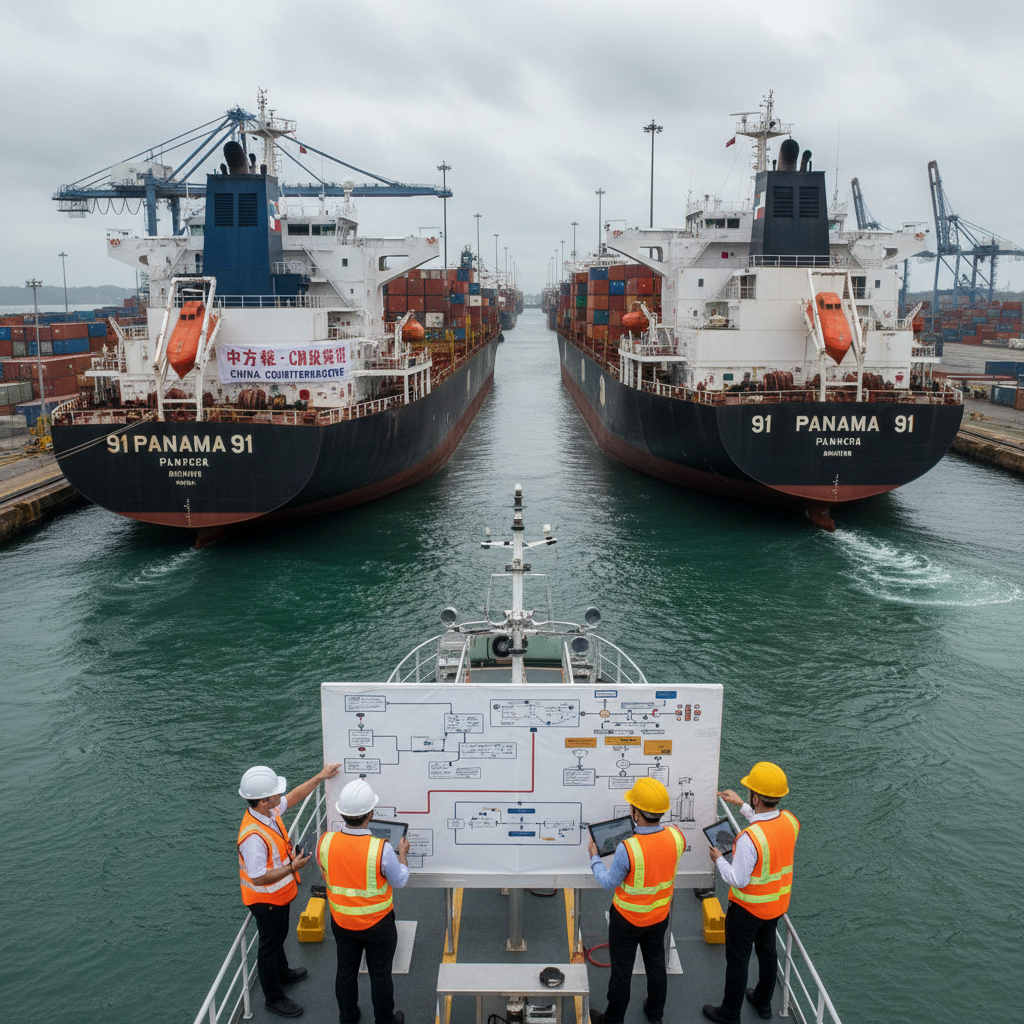
Rather than relying solely on diplomatic protests, Beijing has operationalized its economic leverage. In March 2026, Chinese authorities detained 91 Panamanian-flagged vessels under the guise of port-state control, representing roughly 74% of all vessel detentions in the Asia-Pacific region. This marks a massive increase from the 32 detentions recorded in March 2025. Key impacts of these countermeasures include:
- Severe delays for Panama-flagged cargo ships across top-tier Asian container ports.
- Heightened operational risks for replacement operators like Maersk and MSC, whose executives faced high-level summons in Beijing.
- A potential mass exodus of ship registrations as vessel owners seek to avoid costly detentions and supply chain bottlenecks.
The Panama Canal dispute China countermeasures extend beyond immediate ship detentions. China is aggressively accelerating investments in alternative interoceanic routes, including Peru’s Chancay Port and the Interoceanic Corridor in Mexico. As the U.S. Federal Maritime Commission warns of severe strategic consequences, logistics experts must prepare for sustained geopolitical friction. Diversifying shipping registries and exploring alternative routes may become essential strategies for mitigating exposure to this unfolding maritime conflict.
References
- The Economic Times: economictimes.com
- DatamarNews: datamarnews.com
- China Global South: chinaglobalsouth.com