
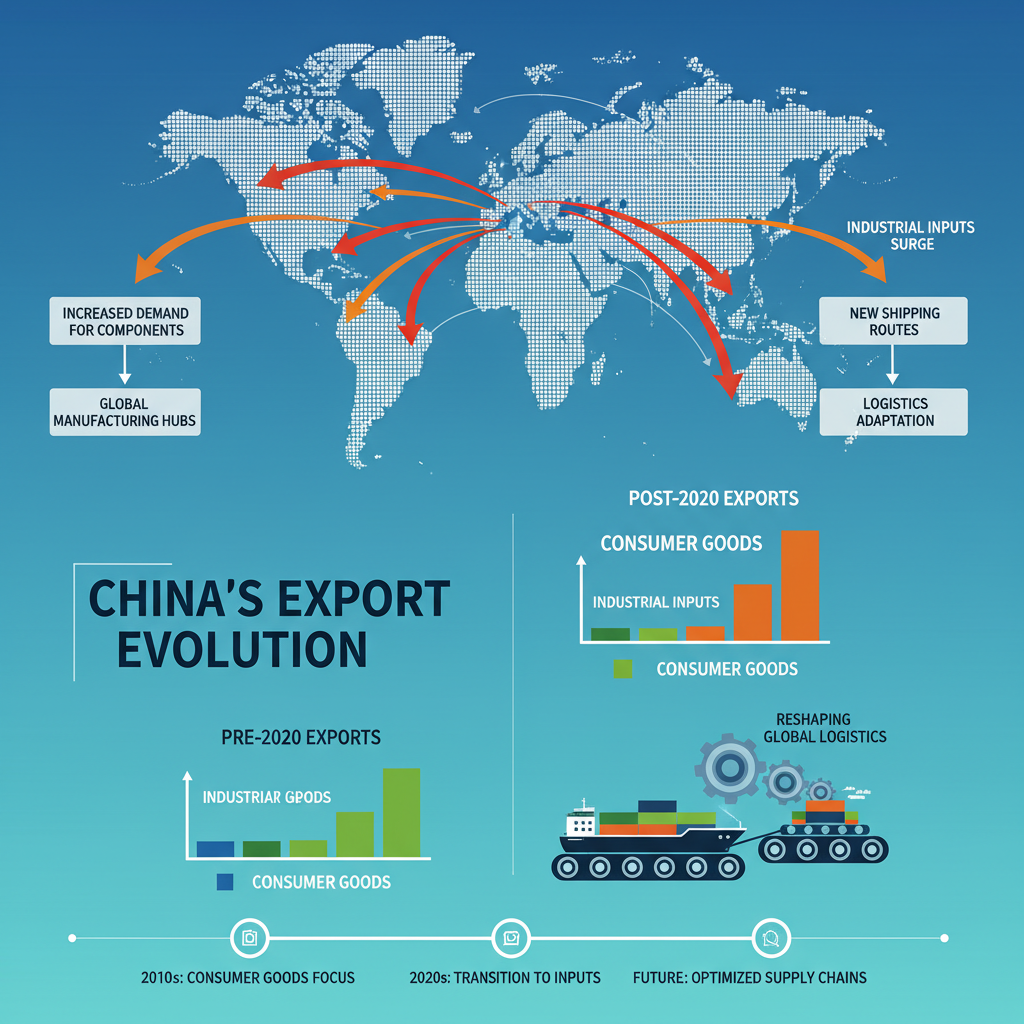
In the wake of geopolitical realignments, the shipping sector is witnessing a profound transformation. The rapid Chinese intermediate goods trade expansion has deepened the nation’s structural influence globally. Data from 2025 reveals that shipments of Chinese-made industrial inputs rose by over $175 billion. Critical intermediate goods, like semiconductors and components, grew by 9%, double the rate of China’s overall exports. This marks a clear transition from exporting finished consumer goods to the West, to supplying the essential machinery that powers manufacturing across the Global South.
For maritime professionals, this structural pivot is rapidly redrawing trade routes. Between 2023 and 2025, Chinese containerized exports surged by 40% to India, 36% to Vietnam, and 37% to Thailand. These markets now serve as secondary export gateways that rely heavily on Chinese supply chains. Logistics providers are expanding capacity on services between China and emerging hubs to keep pace with the Chinese intermediate goods trade expansion. In 2025, trade with Belt and Road Initiative nations reached $3.39 trillion, capturing nearly 52% of China’s total trade value.
This expansion necessitates agile responses from the maritime logistics industry.
- Diversified Routing: Carriers must invest heavily in intra-Asian and Latin American lanes to handle knocked-down modules.
- Regional Hubs: Capitalizing on secondary logistics facilities in Vietnam and Mexico is critical for final assembly.
As global reliance solidifies, shipping networks must adapt to serve a highly interconnected ecosystem.
References
kuehne-nagel.com
news.cn
mckinsey.com
china-briefing.com