

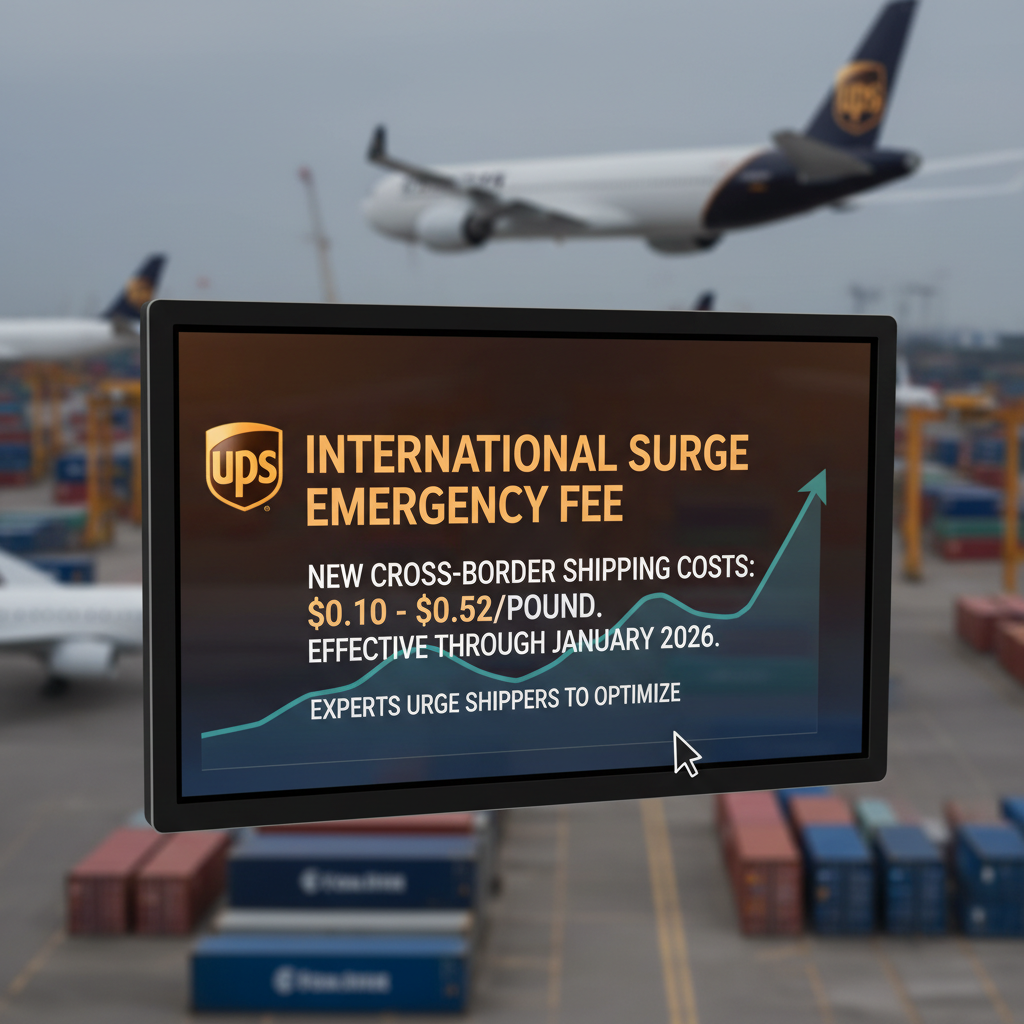
As global trade volumes continue to fluctuate, logistics professionals must stay ahead of carrier pricing adjustments. Recently, parcel carriers announced updated structures for the UPS international surge emergency fee, impacting cross-border shipping budgets for the upcoming peak season. Shippers utilizing international services are facing new cost variables that require immediate strategic planning to maintain profit margins.
The implementation of the UPS international surge emergency fee aims to maintain network efficiency during high-volume periods, covering extra personnel and transit costs. Carrier data indicates that international demand and surge fees range from $0.10 to $0.52 per pound, depending heavily on specific origin and destination pairs. This broad surcharge window spans from late October 2025 through January 17, 2026, encompassing the entire peak holiday shipping season.
- Fees vary strictly by origin-destination lanes, requiring granular invoice analysis.
- Additional handling and large package constraints face compounding demand surcharges.
- Shippers who fail to optimize packaging may incur severe over-maximum limits penalties.
To offset the financial impact of the UPS international surge emergency fee, enterprise shippers must proactively adapt. Experts recommend adjusting ship dates to avoid peak surcharge windows whenever possible. Furthermore, reviewing alternative service levels or shifting volume between regional distribution centers can drastically reduce exposure to these international surcharges.
References
TransImpact Report: https://transimpact.com
UPS Demand Surcharges: https://ups.com
Shipcloud Peak Season Help Center: https://shipcloud.io
UPS Demand Surcharge Official Updates: https://ups.com