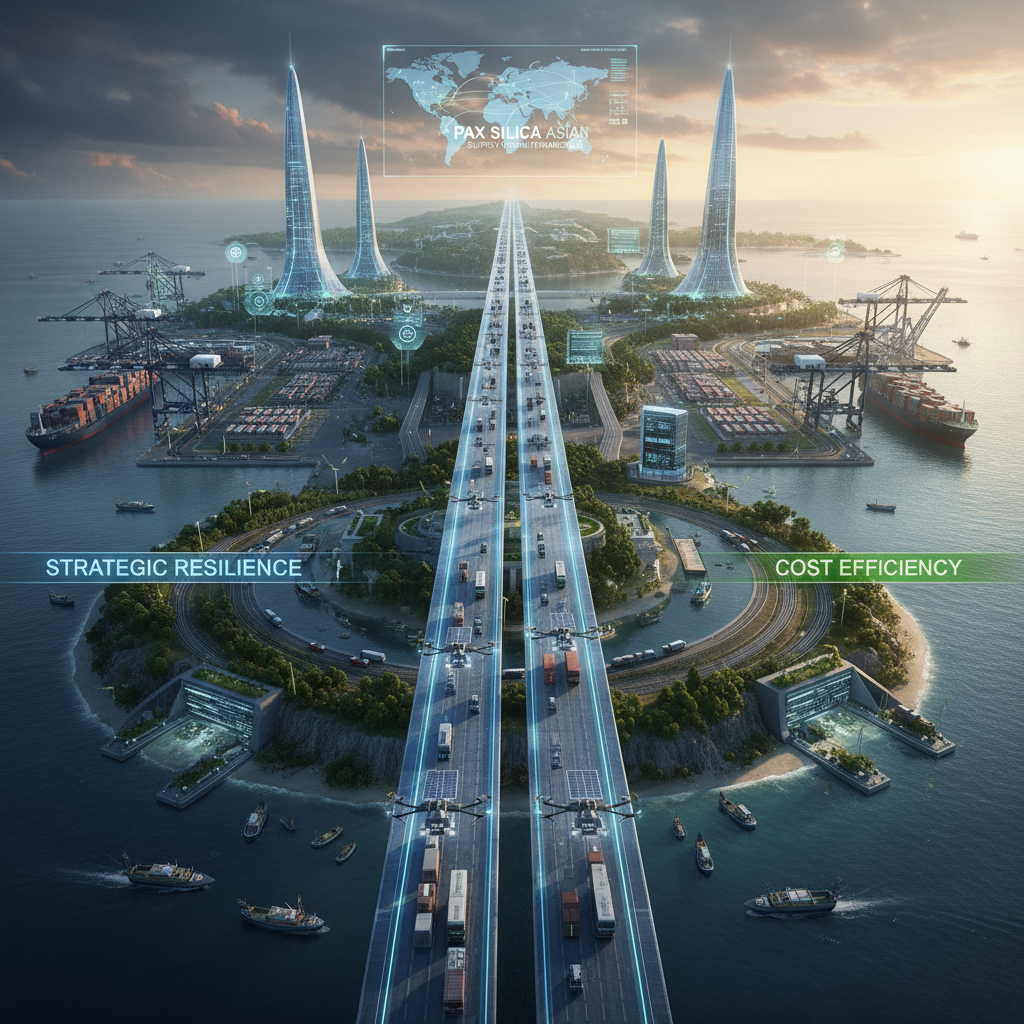
The global logistics landscape is undergoing a massive restructuring with the emergence of the Pax Silica Asian supply chain framework. Launched in December 2025, this initiative creates a secure network spanning artificial intelligence, critical minerals, and advanced manufacturing [1]. For logistics experts, this framework represents a pivotal shift from cost-driven models to strategic resilience.
Recent developments in early 2026 highlight rapid regional expansion. Key supply chain shifts include:
- The Philippines joining as the 13th member in April 2026, unlocking the Luzon Economic Corridor [2].
- A 4,000-acre AI-native investment hub signaling major infrastructure developments for shipping operators [2].
- A $250 million pledge for the Pax Silica Fund to support critical mineral processing [4].
The inclusion of Asian powers like Japan, India, and Singapore ensures the Pax Silica Asian supply chain framework will dominate regional procurement [3].
Unlike previous agreements, this initiative integrates the value chain from rare earth extraction to end-to-end logistics systems [3]. As the Pax Silica Asian supply chain framework matures, logistics leaders should anticipate tighter export controls and the urgent need for parallel ecosystems. Navigating diverging regulatory environments will become the primary challenge for Indo-Pacific shippers.
References
- [1] U.S. Mission to ASEAN. (2025). Pax Silica Initiative Fact Sheet.
- [2] Second Line of Defense. (2026). The Luzon Economic Corridor.
- [3] Resilinc. (2026). Pax Silica Supply Chain Governance.
- [4] Supply Chain Digital. (2026). Pax Silica Power Play.